We must adapt and recognize that learning technologies have shifted how students will learn. Educators in both K12 and post-secondary must embrace 21st century communication capabilities, model collaboration, improve instructional delivery using questioning techniques, and share a passion for learning. I would add that it is imperative that instituions training the teachers of tomorrow understand that they must also radically change approaches.
Rhonda Ritter’s presentation on the iCARE instructional design model provides an excellent framework to utilize with secondary/post-secondary students. The iCARE model, from my perspective, builds strong connections to 21st century learning skill sets. iCARE consists of a simple and flexible design approach. iCARE (Introduction, Connect, Apply, Reflect, and Extend) provides students with answers to why learning content is needed and how content extends to “real world” scenarios. Students often need to extend reflections to a larger audience. Students who often lack motivation to earn or make the grade, and iCARE provides an external motivator that could push students towards lifelong learning. Online learning environments offer a variety of collaborative platforms, and the iCARE model could easily provide learning communities an improved online environment to “showcase” and extended learning to a larger audience.
Backwards Design
Brenda Quintanilla provided a strong presentation on how the Backwards Design model improves instruction by aligning objectives to final outcomes. Backward design suggests that learning design should should begin with a final assessment in mind. Backward design attempts to ensure that students meet the expected outcomes or course goals. While I agree that aligning is very important, instructors must be cautioned to not “teach to the test.” Drill and kill approaches often fail to inspire students to apply content to real world scenarios or approaches. Goals are important, but assessment driven instruction can become repetitive. Educators and instructors perhaps need training on best practices on using Backward Design approaches. The following link can help improve Backward Design approaches.
Blooms Taxonomy
Christina Gilliam’s provided an informative review of how Blooms order of domain has shifted to include remembering, understanding, applying, analyzing, evaluating, and creating. Gilliam’s presentation included key domain questions and verbs to consider.
Integration and community approaches using technology can potentially provide differentiated instruction efficiently. Training and coaching on best Blooms practices using technology will continue to be a high need. Instructional designers can assist teachers with how to apply advanced instructional models using learning technologies.
I hope you enjoyed the the past three post involving creativity and the digital classroom. I welcome you to the fourth in this series of posts. I have some reflection, ideas, and some amazing resources to share. Please enjoy and share this post via email or a retweet. While you are at it, I would appreciate that you take a moment to subscribe to this Blog by RSS or email and follow me at (mjgormans). Also, feel free to contact me about any conference, in-service plans, or PD you might wish to include me in. (mjgormans@gmail.com). You can learn more at the Booking Link. Please continue to network and join me for our special journey into 21st century education, something that is very exciting to me. – Mike Gorman (http://21centuryedtech.wordpress.com)
Note – Join me for a free webinar this Tuesday, February 12 at 8:00 PM EST…
Connecting is key to experiencing positive LMS experiences. Instructional designers must consistently evaluate content. Often faculty lack time to revisit learning approaches, but improving the quality of online learning platforms is crucial to growing post-secondary environments. LMS must be systemic and continually evaluated. Far too many virtual courses develop a learning repository for students and courses are not viewed as unique experiences. This often leads to feelings of detachment from both the learner and instructor. Content may become dated. Instruction often lacks meaning. Building stronger connections requires both collaboration and evaluation of instructional approaches. Faculty often do not revise courses in LMS environments. Approaches to holistic and consistent instructional design is needed for all learning environments, virtual and face to face.
The Kemp Model
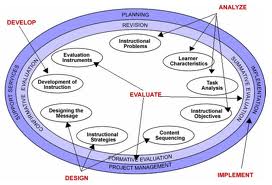
The Kemp Model is one approach to revising content within the learning environment. The designer is free to begin with any Kemp Model element and instructors can be flexible as they do not have to present elements in any particular order. Multidisciplinary approaches must be considered by faculty. How can we reliably and consistently evaluate online learning environments? How do we keep the element of creativity as we apply standardized evaluation techniques? Models are tested. Theories explain the whys surrounding learning outcomes and experiences related to an instructional model.
ARCS Motivational Design
The ARCS model appeals to me as it lends itself to a strong sense of community and student motivation. Using experiences, visuals, relevance, and strong collaboration exercises provide meaning. Satisfaction and confidence are two great elements for faculty to consider measuring. The ability for users to form deeper short term and long term relationships is measurable.
This week was a great start to learning advanced instructional design techniques.
Rapid Prototyping and Quality Matters
Whitney Kilgore’s presentation on Rapid Prototyping and Quality Matters was very interesting. As a lifelong student and contributor in the online environment, the recognition that quality matters is essential to the online learning environment. It is essential for standards to be in place. Rapid prototyping allows for simple navigation. Quality matters is more than branding, as Whitney mentioned. It is the overal experience that is most important to users and students. Online environments are just now understanding the need for systemic learning approaches in LMS.
October Smith’s presentation on Problem-Based Learning was also enlightening as PBL engages students to critically think, reflect, and approach problems collaboratively. Learning technologies foster communication by capturing applications to allow for students to research, process and contribute. I view problem based learning as an instructional strategy, which is instrumental to developing critical thinking and creative skills.
According to the constructivist learning theory, knowledge is constructed as student integrate new information with their pre-existing knowledge base.
Proponents of constructivism suggest that students learn best when they are actively engaged in performing activities that relates to their real world. In essence, constructivists would like for students to “think like a scientist.”
The 5E instructional model is designed to give students the ability to incorporate a student led inquiry approach following the 5E phase (Engage, Explain, Explore, Elaborate, and Evaluate). How are learning technologies being leveraged using the 5E instructional model successfully?




 Dr. Jennifer Miller-Ray