Jean Piaget stressed that “children have real understanding only of that which they invent themselves, and each time that we try to teach them something too quickly, we keep them from reinventing it themselves.” (Papert, 1999). As I continue to collaborate with makers and educators around the world, I like many before me see patterns preventing progress. Programs and strategies often talk of innovation and creativity, but fail to create systems and processes to provide a sustained action. Unfortunately, many are missing the mark. Makerspaces can serve as a disruptive change agent that can encourage diverse learners to create, invent, and in effect develop new knowledge.
During the last few months, I have had the opportunity to collaborate and coach a Navajo school located in northern Arizona through an Indigenous Makerspace Outreach program coordinated by NASA, the Indigenous Education Institute, the University of North Texas, and myself. Ideas on integrating a makerspace approach continue to take shape, which began in 2012 with a joint ISTE and NASA Multiscale Magentosphere curriculum initiative. I had an idea that I developed through my PLN that took traction. I collaborated with Sandra Wozniak, Tom Chambers, and Troy Cline on a STEAM approach that utilized 4 career stations. That STEAM approach was revamped through four separate NASA and state funded programs to include multiple STEAM camps in Texas and other locations around the world, a NASA Makerspace Launch activity in Florida at the Kennedy Space Center, NASA funded Makers’ Guild professional development outreach program located in north Texas, and now a NASA funded Indigenous Makerspace Outreach program. With each new program and idea, our makerspace project-based learning process grew.
Makerspace Connections to Literacy
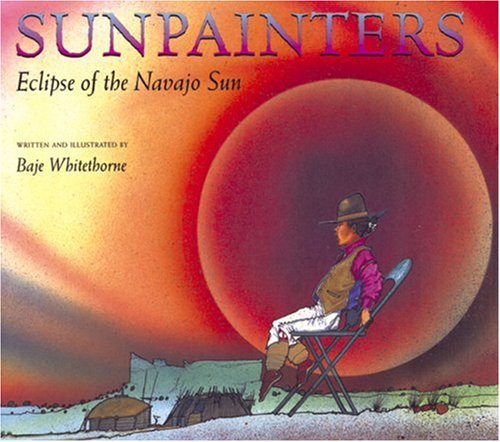
Students and the entire Navajo school staff have read Sunpainters: The Eclipse of the Navajo Sun. After reading the story, students identify main ideas and concepts. Annelle Butler, a teacher at Spicer elementary located in north Texas helped me to revamp this concept to include a focus on complex text. Ms. Butler serves a very diverse student population, with over 14 languages represented in her classroom last year. Makerspace served to help Ms. Butler meet the needs of diverse learners. Students complete a KWHL chart to identify main ideas and themes.
A Navajo cultural teacher working with me, has weaved Navajo teachings into literacy activities to center on an understanding of K’e – The Kinship System. After developing a strong understanding of content, students then extend research as they fulfill a makerspace project based learning activity using challenge cards. After making an artifact, students will write and reflect on their makerspace design process, utilize informational text, and add content to their personal journals.
Making Through 4 STEAM Career Lens
The concept of making using a purposeful instructional design, can help diverse learners bridge the academic gap between the arts and the sciences. How does a purposeful design help? Purposeful design adds a focus to the design process, which aides in students knowing how to direct student-led passion projects.
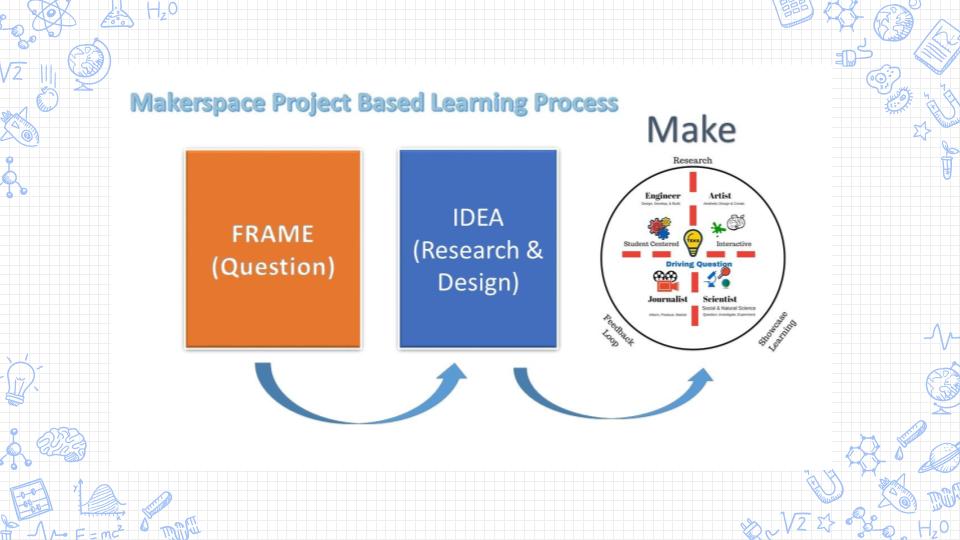
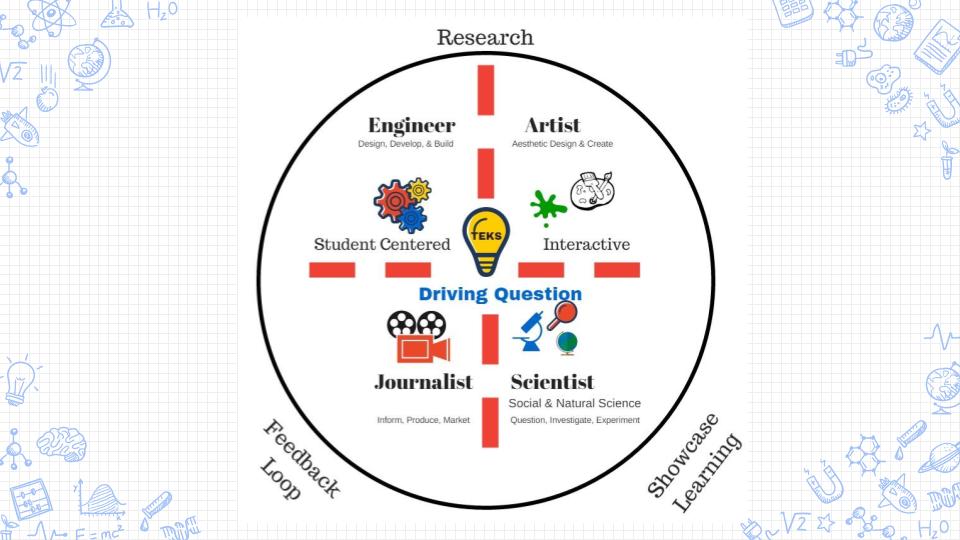
Such a process is rooted in research, but often schools fail to understand the importance of purposeful design. It serves to provide enrichment toward classroom content centering around a central question. In this case, students are posed with the following question.
How does elements in the Sunpainters: Eclipse of the Navajo Sun represent K’e?
I worked with teachers during two online professional development training using Zoom and a face to face 3 hour training. Traditional Navajo beliefs center on the elements. The sun and moon are powerful deities in Navajo culture. The sun controls and regulates the universe, while the moon controls and regulates the earth. As a result, we will be honoring traditional beliefs indoors during this sacred time. Afterwards, students will participate on a makerspace event to reflect on activities during the last week through the lens of a scientist, journalist, artist, and engineer. Students will be presented several challenge card activities and will be encouraged to create their own makerspace challenge card. A representative of challenge cards are located below.
Students will showcase makerspace products in multiple community events during the next month. The program serves to be a model to other organizations. Teachers will continue to learn how to design makerspace challenge cards with me throughout the school year. In addition, students will reflect in writing journals on their design process. Additional activities will include weaving, sash belt looms, and other traditional Navajo arts.
Papert, S. (1999). Papert on piaget. Time magazine, (p. 105).


 Dr. Jennifer Miller-Ray