Month: April 2018
-
Assessment for Learning Vs. Assessment of Learning
Assessment is an important component toward determining the success of curriculum, or learned curriculum. While I agree that it is horrible to witness what we see in our public school systems, a drill and kill approach toward learning, I feel that many leaders are missing the point. I wonder what would happen if states would just administer a pretest at the start of the school year to measure retention or what was learned as a result of the previous year? Leaders could then concentrate on instructional approaches toward closing and narrowing the gaps through strong vertical and horizontal alignments and creative teaching approaches.
Is the current system failing our students, our teachers, our parents, our future employers?
Yes, we can probably all agree by now that the current system has failed our children. While there are many overreaching circumstances influencing the direction of the current school system, we cannot just ignore the importance of assessment. Assessment should not be treated as a four letter word among the education community. The problem is we are holding assessment as the end all be all. Our approach is currently failing students because assessments must be followed by high-quality, corrective instruction designed to remedy whatever learning errors the assessment identified (Guskey, 1997).
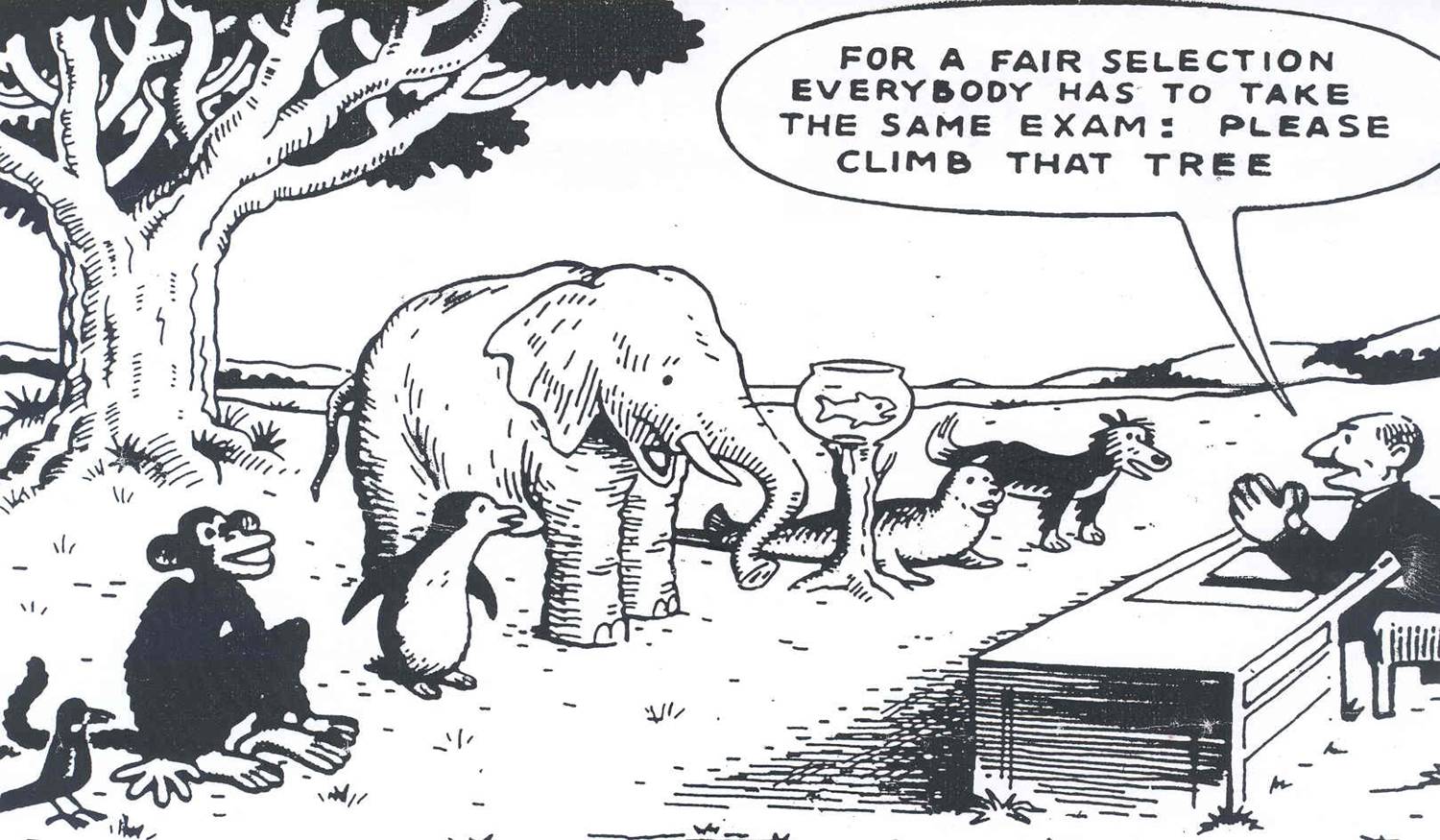
A friend and leader at a university located in north Texas framed the problem with the current situation recently. Her ideas and frustration are not unique to this area. She put it this way: “What the current high-stakes assessment system approach does in truth is ROB our children of time to process and learn so much more than they are being exposed to. If you take a good look at the curriculum, you see developmentally inappropriate curriculum tested and also lots of little stuff that in the long run is not very important or relevant. Also, we psychologically damage kids who don’t test well by sending the message they aren’t “good enough.” That is a crime. I’m not saying let them get by without learning, but start where they are and go from there, not where they “should” be”.
Does this mean that we have no assessment?
Of course not. Our approach toward assessment is misguided. Cobb (2011) shares that “teachers accomplish accountability with daily, authentic, practical assessments that inform instruction” (p 193). Could alternative assessment approaches better serve us? Couldn’t we capture learning via authentic tasks and products throughout the year to show improvement through an alternative approach? How could we improve our system by trusting teachers with our accountability system, not large companies? Perhaps the standardized test could only serve as a guide at the start of the year with the teacher mapping out an instructional program and assessment plan using alternative approaches. Some ideas can be found below:
https://ctl.yale.edu/Formative-Summative-Assessments
https://radicalscholarship.wordpress.com/2017/06/22/rethinking-literacy-and-all-assessment/
Guskey, T. R. (1997). Implementing mastery learning (2nd ed.). Belmont, CA: Wadsworth.Cobb (2011) Reading Assessment: Looking Backward, Living in the Present Climate of Accountability, Crafting a Vision for the Future In J.B. Cobb, & M. K. Kallus (Eds.), Historical, Theoretical, and Sociological Foundations of Reading in the United States (pp. 552-580). Boston, MA: Pearson/
-
Reflective Teaching ~ Exploring My Makerspace Literacy Research Approaches and Classroom Practice
Currently, I teach six graduate education courses at Sul Ross State University, which is a small rural university serving 898 graduate students and a little over 2,000 undergraduate students. The institution is a Hispanic serving institution, serving low income students (Jenkins, et al., 2017). I am working with many rural schools in the Big Bend area to include Presidio ISD. Presidio ISD is a STEM school, and serves a population of 1,350 students to include demographics of 96.6 % Hispanic students and 93.4% economically disadvantaged students (2015). Presdio ISD is located on the Rio Grande river, located on the Texas-Mexican border. In addition, I am working with Maathon ISD, which is a rural district serving over 70 students to include a demographic population of 67 % Hispanics and 87 % economically disadvantaged students (2015). I am also working with several districts in the Trans-Pecos area.
My learning goals this academic year is to grow as an educator and continue improving my Ph.D. research initiatives at the University of North Texas investigating makerspace literacy environments that centers around a project-based learning 4 career STEAM model targeting elementary and middle school programs. My knowledge regarding the reading process has definitely changed and improved this semester. Perhaps the most significant change includes reevaluating my approach to really center on balanced literacy approaches that really think about transactional theory in action during professional development and instructional design approaches. Transactional theory centers on “how readers respond to the books that engage them and how these experiences can be enacted in classrooms” (Galda, 2013, p. 6). Transactional theory is rooted in Vygotsky’s social constructivism and principles of language and cognition, “which centers of teaching reading and writing highlighting creation of environments and activities in which students are motivated and encouraged to draw on their own resources to make live meanings” (Rosenblatt, 2013, p. 148).
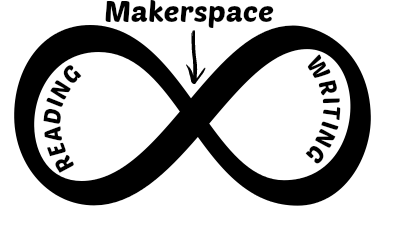
What will I eliminate in the future? I will eliminate some of the STEM quantitative measures I have used in the past. These instruments were only used to show interest and attitude toward STEM and never measured the impact on the overall impact of literacy. Previously, I would give this instrument before and after a STEM makerspace camp or at the beginning of a semester and at the end of a semester to gauge interest. I utilized the makerspace project-based learning model and only measured the impact of interest. The model did incorporate reading prior to the makerspace PBL and a written reflection after the experience. The pre and posttest utilized in two published studies found statistically significant findings but failed to measure the impact on reading and literacy. The learner would take the STEM Semantic pre-test, read text from their content area, participate in a KWLH 21st century learning activity, participate in a makerspace project-based learning activity using challenge cards mapped to curriculum, and reflect via writing about the experience. At the end, learners would take another post-test, the STEM Semantic survey. I have not really considered the empirical design approaches to include journaling during the entire makerspace process and/or video recordings to include in portfolios in research approaches. In the past, I have used only quantitative measures to gauge student or teacher interest and confidence levels pre and post over a period of time. While the instruments we used at the University of North Texas are widely accepted as strong and valid instruments, I now realize that a mixed method approach to include journaling throughout the experience and video interviews and reflections would add further depth to capture the impact of the STEAM makerspace challenge cards before and after literacy events. In addition, I feel this would really add to the field of sociolinguistic issues discussed this semester. I now have a stronger understanding on how to leverage native language and family cultural heritages in the makerspace model to not only improve literacy in English Language Learners but also to value the funds of knowledge to this process.
How can this approach help increase literacy opportunities for English Language Learners? First, I need to strengthen the collaborative dialogue, which I feel is strong in the KWLH activity. However, I can improve the scaffolding of my model to include previewing a picture book, vocabulary discussion, incorporating a story map, repeat reading of the story, compete the KWHL activity, and then encourage discourse after the makerspace activity. In addition, I can encourage video procedures and or reflections throughout the makerspace process. This will provide a visualization component that others may find beneficial and highlight the impact of the activity. Repeating readings can be used to measure fluency. The makerspace PBL activity using the challenge card concept could also include visualization to incorporate sociolinguistics highlighted in this course.
Tan, Barton, & Schenkel (2018) describe the impact of “meaningful and prolonged engagement toward focused complex projects through making experiences and found that children’s rich funds of knowledge anchored in children’s existing social networks provide community enthnography as a pedagogical approach (p. 77). Bringing in the “community wisdom” through makerspace activities brought about rich conversations that can really leverage experiences connected to curriculum in their own community (Tan, Barton, & Schenkel, 2018, p. 81). Range & Schmidt (2014) highlight the importance of schools and community organizations to tap into prior knowledge in makerspace activities and suggest that “students drive the process of designing projects and soliciting makerspace community for help” (p. 8). While I agree this is true, I still think many students need facilitation of such projects through a focus that may connect to core curriculum content, showing that topics can be extended to real world scenarios relevant to their community.
In conclusion, this course has helped me to really improve my understanding on how to better design literacy instructional design approaches to incorporate a large focus that centers on the transactions of the reader, text, language, culture, authentic making design process, writing, and reflection. I hope to revamp my approaches to really center on how such creative processes might not only engage interest in STEM but also build to improve cognition approaches toward multiple literacies in a mobile makerspace research environment that investigates reader response theory, or transactional theory
Galda, L. g. (2013). Learning From Children Reading Books: Transactional Theory and the Teaching of Literature. Journal Of Children’s Literature, 39(2), 5-13.
Jenkins, R. W., Stedman, S. W., Teusher, D. D., DeLaGarza, H. R., Acosta, A., Anwar, S. J., Paredes, R. A. (2017). Texas Public Higher Education Almanac.
Marathon ISD, (2015) Retrieved April 13, 2018 from https://schools.texastribune.org/districts/marathon-isd/marathon-isd/.
Presidio ISD. (2015). Retrieved April 13, 2018, from https://schools.texastribune.org/districts/presidio-isd/.
Range, E., & Schmidt, J. (2014). Explore, plan, create: Developing a makerspace for your school community. School Library Monthly, 30(7), 8-10.
Rosenblatt, L. Transactional theory of reading and writing. In J.B. Cobb, & M. K. Kallus (Eds.), Historical, Theoretical, and Sociological Foundations of Reading in the United States (pp. 13-66). Boston, MA: Pearson.
Tan, E., Barton, A. C., & Schenkel, K. (2018). Equity and the Maker Movement. Science and Children, 55(7), 76-81.
-

What is critical literacy?
Morris (2011) suggests that critical literacy fosters a global approach toward meeting equipping learners towards a greater understanding of literacies to include not only “linguistic, visual, aural, spatial, emotive, and gesture forms but to also recognize literacy as it is applied in a historical and cultural context” (p. 293). Ensuring that all literacies associated toward becoming a global citizen require us to consider how we facilitate future-ready instructional outcomes that are not a standardized process, but instead encourage creativity in not only the learner but also as an instructional designer or artistic teacher. Critical literacy requires an understanding toward facilitating a community that applies social justice. Nicolini (2008) suggests that such approaches “demand discussions regarding ethics and government” (p. 77). Dialogue facilitates an understanding of injustices, clairity, and empathy, which builds knowledge towards environmental, economic, pedagogical, political, social, and cultural transformations, or critical literacy (Morris, 2011). Why is this important?
Blotz, Henriksen, & Mishra (2015) show that empathy is in decline and is an important characteristic of creative thinkers. We often talk about this as a skill set that is in decline and needed. However, strategies that encourage empathy and creativity are rarely provided in professional development trainings. Perhaps it is due to a lack of understanding of pedagogy and anthology to center on what critical literacy is, how it is important, and what we could do to facilitate learning in this area. Perhaps Morris (2011) said it best, “critical literacy attempts to make clear how education, under the guise of accountability schemes, is presently being reduced to domesticating factories of high-stakes testing linking standardized assessment and curriculum that undermines the possibilities for a democratic culture in numerous ways by deskilling teachers an eliminating creative processes and projects” (p. 298). This minimizes our ability to rely on the importance on cultural influences and historical approaches which produces new knowledge.
Boltz, L., Henriksen, D., & Mishra, P. (2015). Rethinking Technology & Creativity in the 21st Century: Empathy through Gaming – Perspective Taking in a Complex World. Techtrends: Linking Research & Practice To Improve Learning, 59(6), 3-8.
Morris, D. (2011). Critical literacy: crisis and choices in the current arrangement. In J.B. Cobb, & M. K. Kallus (Eds.), Historical, Theoretical, and Sociological Foundations of Reading in the United States (pp. 13-66). Boston, MA: Pearson.
Nicolini, M. (2008). Chatting with Letters: Developing Empathy and Critical Literacy through Writing Communities. The English Journal, 97(5), 76-80.
-
Round as a Tortilla Makerspace STEAM Literacy Event
Moll, Amanti, Neff, & Gonzalez (2011) describes the importance of education programs leveraging a child’s fund of knowledge through connecting with families and involving a holistic approach toward learning activities and learning environments. Makerspaces can serve as a quality environment to facilitate activities to incorporate balanced literacy approaches to meet the needs of diverse learners. Range & Schmidt (2014) suggests “successful makerspaces, particularly in education environments, balance practicality with creativity and collaboration to serve the needs of the school community” (p. 8). Tan, Barton, & Schnekel (2018) highlight that “children’s funds of knowledge were recruited by engaging them in community ethnography, which informs of the making design process” (p. 77) via a makerspace environment. The purpose of this activity is to align a purposeful makerspace activity to topics explored in Pre-K and kindergarten using the book by Thong & Parra (2015), Round as a Tortilla.
Repeated Reading Strategy
Day One
- The teacher will introduce the, Round is a Tortilla, to their students. The teacher will show the front cover, back cover and conduct a picture walk. Remember to read the story enthusiastically, and with expression.
- After reading, ask why questions to allow time for students to make inferences and to measure understanding of story events.
- Begin the a KWHL: What do we know? What do we want to know? How will we find out? What have we learned? How will we find out?
Send home a Round as Tortillia Makespace STEAM Event letter to invite parents to the school library and to participate in making items from the story. Include 4 challenge card ideas in the letter with a link to the video. Invite the makerspace community. Your librarian should be able to help you facilitate this process.
Day Two
The teacher will conduct the second read-aloud to enrich reading comprehension and provide further engagement opportunities through a book talk, and highlight vocabulary.
- Add more frequent questions.
- Ask children questions to think beyond the story with completing a KWHL, What have we learned?
- Introduce 4 STEAM Makerspace Challenge Cards and Makerspace activities. Here are some ideas. Encourage students to make their own challenge card but remind students that cards should connect to elements found in the story.
- Journalist: Be a storyteller and make a story about shapes in your community.
- Scientist: Be a scientist and investigate the process of making masa and round tortillas. Be a computer scientist: Make a game with squares and other shapes.
- Artist: Make a weave of shapes to use as a rectangular flag as represented in the story. Make an oval necklace.
- Engineer: Engineer a sail for a boat that you make.
Day Three: Makerspace STEAM event in the library. Students will make items that represent elements in the story with their parents and makerspace community.
Repeat the reading of the story. After the activity, ask the children, What have you learned?
This activity connects to Moll’s ideas of knowledge as it involves the child’s entire community in the literacy process. Children can learn how their culture connects to classroom topics through the art of making. Elders can help children learn how to weave, code, build, and apply STEAM principals through everyday activities.
 Dr. Jennifer Miller-Ray