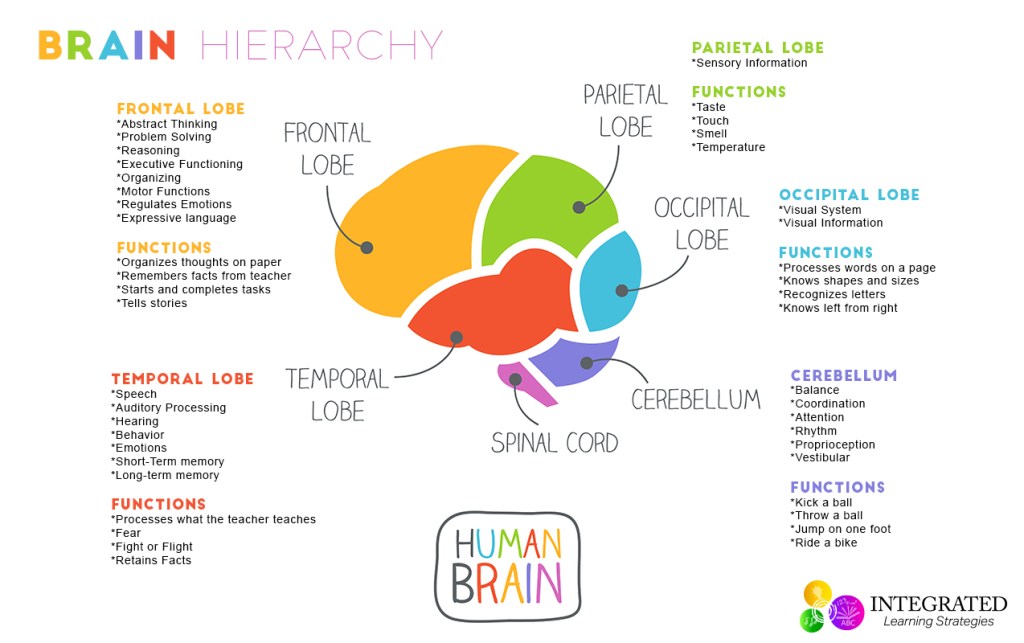
Nassaji (2003) describes reading as a “multivariate skill set that involves a complex and integrated combination of cognitive processes ranging from low level processing abilities involved in decoding a variety of mediums, visuals, and print and encoding visualizations to higher level skills of syntax, semantics, discourse, and text representation of ideas with a reader’s global knowledge” (p. 261). Working memory is central toward improving reading skill sets according to literature. Gabe (2009) provides a direct link to lower level cognitive skill sets and working memory, to include the ability to suppress information, the “syntactic and semantic processing, such as decoding, that stores relevant information to assist reading comprehension,” and the ability to use text information to build a representation of main concepts (p. 35).
Teachers can use strategies to improve lower level processing to assist early readers and ELL learners with phonetic and visualization approaches. An example of this can be found in the Rosetta Stone application. When evaluating a learning application, it is important to look for apps that can improve lower level processing. Rosetta Stone, uses phonetic principals with a strong audio component and visuals when introducing letters in their beginning modules. Other alternative applications like Memrise sometimes lack all of these elements. Memrise, for example, includes an audio component to assist with phonetic principles to improve lower level processing but fails to use visualization to assist with a stronger cognitive word association compared to Rosetta Stone. In essence, working memory is the vehicle in which lower level processing assists with the reader automatically comprehending communications using skill sets to include not only letter-sound correspondences but also word recognition as well as grammar knowledge and structures (Grabe, 2009).
Higher level processing “extract explicit and implicit information from text and integrate this text-based information with prior knowledge” (Hannon, 2012, p. 125). Cognitive skill sets associated with higher level processing are more controversial. In fact, little research exists exploring multiple processing levels in advanced reading (Nassaji, 2003). Grabe (2009) provides a strong example of the complex cognitive skill sets required during higher level processing to include inferencing, suppression of information, restructuring to summarize information, linkage to prior knowledge network, and the ability to overlap elements. These outcomes rely on a higher level processing ability to create a mental representation of knowledge, improving reading comprehension and utilizing both working and long term memory.
Literature highlights the need for continued research in this area. Grabe (2009) provides a solid argument toward the importance of teachers designing tasks to assist students toward creating a situation model and text model to improve reading performance to include activities that promote discourse, constructivist strategies like the KWHL strategy to tap into prior knowledge, inferencing and goal setting.
In my past experiences, we incorporated the SCAN tool to utilize discourse, encouraging teachers to design lessons that have student take on a perspective to defend after reading text. For professional development, teachers were introduced to a real world problem and event. Teachers then took on a role to solve a science problem thinking as a corporate representative, a scientist, a concerned citizen, or an environmentalist. We used the discussion tool to teach how to integrate technology to assist with a discourse activity. This assisted in teachers understanding deep scientific concepts that related to the mission. Some of this can be seen at http://scan-werecriticaltothinking.blogspot.com/2012/03/do-you-walk-walk.html.

Grabe, W. (2009). Reading in a second language: Moving from theory to practice (pp. 21-58). New York: Cambridge University Press.
Nassaji, H. (2003). Higher–level and lower–level text processing skills in advanced ESL reading comprehension. The Modern Language Journal, 87(2), 261-276.
Hannon, B. (2012). Understanding the relative contributions of lower‐level word processes, higher‐level processes, and working memory to reading comprehension performance in proficient adult readers. Reading Research Quarterly, 47(2), 125-152.
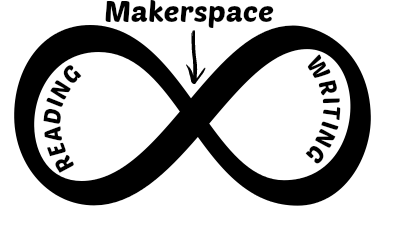

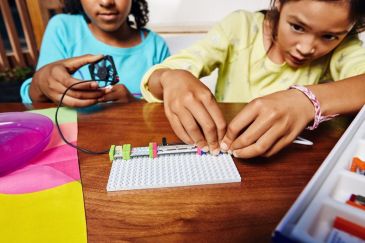 Social constructionism “relies on the centrality of language to mediate what people come to understand about their lived experiences” (Avermann, 2011, p. 205). Constructionist environments support “active learning” approaches in which learners are engaged in building their own public objects or artifacts. Active learning emphasizes cognitive processes occurring during the actual construction of the object. The public nature of the final object or artifact is also understood to be important (Beynon & Roe, 2004). The “maker movement emphasizes learning through direct experiences, hands-on projects, inventions, and is based on a constructionist learning theory even if members and advocates of the movement are unaware of the theory” (Stager, 2013). Papert (2000) advocates that Piaget’s belief of all learning takes place in discovery is accurate. However, Papert extends this idea to suggest that setting learners “to the task of re-empowering the ideas of being learned is also a step toward re-empowering the idea of learning by discovery” (p. 723). Papert (1999) underscores the importance of Piaget’s theory of constructivism and the nature of knowledge. Challengers of Piaget’s constructivism often refer to experiments demonstrating knowledge acquired by infants. However, Papert stresses “Piaget as a giant in the field of cognitive theory, the difference between what a baby brings and what the adult has is so immense that the new discoveries do not significantly reduce the gap but only increase the mystery” (Papert, 1999, p. 105). Papert’s Knowledge Machine” introduced the world to a new theory of learning, constructionism, which “synthesized revised insights into human development, systems theory (cybernetics) and how we think about learning (epistemology)” (Maser, 2013). Technology based modeling and methods of teaching with technologies deliver alternative methods to teaching, providing learners with choices that engage the learner in an improved learning experience (Burbaite, Stuikys, & Damasevicius, 2013). While at MIT, Papert developed Logo, designed to introduce children to programing and robotics as early as 4th grade. Children received instant feedback from a real and physical response to their creation using technology. Papert envisioned robotics as being extremely influential to children at a young age. Learners perform higher when engaged in an activity that is meaningful to them, and robotics along with programing languages encourages curiosity and experimentation beyond the actual syntax (Pierce, 2013). Papert led many research projects to study the effects of constructionist theories with at risk populations and in high-risk environments. These projects attempted to build an alternative approach to the learning environment. Despite obstacles, students proved to be successful. Experiences from Papert’s work towards building a community of learning centered on constructionism continues to guide the future design of learning environments (Stager, 2013).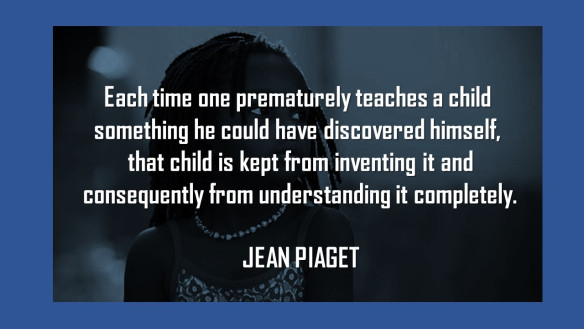
 Dr. Jennifer Miller-Ray