Author: Dr. Jennifer Miller-Ray

  • Learning to Read

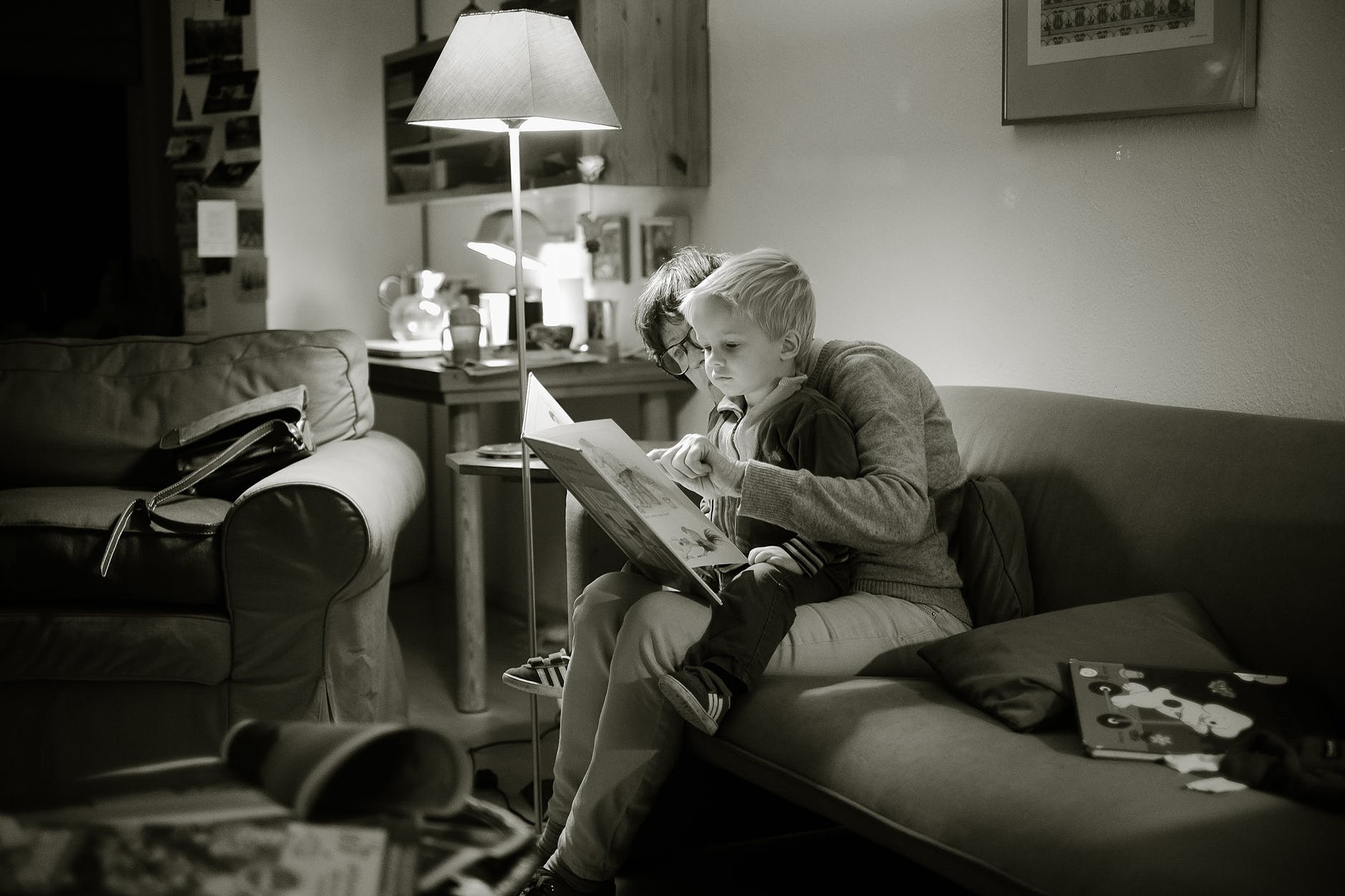
    How did I learn to read? This is a good question to consider when thinking about the process of reading. Teresa Horner, a middle school librarian aide, taught me how to read at a very early age. Mrs. Horner is also my mother and avid reader, which enriched my opportunities toward becoming a successful reader. My mother took a big interest and engaged me every day with rhyming and song. Before I could read, I remember memorizing Baring-Goud & Baring-Gould’s Mother Goose (1967) nursery songs that we would sing together. Later we graduated to Dr. Seuss’s children books and rhymes. I learned to listen while other read to me and to interact with the reader via song. The public library always offered a summer reading program and my mother would escort all four of her children to the program each summer. As a kindergartner, we were able to have our parents read to us to sign off on our program. Participants were rewarded in some way, but I do not remember what the reward was. We were encouraged to read 10 books each summer, attend a weekly meeting, and participated in a party afterwards. As an early reader, we participated in literacy circles, met colorful authors and guest readers, and created artistic representations of the books we read during public library programs. I began to learn to read early in life, 4 to 5 years of age, with learning the alphabet. As the textbook mentions, pictures and song influenced both my ability to engage and comprehend readings. My first grade teacher, Mrs. Fortune, provided us with books that we would take home to read. They were very simple and required parent involvement. As we progressed to second, third, fourth, and fifth grade, I remember my mother encouraging us to read more. As a family, we would read chapter books to include the Boxcar Boys, Nancy Drew Mystery Stories,  and Little House on the Prairie. Again, she took me to the public library each week and we would check out books together as a family. I don’t remember my school librarian at all and don’t remember the school library being a fun learning environment. The public library was always of interest to me.

    reading-77167.jpeg

    Baring-Gould, W. S., & Baring-Gould, C. (1967). The annotated Mother Goose: nursery rhymes old and new. New American Library.

    Cobb, J. B., & Kallus, M. K. (2011). Historical, theoretical, and sociological foundations of reading in the united states. Boston, MD: Pearson Education Inc.


  • Reflection on Reading in the 20th Century


    What is the difference between the look-say and the phonics approaches to teaching reading. What did the first grade studies tell us about these methods?

    Mitford Mathews’s reading method words-to-reading, or look-say, introduces a large amount of vocabulary words as sight words to the reader. For instance, the teacher would introduce a letter and then provide a list of words and ask the learner to “note or listen for similarity between sounds of letters in each word” (Cobb & Kallus, 2011, p. 16). Matthews look-say method was widely accepted for most of the 20th century. After sight words are introduced, the student would be introduced to analytic phonics, or generalizations, which were applied to a particular sound correspondence.  The idea that readers would respond more rapidly as they recognize whole words, or look-say, rather than a letter-sound relationship.

    Phonics approaches to reading teach the student the sound to say each time they observe a symbol, or a sound to a letter approach. The learner is then motivated to decode words that they encounter. Prior to the first grade studies, reading began in first grade. Sight words, or the look-say method, was used, and analytic phonics introduced. Vocabulary was tightly controlled in grades 1-3, and children worked in small groups. However, the first grade studies highlighted a need to revamp the entire education system, as Chall found that an early code emphasis would be beneficial toward word recognition at an earlier age. As a result, a greater emphasis and intensity was placed on phonics at an earlier age. A change in curriculum was implemented. No longer did schools employ the Dick and Jane approach in first grade. Students were introduced to a wider library collection, to include a focus on children’s literature, with little vocabulary restriction.

    Look at the examples of texts in the table on p. 29. What was the underlying assumption about how reading should be taught for each type of text?

    Each example provides an opportunity for educators to explore how to best help a student learn to read, not to to focus on teaching a student to read, an idea expanded upon by Frank Smith (1971). Smith valued the importance of literacy experiences on cognition and stressed the importance of value texts for early readers.  He also suggested that a mistake was an opportunity to explore the inner workings of the child’s mind, with a focus on cognitive processes and strategies. Each example provides a strategy using value text to assist the teacher. Example one employs patterns, language rhyming,  so that the early reader can predict what is coming next and then understands the meaning. It reminds me of the same principles and strategies that we currently utilize when using a program like flocabulary. It is a great way to introduce vocabulary to students. Students are engaged and can predict what is coming next using language rhyming. The other two examples rely on high frequency words and are the best approach toward engaging beginning readers. Example two utilize rhythm patterns, repetition, and rendition so that the learner can interpreting and interacting with text. Decoding text, the third example, utilize phonics and is not the preferred choice. A beginner can learn one or two words from repetition but do they really know what the words mean? Example one incorporates an improved approach because it encompasses a language rhyme and patterns to help the emerging reader make sense of the words read. It is interesting to me that Smith (1971) warns of the dangers of relying heavily of visuals when so much screen time is placed in front of our students in K-12 environments.

    How does the notion of integrated curriculum relate to the ideas proposed by sociolinguistics?

    Both rely on the premise that perspectives, rooted in cultural heritages, should be valued and contribute toward improving knowledge acquisition through a global lens. Both examples create a more meaningful approach, as differences are valued and not seen as a shortcoming. For example, integrating curriculum can break down barriers between core content areas so that diverse learners can make sense of how each content area contributes to the “real world”. Sociolinguistics adopts this same concept, as the idea values dialects. Integrating dialects exposes learners to new cultures and communities of thought through perspectives. Learners can learn dialects from each other, and as a result, learners develop a better understand of how language differences can contribute toward a better understanding of community. Both approaches create a more globally competent student. In addition, both integrated curriculum and sociolinguistics adopt the idea that reading and language is best understood when put to use for another purpose, learning activity, or event.

    Cobb, J. B., & Kallus, M. K. (2011). Historical, theoretical, and sociological foundations of reading in the united states. Boston, MD: Pearson Education Inc.

    Smith, F. (1971). Understanding Reading: A Linguistic Analysis of Reading and Learning to Read. New York: Holt, Rinehart and Winston.


  • Homeschool Cover-Up Of Dropout Problem

    Heather's avatarBecoming Worldly

    So this PBS article is an exposé on how the state of Texas is cheating on its dropout numbers to the point of where some schools have listed zero dropouts. While this finding is understandably embarrassing to Texas education officials, and likely infuriating to Texas parents and students who have worked hard to have that diploma and rightly believe it should mean something, this brings up another issue closer to home for me: homeschooling is being used as the preferred method of cheating.

    Obviously this is not okay. It’s a huge problem to have homeschooling serve as this kind of a loophole. It reduces credibility and sends too many “homeschooled” students out into the world who can both be expected to reflect badly on the concept of homeschooling, and consigns too many young people to struggle as human beings with a sub-par education.

    It is unconscionable that underperforming public schools…

    View original post 865 more words

  • Literacy in Making: Purposeful Makerspaces Connect to All Disciplines

    Many people connect the makerspace movement to STEM (science, technology, engineering, and mathematics) activities through a project-based learning approach. As many are aware, the makerspace movement, founded by Dr. Seymor Papert’s (1991) theory of constructionism, is not a new learning theory or approach. Many schools and programs fail to really embrace the full power of Dr. Papert’s learning theory, which centers around social and intellectual practices to include the skill sets of problem solving, engagement, sharing expertise, and literacy  (Tucker‐Raymond, Gravel, Wagh, Wilson, Manderino,  & Castek, 2016).

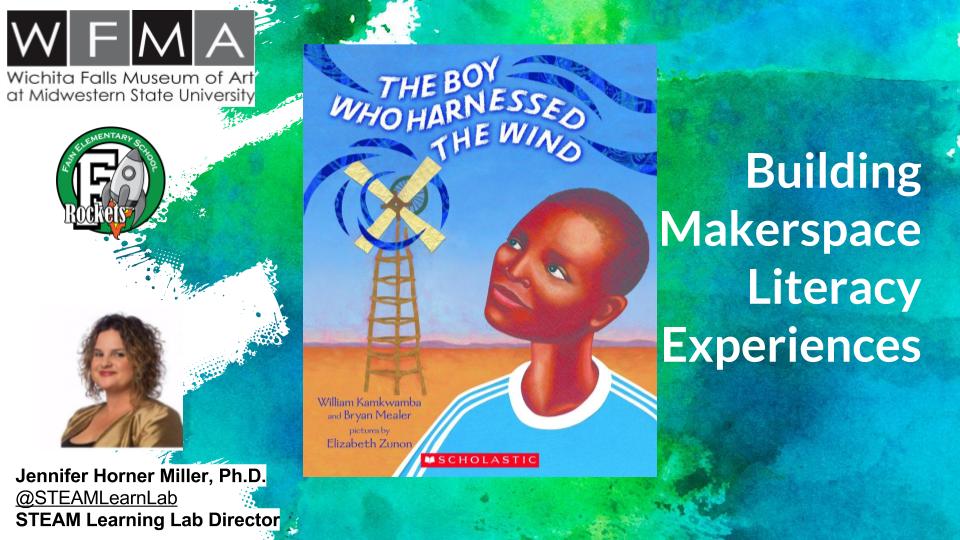
    Building Makerspace Literacy Experiences 10_27 (7)

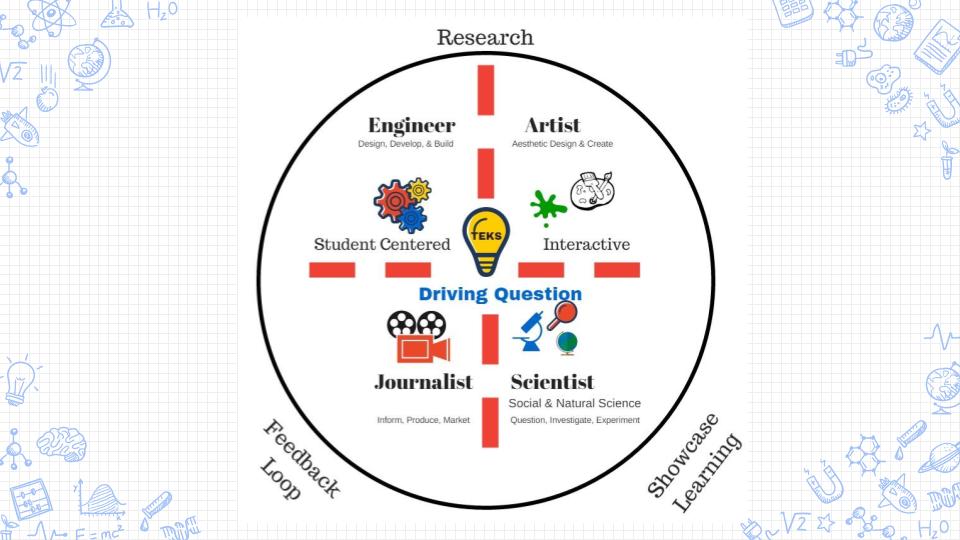
    A recent example of this in practice was provided to elementary teachers during a workshop in north Texas recently. Teachers read the book, The Boy Who Harnessed the Wind.  This book was selected as there is both a chapter version and young readers edition of the true story.  Also, William’s story connects to so many STEM principles that we often see in a makerspace. After reading the story, teachers identified main ideas and concepts, inferences were made, and filled out an upgraded KWL 21st Century Style chart that I have found to be very helpful from Silvia Tolisano (2015). Afterwards, teachers made an artifact serving 1 of four career STEAM roles using the following challenge cards. Afterwards, teachers would reflect via writing.  A link to the presentation and challenge card concept can be located below.

    The following week we implemented this strategy in a Navajo school in northern Arizona. Students were very eager to learn about topics presented and built windmill prototypes and took on a makerspace project using the challenge card concept. Cards were adapted to bring in diversity topics of the Elements, to honor Navajo beliefs and culture.  Navajo students will share their project soon with a larger community.

    Papert, S., & Harel, I. (1991). Situating constructionism. Constructionism36(2), 1-11.

    Tucker‐Raymond, E., Gravel, B. E., Wagh, A., Wilson, N., Manderino, M., & Castek, J. (2016). Making It Social: Considering the Purpose of Literacy to Support Participation in Making and Engineering. Journal of Adolescent & Adult Literacy, 60(2), 207-211.

  • Leading as a Literacy Principal

    As an educator, I have always been passionate about literacy and have continued to seek out new learning. My literacy thinking has been refined as I’ve read books by Regie Routman, Donalyn Miller, Boushey and Moser, Richard Allington, Fisher and Frey, and now Jennifer Allen. Becoming a Literacy Leader is a goldmine of a book […]

    via Leading as a Reading Principal — Reading By Example

  • Understanding Diversity Through Makerspace

    Understanding Diversity Through Makerspace

    Makerspace environments not only foster innovation, collaboration, critical thinking, and problem solving, activities strongly support cognitive pluralism and serves as a platform to create unity in diverse education systems. Leaders in education must begin to recognize that learners may have different cognitive architectures, therefore being disposed to reason differently or form and revise beliefs and desires differently (“Cognitive pluralism – Oxford Reference”, 2017). In other words, learning is not a standardized process. Yes, it is important to measure progress, but we must recognize the process of doing so is much more complicated than just charting a biased data set. As Time magazine’s Rana Foroohar (2016) correctly points out, “big data comes with the biases of its creators.”

    Makerspace Encourages Communication, Discourse, and Conflict Resolution

    Makerspaces serve to promote a stronger cultural understanding through the art of making. Community discourse encourages an exchange of cultural perspectives. As each learner attempts to apply the design process of a makerspace project based learning activity, students share research perspectives, debate on approaches, learn about other cultural perspectives, design an make an artifact within a community, and receive feedback from peers. If teachers encourage a written reflection about the process of making after makerspace, students can learn conflict resolution skill sets, a vital 21st century skill. Johnson, Johnson, and Tjoosvoid (2006) describe strategies to encourage skilled disagreement.  When students participate in claim evidence reasoning activities, “students learn that criticizing an idea is not criticizing those who propose ideas-that their worth as human beings is separate from their ideas” (Koppelman, 2014, p. 60).

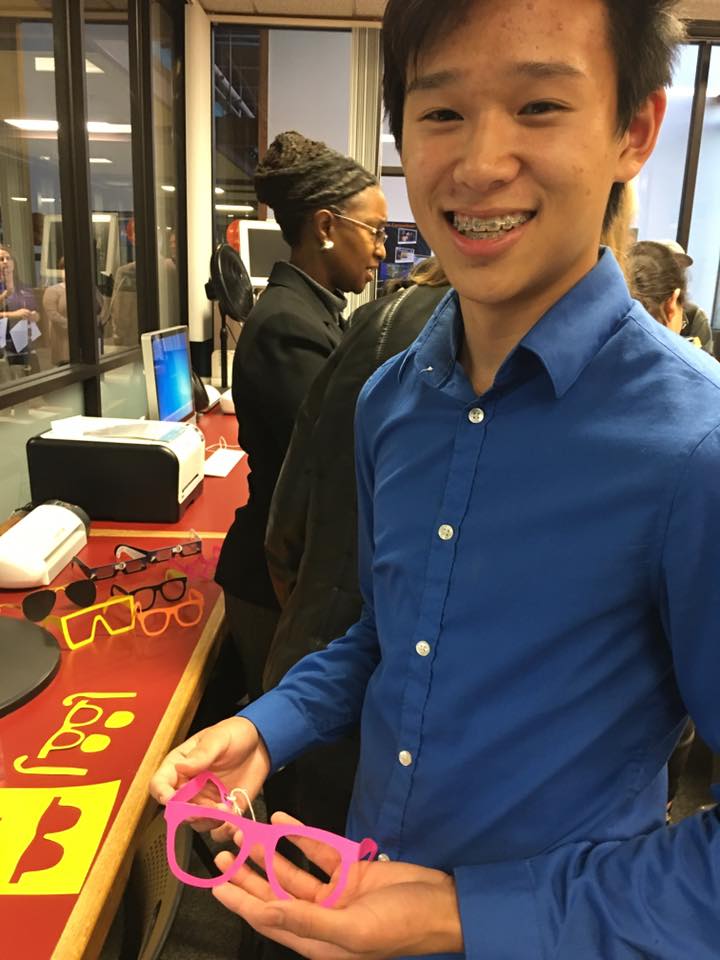
    14922235_10154426388370743_2183760338966339176_n

    Makerspaces Encourage Self-Confidence for Diverse Students

    We know attitudes can influence success or failure in learning. Learning may not happen easily unless students have positive attitudes toward learning the content. Makerspaces using a four station approach, in which students solve the problem as an artist, journalist, scientist, or engineer, may offer the ability for diverse students to select a comfortable and safe approach toward learning. This multicultural approach serves to not only improve the attitude toward learning, but provides a strategy to improve the self-efficacy of diverse students.

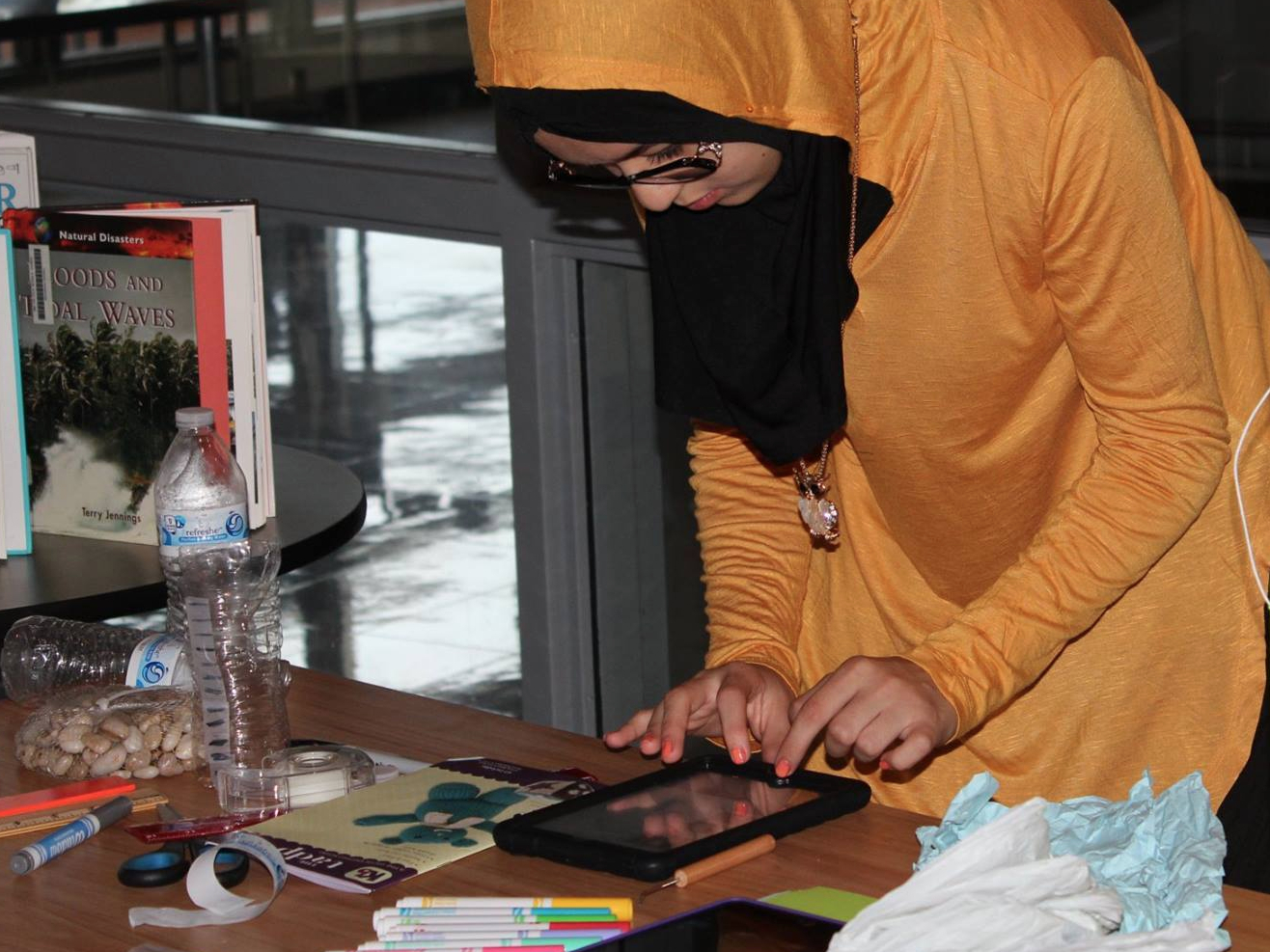
    12079958_10153520286560743_5465554661638601068_o.jpg


    Cognitive pluralism – Oxford Reference. (2017). Oxfordreference.com. Retrieved 14 September 2017, from http://www.oxfordreference.com/view/10.1093/oi/authority.20110803095622312.

    Foroohar, R. (2017). Big Data Comes With the Biases of Its Creators. Time.com. Retrieved 14 September 2017, from http://time.com/4477557/big-data-biases/.

    Koppelman, K. L. (2014). Understanding human differences: Multicultural education for a diverse America (4th ed.). Pearson.

    Johnson, D.W., Johson, R.T., & Tjosvold, D. (2006), Constructive controversy: The value of intellectual opposition. In M. Deutsch, P. Coleman, & E.C. Marcus (Eds.), The handbook of conflict resolution (2nd ed. pp. 65-85). San Francisco, CA: Jossey-Bass.

  • Celebrating Diversity and Eclipse 2017 via a Makerspace K’e Activity

    Jean Piaget stressed that “children have real understanding only of that which they invent themselves, and each time that we try to teach them something too quickly, we keep them from reinventing it themselves.” (Papert, 1999).  As I continue to collaborate with makers and educators around the world, I like many before me see patterns preventing progress. Programs and strategies often talk of innovation and creativity, but fail to create systems and processes to provide a sustained action. Unfortunately, many are missing the mark. Makerspaces can serve as a disruptive change agent that can encourage diverse learners to create, invent, and in effect develop new knowledge.

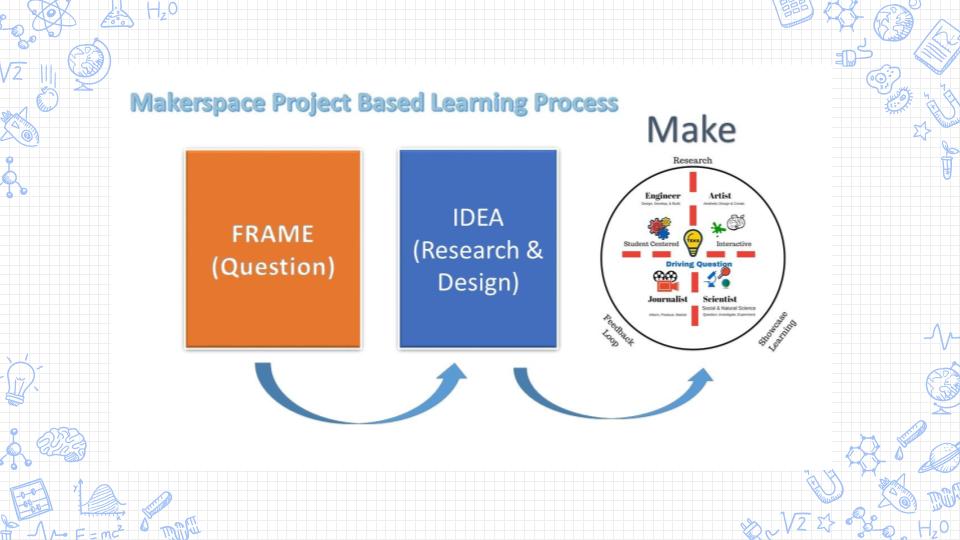
    During the last few months, I have had the opportunity to collaborate and coach a Navajo school located in northern Arizona through an Indigenous Makerspace Outreach program coordinated by NASA, the Indigenous Education Institute, the University of North Texas, and myself.  Ideas on integrating a makerspace approach continue to take shape, which began in 2012 with a joint ISTE and NASA Multiscale Magentosphere curriculum initiative. I had an idea that I developed through my PLN that took traction. I collaborated with Sandra Wozniak, Tom Chambers, and Troy Cline on a STEAM approach that utilized 4 career stations. That STEAM approach was revamped through four separate NASA and state funded programs to include multiple STEAM camps in Texas and other locations around the world, a NASA Makerspace Launch activity in Florida at the Kennedy Space Center, NASA funded Makers’ Guild professional development outreach program located in north Texas, and now a NASA funded Indigenous Makerspace Outreach program. With each new program and idea, our makerspace project-based learning process grew.

    Makerspace Connections to Literacy

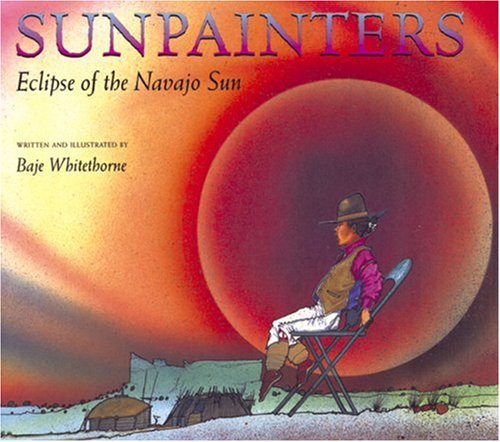
    Students and the entire Navajo school staff have read Sunpainters: The Eclipse of the Navajo Sun. After reading the story, students identify main ideas and concepts. Annelle Butler, a teacher at Spicer elementary located in north Texas helped me to revamp this concept to include a focus on complex text. Ms. Butler serves a very diverse student population, with over 14 languages represented in her classroom last year. Makerspace served to help Ms. Butler meet the needs of diverse learners. Students complete a KWHL chart to identify main ideas and themes.

    A Navajo cultural teacher working with me, has weaved Navajo teachings into literacy activities to center on an understanding of K’e – The Kinship System. After developing a strong understanding of content, students then extend research as they fulfill a makerspace project based learning activity using challenge cards. After making an artifact, students will write and reflect on their makerspace design process, utilize informational text, and add content to their personal journals.

    515OLGE4kxL (1)

    Making Through 4 STEAM Career Lens

    The concept of making  using a purposeful instructional design, can help diverse learners bridge the academic gap between the arts and the sciences. How does a purposeful design help? Purposeful design adds a focus to the design process, which aides in students knowing how to direct student-led passion projects.

    Maximizing PBL Makerspace Environments

    Maximizing PBL Makerspace Environments (1)

    Such a process is rooted in research, but often schools fail to understand the importance of purposeful design. It serves to provide enrichment toward classroom content centering around a central question. In this case, students are posed with the following question.

    How does elements in the Sunpainters: Eclipse of the Navajo Sun represent K’e?

    I worked with teachers during two online professional development training using Zoom and a face to face 3 hour training. Traditional Navajo beliefs center on the elements. The sun and moon are powerful deities in Navajo culture. The sun controls and regulates the universe, while the moon controls and regulates the earth. As a result, we will be honoring traditional beliefs indoors during this sacred time. Afterwards, students will participate on a makerspace event to reflect on activities during the last week through the lens of a scientist, journalist, artist, and engineer. Students will be presented several challenge card activities and will be encouraged to create their own makerspace challenge card. A representative of challenge cards are located below.

    Students will showcase makerspace products in multiple community events during the next month. The program serves to be a model to other organizations. Teachers will continue to learn how to design makerspace challenge cards with me throughout the school year. In addition, students will reflect in writing journals on their design process. Additional activities will include weaving, sash belt looms, and other traditional Navajo arts.

    Papert, S. (1999). Papert on piaget. Time magazine, (p. 105).

  • Cultivating Ideas via Makerspace

    Last week I was fortunate to collaborate with an amazing Makerspace community, known as the Makerspot, led by NRH Public Library Director Cecilia Barham located in north Texas. I began this blog post but failed to publish it.  Teachers not only connected with the makerspace community, they were challenged to make a product, that connected to main ideas and concepts in their content area, serving the role of a journalist, engineer, artist, or scientist.  Teachers selected an article, book, or play and began to make a product.  Afterwards, teachers shared their products or ideas to the makerspace community. Take aways included the following.

    Makerspace Centers On Community

    It is important to remember that a true makerspace is a community of makers, not relying on just one leader or participant. When a makerspace becomes a shared space of leaders sharing their craft, all students benefit. Many schools fail to understand this. As a result, the makerspace becomes a club or after school program. While this does provide many benefits, the lack of shared ownership can result in the makerspace facilitator feeling overwhelmed. In addition, when the sponsor leaves, so does the program. Perhaps, the largest issue is the lack of connection to classroom content. Connecting teachers to the space provides a platform to enrich curriculum and shared ownership.

    (more…)

  • How to Submit a Podcast to Google Play

    podbean's avatarPodbean Blog

    Podcasts are now available (released in the U.S. and Canada currently) on Google Play Music. You can submit your Podbean-hosted audio podcasts so you can be found there! Go to Google Play to submit your RSS feed. You will need to 1. Add your RSS feed, 2. Confirm ownership, and 3. Publish.

    1

    You need to have at least 1 episode published and have the appropriate tags set up in Podbean:, or , and or (Podbean supports the iTunes tags, which work for both iTunes and Google Play). Login to google and “add a podcast”. If you don’t know your RSS, simply go to Settings→Feed/iTunes in your Podbean dashboard. At the top you will see “Your RSS feed” (http://yourname.podbean.com/feed/).

    After submitting your RSS feed, you will need to “confirm email” (via the email in the RSS feed). Check for the email from Google and click on the “verify ownership” button (or…

    View original post 74 more words