How well supported does your personal theory feel? What research could you do in order to support your theory? What methods would you employ?
To best engage students, learning should be a collaborative experience, where ideas are shared, debated, and possible new perspectives formed. Online experiences must include meaningful exchanges, where clear goals and expectations of outcomes are shared. Reflections should be public. Blended approaches offer advantages, using both asynchronous and synchronous tools to build a continuing dialogue of conversation promotes active learning within the virtual world. This type of exchange can be just as effective as a face to face interaction, as long as the energy of the instructor and students continue through meaningful dialogue and conversation. In my opinion, learning is most effective when students are able to take information from a virtual environment and apply information to their physical or real world. Reflections capturing this activity and sharing the outcome to the online community via social media allows for a deeper and rich learning experience.
Interested in learning more about second life? As with any resource, it is important to investigate worlds within second life. Many locations within second life are very interactive, providing students with a simulated and collaborative experience. However, many locations lack interactive components mentioned above. The following resources are useful to instructors interested in introducing secondary students.
Second life has been around for over a decade and results from research provided in this world continue to stress the importance of collaboration within a virtual experience. However, users often find themselves lost within the environment and users often choose not to explore within the environment.
Will second life continue to be an important virtual space within the education community? Some believe that second life will be revived and given a second chance. I found perspectives on the future of second life interesting.
Further research in how to best provide choices to students regarding TBLE input and output along with the frequency of interactive components is needed. In addition, instruments measuring assessment of the virtual post secondary environment from a student perspective is lacking within the academic community. Qualitative approaches to include experimental case study approaches could assist in providing valuable insight on student perspectives regarding the effectiveness of an online learning environment.
Synchronous (i.e. Connect) vs. asynchronous tools (Forums): Which is better at fostering online learning? Why? What are your reasons and evidence for this?
Stodel, Thompson, & McDonald (2006) stress the importance of maintaining and modeling a “social and cognitive presence” within the online learning community. Results from research cited in the above study indicated that learners engaged in interactive activities focusing on synchronous activities set the stage for a deeper learning experience. Linear asynchronous activities lessened the desire of participants to engage in learning activities. Face to face video using Skype, Google Plus, Adobe Connect, or GoToMeeting activities provide an opportunity in which the learning communities can foster a deeper collaboration experience, building a highly social and interactive exchange of energy. Questioning, reflection, and activities to encourage dialogue deepen the learning experience when utilizing a synchronous approach. Instructors should rely less on the lecture format when using a synchronous tool. Again, it is important to foster interaction and social dialogue, which is easily accomplished using synchronous technologies.
Is there a place for asynchronous activities? The above study also found that a creative text dialogue used within the introduction discussion board using a poem improved the social experience within the learning community. It is important to note that advantages do exist using asynchronous tools to include flexibility and improved written communication techniques. Perhaps, asynchronous actives could embrace text based social media tools to improve the overall learning experience. Professional learning discussions are often highly engaging using social media collaboration tools such as Twitter and Today’s Meet. Searls (2012) encourages online learners to reach out using asynchronous tools along with social media can lessen the feeling of isolation. Often instructors are absent from discussion tools, which leads to an isolated learning experience.
A blended approach to online learning using a balanced mixture of synchronous and asynchronous tools is the best option to building a rich and interactive learning environment. Instructors must be present and model social engagement consistently and frequently synchronously and asynchronously. Including an organized schedule of expectations and timeline of synchronous and asynchronous tools provides structure to improve the overall effectiveness of a learning exchange.
Searls, D. B. (2012). Ten simple rules for online learning. PLoS Computational Biology, 8(9), e1002631.
Stodel, E. J., Thompson, T. L., & MacDonald, C. J. (2006). Learners’ perspectives on what is missing from online learning: Interpretations through the community of inquiry framework. The International Review of Research in Open and Distance Learning, 7(3).
Wang, F., & Hannafin, M. J. (2005). Design-based research and technology-enhanced learning environments. Educational Technology Research and Development, 53(4), 5-23.
http://academictech.doit.wisc.edu/blend/facilitate/communicate
My career as a teacher began way before the introduction of Rubrics to education. As an English teacher I was required to assess students’ writing and convert that assessment into a grade for the student. Back in the 70’s the most progressive grading method I was exposed to was giving a grade over another grade (85/95). The top grade was for the piece and the bottom grade was for the effort exhibited. The entire grade was almost totally subjective, and dependent on the good will of the teacher to attempt to be as objective as possible. I always considered the effort grade a way to clear the conscience.
I thought that this subjective method of grading was pretty much gone until I had a recent conversation with my daughter about her college writing class. It would seem her professor was old school and assigned grades on assignments using the holistic…
View original post 951 more words
Why have we moved so many courses online?
Mobile platforms provide flexibility to a growing global market of adults seeking to improve skill sets needed within a 21st century workforce. Cellular applications used to access online learning content, along with the deliver of MOOCS, offer students convenient approaches to learning online. Globalization combined with an emerging demand from a previously absent third world population within the post secondary market will continue to push for increased access to online learning. Improvements in communication technologies along with increased access in rural environments allow for new markets and platforms to fulfill an ever increasing demand to online education.
Online learning platforms include the following choices to training and higher ed institutions.
Canvas is a free, very sleek and is attractive to users. It is a very user friendly, providing simplicity. Social media can be integrated within the system, which is very appealing to students and instructors.
Schoology is an excellent approach to online learning and offers many advantages to students to include a simple and collaborative user interface. Did I mention that it is also FREE? Mobile applications are limited with this feature.
Moodle includes a great new mobile app platform and continues to offer access to quality LMS to a growing online learning population. Moodle’s layout and mobile features has greatly improved and continues offer quality LMS options globally for FREE.
Blackboard has upgraded services and is offering a free online course management system, CoursSites. However, unlike Moodle you are limited to 5 courses per log in.
As students, do you feel like online courses are as good as face-to-face courses?
As a student, having an instructor, human, actively participating within the course is a must. The relationship between a teacher and a student is the most important factor in determining success. Online courses can be as good as face to face courses when the instructor encourages online dialogue and communication within the course environment. Video face to face weekly meetings, along with a simple and organized approach to delivery can provide this option. A true learning community must exist in either learning environment. This is why MOOCS will not completely replace instructors as students need a quality learning experience.
What are the major differences between online and FTF courses for you as a student?
A major difference between online and FTF courses is the frequency of interaction within the learning community. Again, a MOOC does not provide frequent quality dialogue. Students must be more disciplined when participating in an online environment, questioning and seeking solutions. It is easier to do so within a face to face environment. Learning curves exist when trying a new LMS platform or when updates to existing platforms occur. Instructors can mitigate these issues by posting help features within the course.
Whether you have taught one or not, what do you think the differences are for the instructor? How do we know if the formats require different skills or result in different learning outcomes? Do we?
Instructors should choose features and integrate files that work across mobile platforms. In addition, providing recordings to assist students who may need to refer back to information during the course is helpful. Learning curves are perhaps larger for instructors, as technologies and LMS platforms change constantly. University and corporate institutions should consider providing support and training options regularly to share best practices within the organization.

Some links that I found interesting regarding the growth of online learning are located below.
http://www.uis.unesco.org/education/Pages/international-student-flow-viz.aspx
http://edition.cnn.com/2013/06/21/business/opinion-koller-education-petersburg-forum/
http://harvardmagazine.com/2013/12/harvard-mit-online-education-views-changing
Join me this Sunday as we discuss STEM and STEAM initiatives on Twitter at #TXEDUCHAT. Non-Texas residents, we want to hear from you! Let us know how you are incorporating STEM in your state. http://lnkd.in/bkU7tWY
Efforts are under-weigh to produce a new generation of K12 STEM leaders within the US K12 public education institution. Last week I was fortunate to learn from top international STEM (Science, Technology, Engineering, and Mathematics) leaders and contribute about a rural STEAM research project located in Dublin, Texas. Why is STEM important? It is estimated that 854,000 professional IT jobs will be added to the US economy between 2006 and 2016, which is a 26% increase in IT jobs (Batts & Lesko, 2011) .
Here are my take aways from STEMx13.
One way to get kids excited and engage in STEM is to challenge kids to create! The Maker Movement is centered on imagination. Some resources that teacher may want to check out include the following:
http://makezine.com/maker-camp/
http://www.cnn.com/2013/09/20/opinion/bare-make-things-teaching/index.html?sr=sharebar_twitter
http://makezine.com/2013/08/16/mit-welcomes-makers/
To learn more about rural fabrication printing programs an integration programs, please view my presentation!
Fabrication and Technology Integration Approaches in US Rural Middle Schools
Everyone is excited about STEM. Museums, non-profits, entrepreneurs, K12 education leadership, teachers, parents, and students connect and collaborate when STEM initiatives occur. Tap into the many STEM networks and professional development opportunities. Check out the STEMx Recordings: http://stemxcon.com/page/2013-recordings and get connected.
It is time to tap into new brain power, and girls are unrepresented in STEM courses and STEM career pathways. Check out these resources:
http://techkim.wikispaces.com/girlsintech
Some resources to share with students who are interested in computer science include the following.
http://www.cosc.canterbury.ac.nz/csfieldguide/student/index.html
http://computerscienceclub.org/
http://csunplugged.org/activities
Let’s keep the STEM conversation going. Join me on Sunday, Sept. 29, from 8-9 PM at #TXEDUCHAT. We will discuss STEM initiatives, STEAM resources, and collaborate on how to bets approach meeting the many national and state STEM K12 initiatives.
References:
Batts, D., & Lesko, C. (2011). JETS TEAMS Competitions Builds Future Leaders in STEM Fields. rube.asq.org, (2006), 1–7. Retrieved from http://rube.asq.org/edu/2011/06/best-practices/jets-teams-competition-builds-future-leaders-in-stem-fields.pdf
STEAM (Science, Technology, Engineering, the Arts/Agriculture, and Mathematics) after school programs serve as a fantastic tool to generate interest and to think about how the core sciences integrate nicely with liberal arts studies to solve real world problem scenarios. STEAM camps provide students with a fun learning approach in which topics are explored, researched, and presented to promote true differentiated learning. Dublin Intermediate and Junior High hosted a second annual STEAM camp last month. Dublin is a rural community located in central Texas, and is working to learn more about solar energy with NASA education’s Multiscale Magentosphere team, the Perot Museum, Tarleton State University, and the University of North Texas. Students were exposed to vocabulary concepts related to NASA’s Magnetosphere Mission and reflected using the arts. Vocabulary approaches were emphasized the first day of STEAM camp and included the following stations: Technology Games for Vocabulary, the Art of Vocabulary, MMS Spacecraft Vocabulary Game, and Creating an iBook Glossary. Integration Tools that were utilized during the first building block included the following.
Keynote
Students were exposed to a variety of science integration lessons were students learned about magnetic force and the sun. Rockets were built and launched within a space crew. Professors, researchers, the public librarian, TX Dot engineers, artists, and NASA engineers were brought in to meet with students daily. In fact, students had the privilege to meet Laurence Gartel, the Father of Digital Art. Students built a solar oven, roasted s’mores, and reflected by creating magnetic art using iPods.
Career guest speakers were brought in virtually and in person throughout the camp experience. Guest speakers shared how topics like magnetic force, measurement, force and motion, green economics, and the creative arts connect to their real professional lives. Students were exposed to TED’s William Kamkwamba to learn about the power of thought, action, and belief in reusing items in existence to build a useful object to help a community. Students were then exposed to Make To Learn resources and Fab Lab and were challenged to build a windmill. Young engineers built Lego NXT robots during STEAM camp. Crews were challenged to build a green city using either recycled trash or Legos. Most crews chose to use recycled trash and Fab Lab to build a green city. STEAM camp participants were fortunate to have the opportunity to visit the Perot Museum to learn more about renewable energy and participated in Biofarming for Fuel. As a final exercise, students replicated NASA’s Transmedia MMS labs to build a scaled version of NASA’s MMS spacecraft. Tarleton State University hosted a space lounge exhibit at the Fine Arts Center in late June were crews led a student museum exhibit and served the role of an artist, engineer, scientist, or journalist to teach the public at large about renewable energy, magnetic force, and NASA’s MMS 2014 mission. The experience was shared at an academic research conference exchange and at the International Society of Technology Education 2013 conference in San Antonio in June. A special thank you to Tarleton State University, the University of North Texas, the Perot Museum, and NASA for giving students this once in a lifetime experience. 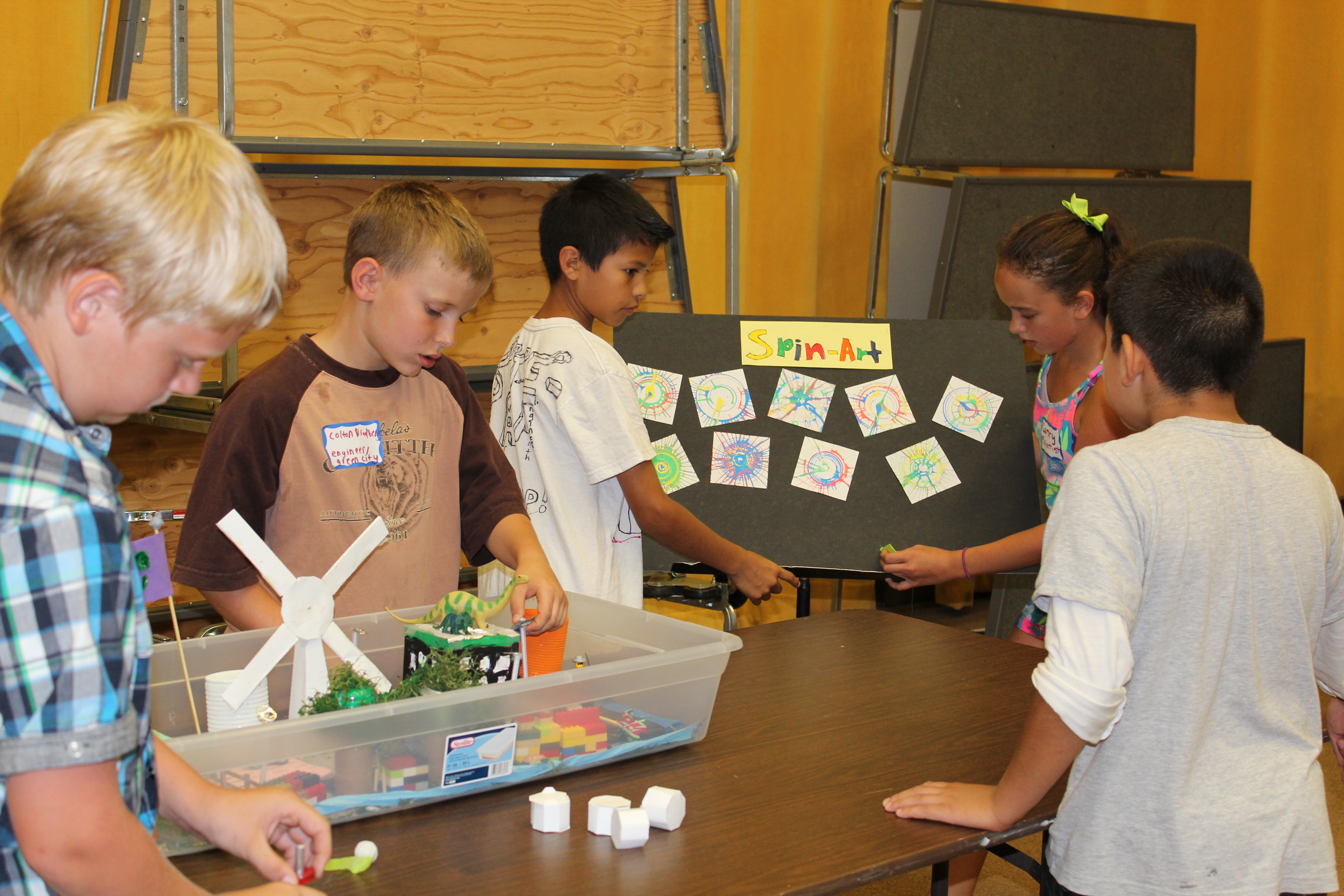

Bobble head leaders don’t say what they really think. They go with the flow to get ahead. Bobble heads don’t speak their mind they defend the company line.
Leaders become bobble heads to protect position and get promoted. It’s dishonest and disingenuous. Look around. How many bobbing heads sit at the table? Is anyone disruptive?
Bobble-head organizations:
The reason you don’t speak your mind:
Good girls and boys go along and get stars on their report cards. Bad girls and boys – disruptors, dissenters, and the unorthodox – go to detention.
Fault:
Top leadership is fully to blame for bobble-heading. Rather than punish bobble…
View original post 155 more words
A different way to view robotics in the classroom.


 Dr. Jennifer Miller-Ray