Author: Dr. Jennifer Miller-Ray

  • Exploring ARCS and VoiceThread to Improve Online Learning Environments

    Write a reflection about the advanced instructional design model that your group chose for the project. Why did you choose it? How do you think you will approach it? How did you divide up the work among members of the group? What will be your timeline for completion?

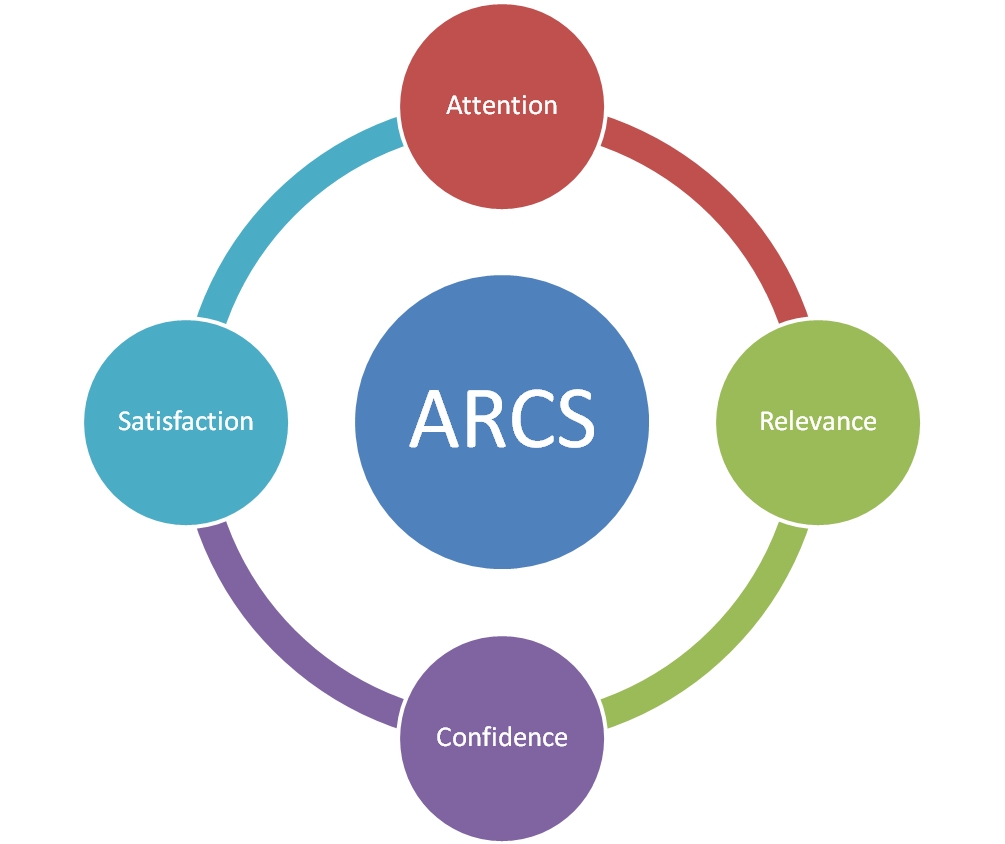
    Our group is investigating the ARCS instructional design model using VoiceThread because we are very interested in improving overall online lesson delivery, student motivation, and success in online learning environments.

    Often students lack self-motivation, do not feel confident in online learning environments,  lack of feedback, support, lack of community, or don’t a clear understanding of realistic course expectations.

    VoiceThread can provide a powerful communication tool to assist faculty in implementing the ARCS model of instructional design.  Our group will be building a ADV ID Model on the ARCS using voicethread and sharing via Google Sites.  

    Each member of the team will be working on a piece of the ARCS model, adding to resources, Works Cited, and the Evaluation piece.  

    Our timeline includes the following:

    3/18-3/23 – Planning and building ARCS VoiceThread Prototype

    3/28 – Design Document presented for group critique

    4/8-4/12 – Development of Activities, Assessment, Evaluation

    4/15 – Development complete including assessment and evaluation tools

    4/16- Implementation of beta group testing through link in Schoology

    4/28 – Collection of VoiceThread creation assessment and course prototype evaluation survey

    4/29-5/3 – Statistical Analysis of data

    5/6 – Group presentations of course prototype


    3/18-3/23 – Planning and building ARCS VoiceThread Prototype

    3/28 – Design Document presented for group critique

    4/8-4/12 – Development of Activities, Assessment, Evaluation

    4/15 – Development complete including assessment and evaluation tools

    4/16- Implementation of beta group testing through link in Schoology

    4/28 – Collection of VoiceThread creation assessment and course prototype evaluation survey

    4/29-5/3 – Statistical Analysis of data 5/6 – Group presentations of course prototype

    ARCS: A Conversation with John KellerImage
     

  • Sun + Technology + Earth + Art + MMS = NASA Sun Earth Day Celebration

    Students that participated in Dublin/RYSS’s Joint Art Workshop in the spring of 2012 utilized solar weather data images provided by NASA to produce digital art that was used for the backdrop during NASA Edge’s press conference held to celebrate Sun Earth Day 2013.  Tom Chamber’s students attending RYSS and DISD students researched academic vocabulary related to space weather and the sun to develop a working knowledge and purpose surrounding the mission.  Students from RYSS traveled to DISD to teach students how to utilize GIMP and utilize NASA data images to create a personal reflection surrounding the mission.

    Dublin Independent School District is located in central rural Texas and is beginning its second year studying about NASA’s MMS (Magnetospheric Multiscale (MMS) mission).  Students are learning about solar weather, earth’s magnetosphere, and magnetic force.  Students participating in DISD’s STEAM (Science, Technology, Engineering, the Arts, and Mathematics, 2012 camp experienced joint PD with teachers learning 21st Century skills and STEAM career opportunities.

    STEAM camp produced much excitement in Dublin during the fall of 2012, and students formed a robotics club to focus on the engineering components.  Students attended their first robotics competition, hosted a MARS party to teach skills to a neighboring district, and participated in PIE (partners in education) showcase during the spring of 2013.

    DISD will host another STEAM camp during June of 2013 to learn more about how the sun can be utilized as a renewable energy source.  Students in Texas were very excited to see their work showcased yesterday.

    NASA’s MMS Educational Resources 

    Creativity Tools

    ISTE NASA MMS Challenge

    STEAM Resources

    NASA EDGE Sun Earth Day 

    Dublin ISD/RYSS NASA Edge Webcast

  • mojotillett's avatarAdventures of Mojotillett

    Here is another great example of effective information transfer via an animated video. The RSA Animate series animation was done by Cognitive Media. These guys do great work. These videos are what I call sticky. Meaning people want to watch them and keep watching them. This is very effective for learning and it is even better if they go viral. This goes way beyond what you can do with the rapid tools I have talked about in previous posts. I would also say that this level is not always needed to be affective for learning. This is professional artists and animators building frame by frame animation. I know I enjoy watching them. What do you think?

    RSA Animates – YouTube.

    View original post

  • Teachers – If we don’t adapt, will we fail our students?

    We must adapt and recognize that learning technologies have shifted how students will learn.  Educators in both K12 and post-secondary must embrace 21st century communication capabilities, model collaboration, improve instructional delivery using questioning techniques, and share a passion for learning.  I would add that it is imperative that instituions training the teachers of tomorrow understand that they must also radically change approaches.

    Teachers - If we don't adapt, will we fail our students?

    Teachers – If we don’t adapt, will we fail our students?.

  • Exploring Advanced Instructional Design iCARE, Blooms, and Backwards Design Models

    Image
    Building Connections…

    iCARE Instructional Design Model

    Rhonda Ritter’s presentation on the iCARE instructional design model provides an excellent framework to utilize with secondary/post-secondary students.  The iCARE model, from my perspective,  builds strong connections to 21st century learning skill sets. iCARE consists of a simple and flexible design approach.  iCARE  (Introduction, Connect, Apply, Reflect, and Extend) provides students with  answers to why learning content is needed and how content extends to “real world” scenarios.  Students often need to extend reflections to a larger audience. Students who often lack motivation to earn or make the grade, and iCARE provides an external motivator that could push students towards lifelong learning.  Online learning environments offer a variety of collaborative platforms, and the iCARE model could easily provide learning communities an improved online environment to “showcase” and extended learning to a larger audience.

    Backwards Design

    Brenda Quintanilla provided a strong presentation on how the Backwards Design model improves instruction by aligning objectives to final outcomes.  Backward design suggests that learning design should should begin with  a final assessment in mind.  Backward design attempts to ensure that students meet the expected outcomes or course goals.   While I agree that aligning is very important, instructors must be cautioned to not “teach to the test.”  Drill and kill approaches often fail to inspire students to apply content to real world scenarios or approaches.  Goals are important, but assessment driven instruction can become repetitive.  Educators and instructors perhaps need training on best practices on using Backward Design approaches.  The following link can help improve Backward Design approaches.

    Blooms Taxonomy

    Christina Gilliam’s provided an informative review of how Blooms order of domain has shifted to include remembering, understanding, applying, analyzing, evaluating, and creating.   Gilliam’s presentation included key domain questions  and verbs to consider.

    Integration and community approaches using technology can potentially provide differentiated instruction efficiently.  Training and coaching on best Blooms practices using technology will continue to be a high need.  Instructional designers can assist teachers with how to apply advanced instructional models using learning technologies.

    Blooms Model applied to iPod/iPad Apps

    Nice Wiki on Advanced Instructional Design and Learning Technologies

    This image has been sourced from http://www.usi.edu/distance/bdt.htm.

    (more…)

  • These tools offer a great addition to the iCreate workshop presented at the TCEA (Texas Computer Education Association) 2013 conference.
    https://docs.google.com/presentation/d/1kPIz70JTPyTDV_TrTSWl6AnF9S18ucr01TGyonB1T5Q/edit?usp=sharing

    mjgormans's avatar21 st Century Educational Technology and Learning

    creativity4

    I hope you enjoyed the  the past three post involving creativity and the digital classroom. I welcome you to the fourth in this series of posts. I have some reflection, ideas, and some amazing resources to share.  Please enjoy and share this post via email or a retweet. While you are at it, I would appreciate that you take a moment to subscribe to this Blog by RSS or email and follow me at (mjgormans). Also, feel free to contact me about any conference, in-service plans, or PD you might wish to include me in. (mjgormans@gmail.com). You can learn more at the Booking Link.  Please continue to network and join me for our special journey into 21st century education, something that is very exciting to me.  – Mike Gorman (http://21centuryedtech.wordpress.com)

    Note – Join me for a free webinar this Tuesday, February 12 at 8:00 PM EST…

    View original post 1,233 more words

  • Considering How To Improve Virtual Learning

    Connecting is key to experiencing positive LMS experiences.  Instructional designers must consistently evaluate content.  Often faculty lack time to revisit learning approaches, but improving the quality of online learning platforms is crucial to growing post-secondary environments.  LMS must be systemic and continually evaluated.  Far too many virtual courses develop a learning repository for students and courses are not viewed as unique experiences.  This often leads to feelings of detachment from both the learner and instructor.  Content may become dated.  Instruction often lacks meaning.  Building stronger connections requires both collaboration and evaluation of instructional approaches.   Faculty often do not revise courses in LMS environments.  Approaches to holistic and consistent instructional design is needed for all learning environments, virtual and face to face.

    The Kemp Model

    Image

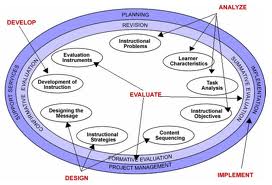
    The Kemp Model is one approach to revising content within the learning environment.   The designer is free to begin with any Kemp Model element and instructors can be flexible as they do not have to present elements in any particular order.  Multidisciplinary approaches must be considered by faculty.  How can we reliably and consistently evaluate online learning environments?  How do we keep the element of creativity as we apply standardized evaluation techniques?  Models are tested.  Theories explain the whys surrounding learning outcomes and experiences related to an instructional model.

    ARCS Motivational Design

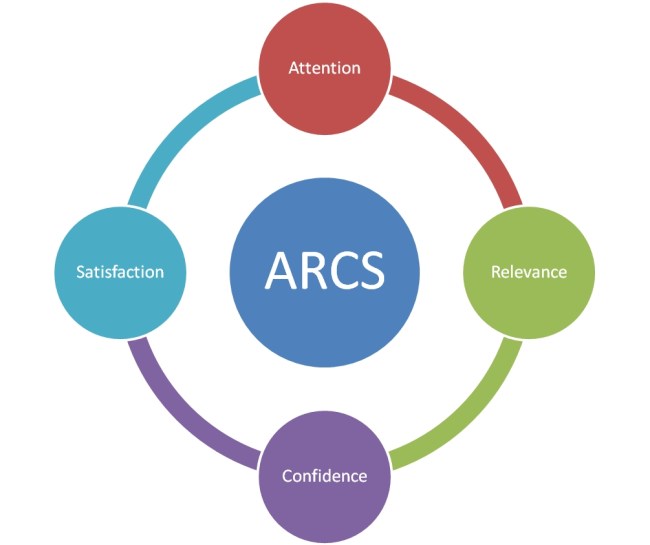
    The ARCS model appeals to me as it lends itself to a strong sense of community and student motivation.  Using experiences, visuals,  relevance, and strong collaboration exercises provide meaning. Satisfaction and confidence are two great elements for faculty to consider measuring.  The ability for users to form deeper short term and long term relationships is measurable.

    Image

  • Prototyping and Instructional Design Reflection

    This week was a great start to learning advanced instructional design techniques.

    Rapid Prototyping and Quality Matters

    Whitney Kilgore’s presentation on Rapid Prototyping and Quality Matters was very interesting.  As a lifelong student and contributor in the online environment,  the recognition that quality matters is essential to the online learning environment.   It is essential for standards to be in place.  Rapid prototyping allows for simple navigation.  Quality matters is more than branding, as Whitney mentioned.  It is the overal experience that is most important to users and students.  Online environments are just now understanding the need for systemic learning approaches in LMS.

    I Like the Idea of Prototyping.

    Problem Based Learning

    October Smith’s presentation on Problem-Based Learning was also enlightening as PBL engages students to critically think, reflect, and approach problems collaboratively.  Learning technologies foster communication by capturing applications to allow for students to research, process and contribute.  I view problem based learning as an instructional strategy, which is instrumental to developing critical thinking and creative skills.  

  • Improving Instructional Design via 5E Model

    According to the constructivist learning theory, knowledge is constructed as student integrate new information with their pre-existing knowledge base.

    Proponents of constructivism suggest that students learn best when they are actively engaged in  performing activities that relates to their real world.  In essence, constructivists would like for students to “think like a scientist.”

    The 5E instructional model is designed to give students the ability to incorporate a student led inquiry approach following the 5E phase (Engage, Explain, Explore, Elaborate, and Evaluate).  How are learning technologies being leveraged using the 5E instructional model successfully?

      (more…)

  • Exploring 5 E and Learning Technologies

    What do you understand about instructional design from what you have read so far?

    Instructional design is an evolving science.  The role of technology has increased the pace of learning, provided richness and depth to the learning process, and potentially gives learners an engaging experience.  Approaches to instructional design will continue to evolve as learning technologies rapidly evolve.  Global approaches and trends to research in instructional design methods will be interesting to follow.

    What model will you present for class? Why? What interests you about it?

    I am very interested in the effect of the 5E instructional design method utilizing learning technologies on middle school rural students.  Recent literature review suggests a need to explore the 5E instructional model and 21st century skills or learning outcomes.  New Designs for Elementary School Science and Health describes the BSCS 5E instructional model as phases  to include Engagement, Explanation, Exploration, Elaboration,  and Evaluation (BSCS, 1989).  

    BSCS and IBM (1989). New Designs for Elementary Science and Health: A Cooperative

    Project between Biological Sciences Curriculum Study (BSCS) and International
    Business Machines (IBM). Dubuque, IA: Kendall/Hunt Publishing Company.

    Porandokht Fazelian, Abdolrarim Naveh ebrahim, Saeed Soraghi, The effect of 5E instructional design model on learning and retention of sciences for middle class students, Procedia – Social and Behavioral Sciences, Volume 5, 2010, Pages 140-143, ISSN 1877-0428, 10.1016/j.sbspro.2010.07.062.
    (http://www.sciencedirect.com/science/article/pii/S1877042810014369)
    Keywords: 5E instructional design model- learning- retention- sciences