Category: Assessment

  • Screeners to Assess Literacy Skills in Primary Grades

    Hess and Marzola (2018) shed light on the importance and benefits of administering screeners in early childhood as screeners can “predict future reading performance” or used to assist the early literacy teacher in flexible grouping and instructional design (p. 269). Screeners afford the opportunity to improve instruction through improved and targeted invention approaches offered early on in a child’s educational experience. These benefits provide numerous added value to preschool children’s academic success (Farver, Nalcmoto and  Lonigan, 2007) , but assessing each literacy skill set should be conducted in a “manner appropriate to the grade level of the child and evaluated for bias to ensure results do not stem from cultural and linguistic differences” (p. 269).

    What are the common focus skill sets for primary screeners? Hess and Mazola (2018) suggest focus skills should center on phonics, phonemic awareness, and listening processing skills  in kindergarten. Screeners measuring fluency and reading comprehension are not appropriate for this grade level. As a child moves into first grade, phonemic awareness and decoding skills monitoring should continue, with a focus placed on oral reading fluency and vocabulary as the child progresses. Reading comprehension can be measured toward the end of 1st grade. As a child moves into 2nd and 3rd grade, instructors should continue to closely monitor phonemic decoding, fluency, vocabulary, and reading compression (Hess and .Mazola, 2018). ELL children are at substantial risk of early academic reading problems and currently there is limited data on early identification and intervention for these children and a need for further research exploring primary ELL screeners, early language and literacy intervention approaches for ELL populations (Farver, Nakamoto, and Lonigan, 2007).

    Screening provides an early opportunity to meet the literacy needs of primary students. Through improved and early screening, targeted instruction can assist in making great academic gains early on, reducing the many negative consequences of delaying intervention. Improving training on the use of screeners along with an improved understanding on how to evaluate the quality of screening approaches can benefit schools and early childhood programs.

    Hess, L. & Marzola, E. (2018). Assessment of Reading Skills.  In Birsh, J. R. & Carreker, S. Multisensory teaching of basic language skills (4th Ed). Baltimore, MD: Paul H. Brookes Publishing Co.

    Farver, J. M., Nakamoto, J., & Lonigan, C. J. (2007). Assessing preschoolers’ emergent literacy skills in English and Spanish with the Get Ready to Read! screening tool. Annals of Dyslexia, 57(2), 161–178. https://doi.org/10.1007/s11881-007-0007-9
  • Assessment for Learning Vs. Assessment of Learning

    Assessment is an important component toward determining the success of curriculum, or learned curriculum. While I agree that it is horrible to witness what we see in our public school systems, a drill and kill approach toward learning, I feel that many leaders are missing the point. I wonder what would happen if states would just administer a pretest at the start of the school year to measure retention or what was learned as a result of the previous year?  Leaders could then concentrate on instructional approaches toward closing and narrowing the gaps through strong vertical and horizontal alignments and creative teaching approaches.

    Is the current system failing our students, our teachers, our parents, our future employers?

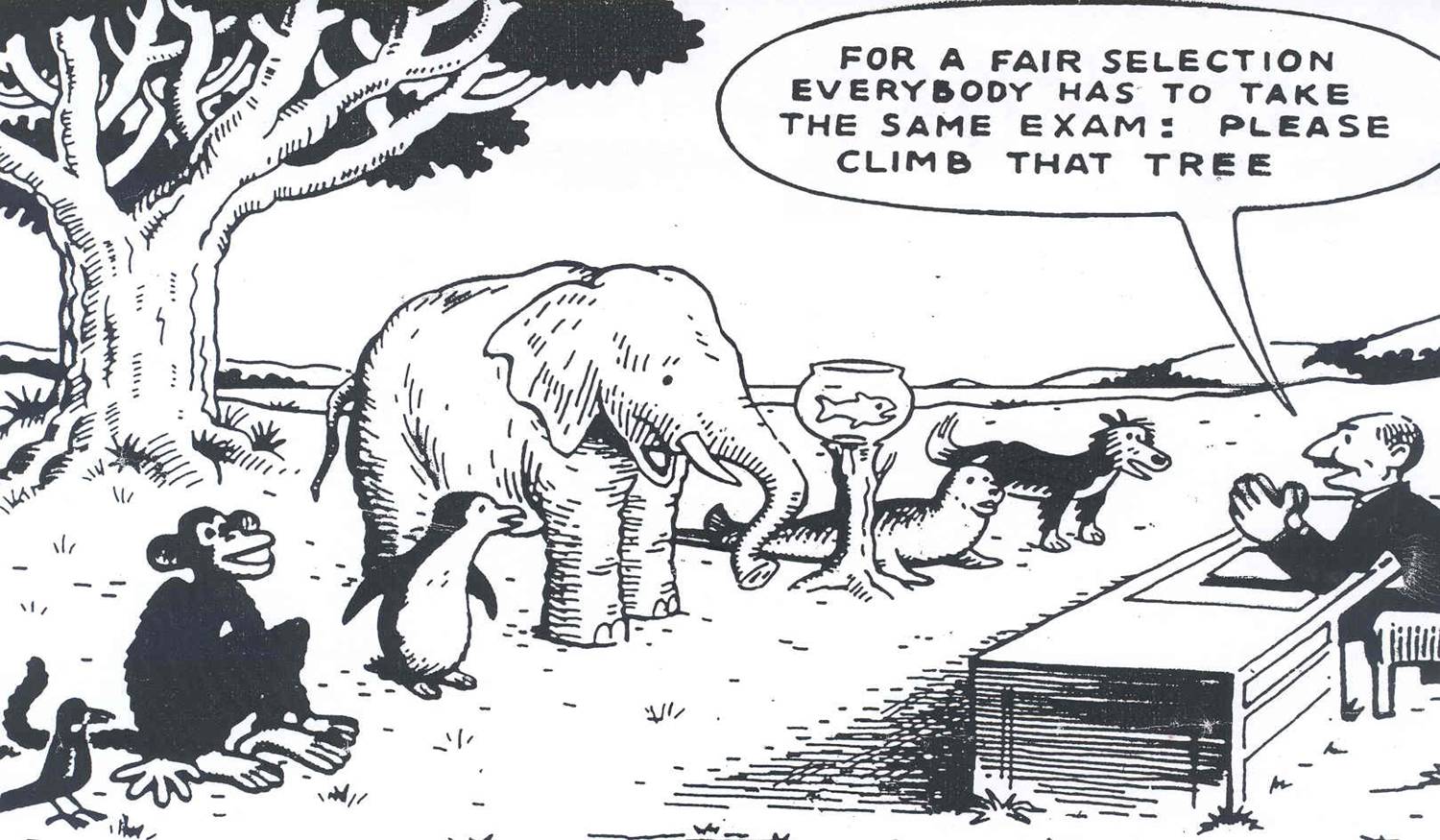
    Yes, we can probably all agree by now that the current system has failed our children. While there are many overreaching circumstances influencing the direction of the current school system, we cannot just ignore the importance of assessment. Assessment should not be treated as a four letter word among the education community. The problem is we are holding assessment as the end all be all. Our approach is currently failing students because assessments must be followed by high-quality, corrective instruction designed to remedy whatever learning errors the assessment identified (Guskey, 1997).

    assessment

    A friend and leader at a university located in north Texas framed the problem with the current situation recently. Her ideas and frustration are not unique to this area. She put it this way: “What the current high-stakes assessment system approach does in truth is ROB our children of time to process and learn so much more than they are being exposed to. If you take a good look at the curriculum, you see developmentally inappropriate curriculum tested and also lots of little stuff that in the long run is not very important or relevant. Also, we psychologically damage kids who don’t test well by sending the message they aren’t “good enough.” That is a crime. I’m not saying let them get by without learning, but start where they are and go from there, not where they “should” be”.

    Does this mean that we have no assessment?

    Of course not. Our approach toward assessment is misguided. Cobb (2011) shares that “teachers accomplish accountability with daily, authentic, practical assessments that inform instruction” (p 193). Could alternative assessment approaches better serve us? Couldn’t we capture learning via authentic tasks and products throughout the year to show improvement through an alternative approach? How could we improve our system by trusting teachers with our accountability system, not large companies? Perhaps the standardized test could only serve as a guide at the start of the year with the teacher mapping out an instructional program and assessment plan using alternative approaches. Some ideas can be found below:

    https://ctl.yale.edu/Formative-Summative-Assessments

    https://radicalscholarship.wordpress.com/2017/06/22/rethinking-literacy-and-all-assessment/ 
    Guskey, T. R. (1997). Implementing mastery learning (2nd ed.). Belmont, CA: Wadsworth.

    Cobb (2011) Reading Assessment: Looking Backward, Living in the Present Climate of Accountability, Crafting a Vision for the Future In J.B. Cobb, & M. K. Kallus (Eds.), Historical, Theoretical, and Sociological Foundations of Reading in the United States (pp. 552-580). Boston, MA: Pearson/