Category: Diversity

  • 3 Ways to Address the Equity Gap in Educational Technology Post-Covid 19

    3 Ways to Address the Equity Gap in Educational Technology Post-Covid 19

    Over 50 million K-12 public school students learned remotely this past year, with 37% of students located in rural communities lacking broadband compared to 25% of suburban households and 21% of urban households lacking connectivity. Texas ranked highest in the nation, with 34% of students lacking broadband connection and 24% of students lacking access to a device (Chadra, Chang, Day, et. al, 2020). Post COVID-19 presents the immediate need to rethink digital leadership approaches to begin to address the digital divide presented by equity and accessibility issues. Research indicates  English learners, students with disabilities, students experiencing homelessness, and students in foster care in middle and high school were all less likely than their peers to access district school platforms in the spring (O’Keefe & Repeka, 2020). Many schools in remote areas of far west and south Texas were fully remote in 2021. In fact, New Mexico schools were mandated to remote learning until late March 2021. What did we learn from this experience? How could leaders improve the strategic plan process to better address the needs of our students, specifically underrepresented populations, students with disabilities and remote schools serving at-risk populations?

    Recognize and identify where the digital divide exists in your community.

    Accessibility issues can no longer be defined in terms of physical access. The pandemic has shown that schools must approach  the use of distance education and digital learning from an equity lens. Age does not define digital fluencies or abilities to apply digital skills to communicate effectively. The term ‘digital divide’ traditionally was used to describe inequities in access to devices and broadband, but this definition fails to capture gaps in educational experiences, curricula, and social, cultural, and economic realities of many (Gorski, 2005). This issue has long been debated in literature but school closures during the pandemic magnified preexisting socio-economic and education disparities on a massive scale, revealing large inequities in access to resources and learning quality (Vishkale, 2020). Schools must begin to truly identify gaps in accessibility to include physical access, technology mediums used,  equity, resources, digital learning, and digital literacy experiences. Strategic planning often fails to provide clarity and efforts to truly identify and address digital divide gaps could greatly equip learners with digital skills. The main factors contributing to the digital inequities may not be identified as physical access only but rather a divide in digital skills/literacy to the extent in which populations are divided and excluded (Li & Li, 2021).

    Invest in teachers and measure professional development efforts.

    The pandemic has presented teachers with a renewed insight on the importance of participation in digital learning development, as now they are aware of their own digital skills, abilities, and limitations (Toto & Limon, 2021). This presents an opportunity for organizations to foster stronger development approaches and to identify gaps in digital competencies, teacher capabilities, and abilities to use technology to communicate well, or digital fluencies. Schools can look to the ISTE standards,  Common Framework for Teaching Digital Competence, or TPACK as a starting point. TCEA is a leader in this area and is an essential partner in the solution for districts to begin addressing this issue. Investment in technology training cannot be an afterthought during the strategic plan process and is a required component to equip students with future-ready skills. Measuring the quality of teacher training and resources can provide insights into how financial allocation of professional development is impacting student engagement, use, and academic performance.

    Live interaction for accelerated instruction will continue to matter.

    Gaps in learning will require strategic planning to heavily invest in accelerated instruction platforms and approaches. Overcoming traditional barriers will be required of administrators to support positive learning experiences as an evidence-making approach within the multi-tiered system. Quality engagement with personalized feedback using technology can have a large impact toward addressing gaps. For example, Houston Community College is offering students virtual support through online advising and tutoring services via a virtual lobby. These types of initiative can go a long way to improving our response using technology as leaders.

    Chandra, S., Chang, A., Day, L., Fazlullah, A., Liu, J., McBride, L., … & Weiss, D. (2020). Closing the K–12 digital divide in the age of distance learning. Common Sense and Boston Consulting Group: Boston, MA, USA.

    Gorski, P. (2005). Education equity and the digital divide. AACE Review (Formerly AACE Journal), 13(1), 3-45.

    Korman, H., O’Keefe, B., & Repeka, M., (2020, October 21). Missing in the Margins: Estimating the Scale of the Covid-19 Attendance Crisis. Bellwether Education Partners. Retrieved from: https://bellwethereducation.org/publication/missingmargins-estimating-scale-covid-19-attendance-crisis#Why%20aren’t%20students%20attending%20school.

    Vishkaie, R. (2020). The pandemic, war, and sanctions: Building resilience for the digital divide in education. Interactions, 27(4), 36-37.

    Li, S., & Li, E. (2021, July). The Impact of Digital Divide on Education in USA Amid COVID-19 Pandemic. In International Conference on Human-Computer Interaction (pp. 571-576). Springer, Cham.

    Toto, G. A., & Limone, P. (2021). From Resistance to Digital Technologies in the Context of the Reaction to Distance Learning in the School Context during COVID-19. Education Sciences, 11(4), 163.


  • Why We Should Begin to Address Digital Disconnect for ELL Learners

    Gunderson (2013) highlights how technologies can create new opportunities and improve ELL literacies as long as barriers are addressed to improve teachers’ self-efficacy with a focus on  technology skills and confidence in professional development, funding to address equity issues, and curriculum in place to address “Digital Disconnect” in schools. Many opportunities exist to improve L2 academic performance. Park & Warschuer (2016) provide compelling evidence to suggest that activating background knowledge through integration of technology using hyperlinked media can begin to address gaps and provide valuable resources. The Multiliteracy Project is one project that caught my attention as students are able to contribute to a meaningful project in their first language and utilizes many diverse literacies that connect to my research interest. The Multiliteracy Project website, http://multiliteracies.ca/index.php/stat/register, connects students to projects around the world using many forms of literacies that promote social responsibility. Gunderson (2013) shares how hyperlinks in one project. Students produce Blue Sea Creatures hyperlinks. This could be of interest to ELL students, as they are curating content and researching to locate valid information and media, to share with others. We are working on Texas land forms and I could see how ELL learners could use this idea using hyperlinks to create their own website. We could utilize both Spanish and English in hyperlinks to provide additional information to users in Google Sites.

    Park & Warschaurer (2016)  provide strong evidence as to how multi-modal vocabulary support can assist ELL learners. Encouraging ELL learners to “express themselves in multiple ways” can provide significant gains in academic vocabulary acquisition (Park & Warschurer, 2016, p. 288). Gunderson (2013) provides many resources and ideas on how to leverage visual imagery to improve comprehensible input. Diccts.info, https://www.dicts.info/, offers users easy search features and includes a universal dictionary, basic vocabulary, picture dictionary, English dictionary, Phrases, Bilingual dictionaries, Flashcards, Vocabulary trainer, English thesaurus, and Examples of use feature. I began searching the words that are using and found that the picture dictionary is limited. For instance, the word mountain and range are both not included in search results.  Range is listed in results but does not populate a search result when selected. While this does serve as a good beginning resource, it highlights the issues facing teachers. I reviewed the PDictionary, http://pdictionary.com, and had a similar experience. I did locate cactus, which is a vocabulary word in this resource. These resources could be useful in teaching ELL students how to look up information, which Gunderson (2013) strongly encourages as a component of information literacy.

    As a strong advocate of information literacy, I appreciate Gunderson’s (2013) approach toward teaching critical literacy online. To me this is the largest issue and serves to begin to finally address the Digital Disconnect Gunderson (2013) discusses. So many classrooms and curriculum teach technology as a skill set but this approach sometimes misses the mark. Digital literacy is more than a skill set, it is a critical thinking approach to validating information prior to possibility creating meaning and products. Therefore, I agree that we must teach online critical literacy skills in all courses and begin to address how to search information, how to evaluate media, and how to read online. I really Gunderson’s (2011) practices of “teaching reading online to identify important questions, to locate information, to critically evaluate information, to synthesize information, and to communicate information” (p. 247). In essence, all teachers should be required to address how to accomplish reading online through these five actions. I can suggest that we begin to do this for  makerspace projects. One part of the makerspace process is research and through the making of the product, he will be creating and communicating his process online. So, I have decided to add a digital layer on the process.  This will strengthen is use of vocabulary as ELL learners will select how the student communicates to share final productions online.

    pexels-photo-278312.jpeg


    Gunderson, L., D’Silva, R., & Odo, D. M. (2013). ESL (ELL) literacy instruction: A guidebook to theory and practice. Routledge.

    Park, Y. and Warschauer M. (2016) Reading instruction in a technological age.  In X. Chen, V. Dronjic, & R. Helms-Park, Reading in a second language: Cognitive and psycholinguistic issues (pp. 282-302). New York: Routledge.

  • Reflective Teaching ~ Exploring My Makerspace Literacy Research Approaches and Classroom Practice

    Currently, I teach six graduate education courses at Sul Ross State University, which is a small rural university serving 898 graduate students and a little over 2,000 undergraduate students. The institution is a Hispanic serving institution, serving low income students (Jenkins, et al., 2017). I am working with many rural schools in the Big Bend area to include Presidio ISD. Presidio ISD is a STEM school, and serves a population of 1,350 students to include demographics of 96.6 % Hispanic students and 93.4% economically disadvantaged students (2015). Presdio ISD is located on the Rio Grande river, located on the Texas-Mexican border. In addition, I am working with Maathon ISD, which is a rural district serving over 70 students to include a demographic population of 67 % Hispanics and 87 % economically disadvantaged students (2015). I am also working with several districts in the Trans-Pecos area.

    My learning goals this academic year is to grow as an educator and continue improving my Ph.D. research initiatives at the University of North Texas investigating makerspace literacy environments that centers around a project-based learning 4 career STEAM model targeting elementary and middle school programs.  My knowledge regarding the reading process has definitely changed and improved this semester. Perhaps the most significant change includes reevaluating my approach to really center on balanced literacy approaches that really think about transactional theory in action during professional development and instructional design approaches. Transactional theory centers on “how readers respond to the books that engage them and how these experiences can be enacted in classrooms” (Galda, 2013, p. 6). Transactional theory is rooted in Vygotsky’s social constructivism and principles of language and cognition, “which centers of teaching reading and writing highlighting creation of environments and activities in which students are motivated and encouraged to draw on their own resources to make live meanings” (Rosenblatt, 2013, p. 148).

    infinity_1_orig

    What will I eliminate in the future? I will eliminate some of the STEM quantitative measures I have used in the past. These instruments were only used to show interest and attitude toward STEM and never measured the impact on the overall impact of literacy. Previously, I would give this instrument before and after a STEM makerspace camp or at the beginning of a semester and at the end of a semester to gauge interest. I utilized the makerspace project-based learning model and only measured the impact of interest. The model did incorporate reading prior to the makerspace PBL and a written reflection after the experience. The pre and posttest utilized in two published studies found statistically significant findings but failed to measure the impact on reading and literacy.  The learner would take the STEM Semantic pre-test, read text from their content area, participate in a KWLH 21st century learning activity, participate in a makerspace project-based learning activity using challenge cards mapped to curriculum, and reflect via writing about the experience. At the end, learners would take another post-test, the STEM Semantic survey. I have not really considered the empirical design approaches to include journaling during the entire makerspace process and/or video recordings to include in portfolios in research approaches. In the past, I have used only quantitative measures to gauge student or teacher interest and confidence levels pre and post over a period of time. While the instruments we used at the University of North Texas are widely accepted as strong and valid instruments, I now realize that a mixed method approach to include journaling throughout the experience and video interviews and reflections would add further depth to capture the impact of the STEAM makerspace challenge cards before and after literacy events. In addition, I feel this would really add to the field of sociolinguistic issues discussed this semester. I now have a stronger understanding on how to leverage native language and family cultural heritages in the makerspace model to not only improve literacy in English Language Learners but also to value the funds of knowledge to this process.

    How can this approach help increase literacy opportunities for English Language Learners? First, I need to strengthen the collaborative dialogue, which I feel is strong in the KWLH activity. However, I can improve the scaffolding of my model to include previewing a picture book, vocabulary discussion, incorporating a story map, repeat reading of the story, compete the KWHL activity, and then encourage discourse after the makerspace activity. In addition, I can encourage video procedures and or reflections throughout the makerspace process. This will provide a visualization component that others may find beneficial and highlight the impact of the activity. Repeating readings can be used to measure fluency. The makerspace PBL activity using the challenge card concept could also include visualization to incorporate sociolinguistics highlighted in this course.

    Tan, Barton, & Schenkel (2018) describe the impact of “meaningful and prolonged engagement toward focused complex projects through making experiences and found that children’s rich funds of knowledge anchored in children’s existing social networks provide community enthnography as a pedagogical approach (p. 77). Bringing in the “community wisdom” through makerspace activities brought about rich conversations that can really leverage experiences connected to curriculum in their own community (Tan, Barton, & Schenkel, 2018, p. 81). Range & Schmidt (2014) highlight the importance of schools and community organizations to tap into prior knowledge in makerspace activities and suggest that “students drive the process of designing projects and soliciting makerspace community for help” (p. 8). While I agree this is true, I still think many students need facilitation of such projects through a focus that may connect to core curriculum content, showing that topics can be extended to real world scenarios relevant to their community.

    In conclusion, this course has helped me to really improve my understanding on how to better design literacy instructional design approaches to incorporate a large focus that centers on the transactions of the reader, text, language, culture, authentic making design process, writing, and reflection. I hope to revamp my approaches to really center on how such creative processes might not only engage interest in STEM but also build to improve cognition approaches toward multiple literacies in a mobile makerspace research environment that investigates reader response theory, or transactional theory

    Galda, L. g. (2013). Learning From Children Reading Books: Transactional Theory and the Teaching of Literature. Journal Of Children’s Literature, 39(2), 5-13.

    Jenkins, R. W., Stedman, S. W., Teusher, D. D., DeLaGarza, H. R., Acosta, A., Anwar, S. J., Paredes, R. A. (2017). Texas Public Higher Education Almanac.

    Marathon ISD, (2015) Retrieved April 13, 2018 from https://schools.texastribune.org/districts/marathon-isd/marathon-isd/.

    Presidio ISD. (2015). Retrieved April 13, 2018, from https://schools.texastribune.org/districts/presidio-isd/.

    Range, E., & Schmidt, J. (2014). Explore, plan, create: Developing a makerspace for your school community. School Library Monthly, 30(7), 8-10.

    Rosenblatt, L. Transactional theory of reading and writing. In J.B. Cobb, & M. K. Kallus (Eds.), Historical, Theoretical, and Sociological Foundations of Reading in the United States (pp. 13-66). Boston, MA: Pearson.

    Tan, E., Barton, A. C., & Schenkel, K. (2018). Equity and the Maker Movement. Science and Children, 55(7), 76-81.


  • What is critical literacy?

    What is critical literacy?

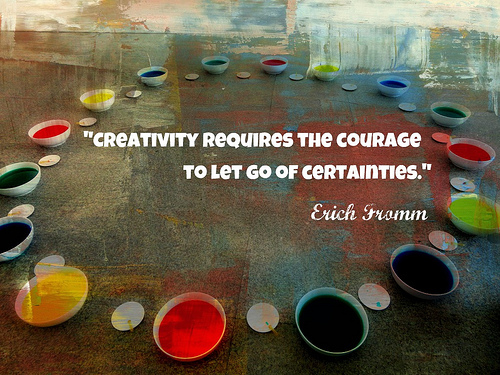
    Morris (2011) suggests that critical literacy fosters a global approach toward meeting equipping learners towards a greater understanding of literacies to include not only “linguistic, visual, aural, spatial, emotive, and gesture forms but to also recognize literacy as it is applied in a historical and cultural context” (p. 293). Ensuring that all literacies associated toward becoming a global citizen require us to consider how we facilitate future-ready instructional outcomes that are not a standardized process, but instead encourage creativity in not only the learner but also as an instructional designer or artistic teacher. Critical literacy requires an understanding toward facilitating a community that applies social justice. Nicolini (2008) suggests that such approaches “demand discussions regarding ethics and government” (p. 77). Dialogue facilitates an understanding of injustices, clairity, and empathy, which builds knowledge towards environmental, economic, pedagogical, political, social, and cultural transformations, or critical literacy (Morris, 2011). Why is this important?

    Blotz, Henriksen, & Mishra (2015) show that empathy is in decline and is an important characteristic  of creative thinkers. We often talk about this as a skill set that is in decline and needed. However, strategies that encourage empathy and creativity are rarely provided in professional development trainings. Perhaps it is due to a lack of understanding of  pedagogy and anthology to center on what critical literacy is, how it is important, and what we could do to facilitate learning in this area. Perhaps Morris (2011) said it best, “critical literacy attempts to make clear how education, under the guise of accountability schemes, is presently being reduced to domesticating factories of high-stakes testing linking standardized assessment and curriculum that undermines the possibilities for a democratic culture in numerous ways by deskilling teachers an eliminating creative processes and projects” (p. 298). This minimizes our ability to rely on the importance on cultural influences and historical approaches which produces new knowledge.

    Boltz, L., Henriksen, D., & Mishra, P. (2015). Rethinking Technology & Creativity in the 21st Century: Empathy through Gaming – Perspective Taking in a Complex World. Techtrends: Linking Research & Practice To Improve Learning59(6), 3-8.

    Morris, D.  (2011). Critical literacy: crisis and choices in the current arrangement. In J.B. Cobb, & M. K. Kallus (Eds.), Historical, Theoretical, and Sociological Foundations of Reading in the United States (pp. 13-66). Boston, MA: Pearson.

    Nicolini, M. (2008). Chatting with Letters: Developing Empathy and Critical Literacy through Writing Communities. The English Journal, 97(5), 76-80.

    7149966049_9b7a43b2a9

  • Round as a Tortilla Makerspace STEAM Literacy Event

    Moll, Amanti, Neff, & Gonzalez (2011) describes the importance of education programs leveraging a child’s fund of knowledge through connecting with families and involving a holistic approach toward learning activities and learning environments. Makerspaces can serve as a quality environment to facilitate activities to incorporate balanced literacy approaches to meet the needs of diverse learners. Range & Schmidt (2014) suggests “successful makerspaces, particularly in education environments, balance practicality with creativity and collaboration to serve the needs of the school community” (p. 8). Tan, Barton, & Schnekel (2018) highlight that “children’s funds of knowledge were recruited by engaging them in community ethnography, which informs of the making design process” (p. 77) via a makerspace environment. The purpose of this activity is to align a purposeful makerspace activity to topics explored in Pre-K and kindergarten using the book by Thong & Parra (2015), Round as a Tortilla.


    Repeated Reading Strategy

    Day One

    1. The teacher will introduce the, Round is a Tortilla, to their students. The teacher will show the front cover, back cover and conduct a picture walk.  Remember to read the story enthusiastically, and with expression.
    2. After reading, ask why questions to allow time for students to make inferences and to measure understanding of story events.
    3. Begin the a KWHL: What do we know? What do we want to know? How will we find out? What have we learned? How will we find out?

    Send home a Round as  Tortillia Makespace STEAM Event letter to invite parents to the school library and to participate in making items from the story. Include 4 challenge card ideas in the letter with a link to the video. Invite the makerspace community. Your librarian should be able to help you facilitate this process.

    Day Two

    The teacher will conduct the second read-aloud to enrich reading comprehension and provide further engagement opportunities through a book talk, and highlight vocabulary.

    1. Add more frequent questions.
    2. Ask children questions to think beyond the story with completing a KWHL, What have we learned?
    3. Introduce 4 STEAM Makerspace Challenge Cards and Makerspace activities. Here are some ideas. Encourage students to make their own challenge card but remind students that cards should connect to elements found in the story.
      1. Journalist: Be a storyteller and make a story about shapes in your community.
      2. Scientist: Be a scientist and investigate the process of making masa and round tortillas. Be a computer scientist: Make a game with squares and other shapes.
      3. Artist: Make a weave of shapes to use as a rectangular flag as represented in the story. Make an oval necklace.
      4. Engineer: Engineer a sail for a boat that you make.

    Day Three:  Makerspace STEAM event in the library. Students will make items that represent elements in the story with their parents and makerspace community.

    Repeat the reading of the story. After the activity, ask the children, What have you learned?

    This activity connects to Moll’s ideas of knowledge as it involves the child’s entire community in the literacy process. Children can learn how their culture connects to classroom topics through the art of making. Elders can help children learn how to weave, code, build, and apply STEAM principals through everyday activities.

  • Considering Cognitive Science and Instructional Design on Reading

    Considering Cognitive Science and Instructional Design on Reading

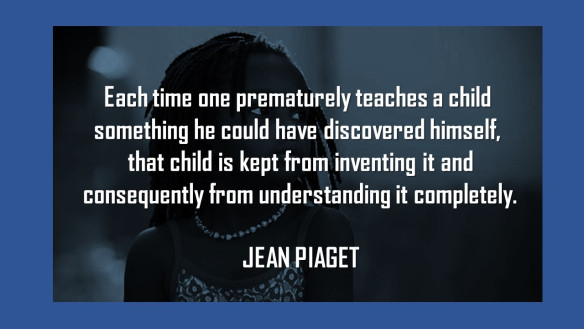
    Personal learning theories on how children and adults best learn are often deeply rooted in past experiences, knowledge, and personal convictions (Ackermann, 2001). We had the unique opportunity to actually hear our great scholar’s explain questions of why and how to address learning as a science. Good (2011) was correct to point out the importance of teachers understanding the cognitive science and theories behind the learning process. This is essential toward improving the instructional design that Skinner speaks of in the video. Learning theories related to how children learn have existed since ancient times. Traditional behavioral learning theories stress the importance of the instructor. Knowledge is transmitted from the mind of the teacher, through lectures and words, imprinted to the student. Learning in a behaviorist’s perspective is a passive experience centered on memorization. Active learning theories evolved from traditional approaches. Piaget’s “Constructivism” continues to have far reaching implications to many modern theories. Constructivism centers on the thought that “knowledge is constructed within the learner’s mind on the basis of existing knowledge and new experiences” (Mavridis, Al Rashdi, Al Ketbi, Al Ketbi, & Marar, 2009). It was wonderful to view Piaget explain his own theories in the video Piaget on Piaget.

    What do I believe about the science of learning?

    Cognitive development and deep understanding are the foci of constructivism rather than emphasizing behaviors and skills (Fosnot & Perry, 1996).  Social Constructivism, an extension of Piaget’s learning theory, stresses that learning is a meaningful and collaborative process employing a variety of perspectives (Smith & Ragan, 2005). Papert’s “Constructionism is a learning theory that adopts constructivist views, but also holds that learning happens most effectively when people are active in making objects to share in the real world” (Mavridis et al., 2009). Constructionism is a learning theory that considers the design as part of the building process. Constructionism allows learners to “dive into unknown situations,” introducing new perspectives (Ackerman, 2001). Constructionism principles outlined by Burbaite, Stuikys, and Damasevicius (2013) provide a framework to approaching e-learning environments.Prior knowledge impacts learning and knowledge is constructed, connecting to constructivist learning theory.Learning and knowledge occurs through the design of meaningful and authentic projects, creating an internal desire to learn.Learning is a process centering on integration of concepts from different realms of knowledge.Building and manipulating objects engage learners to connect and explore the world.Reflection on a learner’s form of understanding is a key component to learning. The above principals center on Papert’s ideas that “learning by making” is effective, allowing learners to construct, or elaborate, thereby providing richness and deeper learning experiences (Papert & Harel, 1991).Constructionist environments support “active learning” approaches in which learners are engaged in building their own public objects or artifacts. Active learning emphasizes cognitive processes occurring during the actual construction of the object. The public nature of the final object or artifact is also understood to be important (Beynon & Roe, 2004). The “maker movement emphasizes learning through direct experiences, hands-on projects, inventions, and is based on a constructionist learning theory even if members and advocates of the movement are unaware of the theory” (Stager, 2013). Papert (2000) advocates that Piaget’s belief of all learning takes place in discovery is accurate. However, Papert extends this idea to suggest that setting learners “to the task of re-empowering the ideas of being learned is also a step toward re-empowering the idea of learning by discovery” (p. 723). Papert (1999) underscores the importance of Piaget’s theory of constructivism and the nature of knowledge.How does this theory assist with understanding toward reading and cognitive processing?To be honest this is the area of improvement that I am working on. I have a strong cognitive science background, but Vaden (2013) presents us with a strong argument as to why teachers need to understand “neurological functioning of struggling readers” (p. 174) Brain science is fascinating and knowing how to address cognitive and behavioral skills during instruction can prove to be invaluable to any educator. For instance, strategies associated with word recognition should center around linking symbols with sounds, as research has linked “fluency to associating symbols with sounds” (Vaden, 20130, p. 181). It is exciting to learn that exposure to quality instructional design can profoundly increase reading comprehension.
    How does this theory assist with understanding toward reading and cognitive processing?To be honest this is the area of improvement that I am working on. I have a strong cognitive science background, but Vaden (2013) presents us with a strong argument as to why teachers need to understand “neurological functioning of struggling readers” (p. 174) Brain science is fascinating and knowing how to address cognitive and behavioral skills during instruction can prove to be invaluable to any educator. For instance, strategies associated with word recognition should center around linking symbols with sounds, as research has linked “fluency to associating symbols with sounds” (Vaden, 20130, p. 181). It is exciting to learn that exposure to quality instructional design can profoundly increase reading comprehension. How can we provide this type of quality instructional experience? I believe we need to improve teaching education programs that address learning as a science, require quality professional development programs, and improve our instructional approaches to target issues and personalize intervention.


    Ackermann, E. (2001). Piaget’s constructivism, Papert’s constructionism: What’s the difference. Future of learning group publication5(3), 438.

    Beynon, M., & Roe, C. (2004). Computer support for constructionism in context. IEEE International Conference on Advanced Learning Technologies, 2004.

    Burbaite, R., Stuikys, V., & Damasevicius, R. (2013, July). Educational robots as collaborative learning objects for teaching Computer Science. In System Science and Engineering (ICSSE), 2013 International Conference on (pp. 211-216). IEEE.

    Edley, N. (2001). Unravelling Social Constructionism. Theory & Psychology, 11(3), 433–441.

    Fosnot, C. T., & Perry, R. S. (1996). Constructivism: A psychological theory of learning. Constructivism: Theory, perspectives, and practice, 8-33.

    Good, K. (2013). Intersections of educational psychology and the teaching of reading:  connections in the classroom. In J.B. Cobb, & M. K. Kallus (Eds.), Historical, Theoretical, and Sociological Foundations of Reading in the United States (pp. 13-66). Boston, MA: Pearson.

    Mavridis, N., Al Rashdi, A., Al Ketbi, M., Al Ketbi, S., & Marar, A. (2009, December). Exploring behaviors & collaborative mapping through Mindstorms robots: A case study in applied social constructionism at senior-project level. In Innovations in Information Technology, 2009. IIT’09. International Conference on (pp. 284-288). IEEE.

    Papert, S., & Harel, I. (1991). Situating constructionism. Constructionism, 36, 1-11.

    Papert, S. (1999). Papert on piaget. Número especial “The Century’s Greatest Minds,” Time, 29, 105.

    Papert, S. (2000). What’s the big idea? Toward a pedagogy of idea power. IBM Systems Journal, 39(3.4), 720–729.

    Smith, P. L., & Ragan, T. J. (2005). Foundations of Instructional Design. In, Instructional Design.

    Stager, G. S. (2013). Papert’s Prison Fab Lab : Implications for the maker movement and education design, 487–490.

    Vanden, S. R. (2013) The brain and reading. In J.B. Cobb, & M. K. Kallus (Eds.), Historical, Theoretical, and Sociological Foundations of Reading in the United States (pp. 13-66). Boston, MA: Pearson.

  • Literacy in Making: Purposeful Makerspaces Connect to All Disciplines

    Many people connect the makerspace movement to STEM (science, technology, engineering, and mathematics) activities through a project-based learning approach. As many are aware, the makerspace movement, founded by Dr. Seymor Papert’s (1991) theory of constructionism, is not a new learning theory or approach. Many schools and programs fail to really embrace the full power of Dr. Papert’s learning theory, which centers around social and intellectual practices to include the skill sets of problem solving, engagement, sharing expertise, and literacy  (Tucker‐Raymond, Gravel, Wagh, Wilson, Manderino,  & Castek, 2016).

    Building Makerspace Literacy Experiences 10_27 (7)

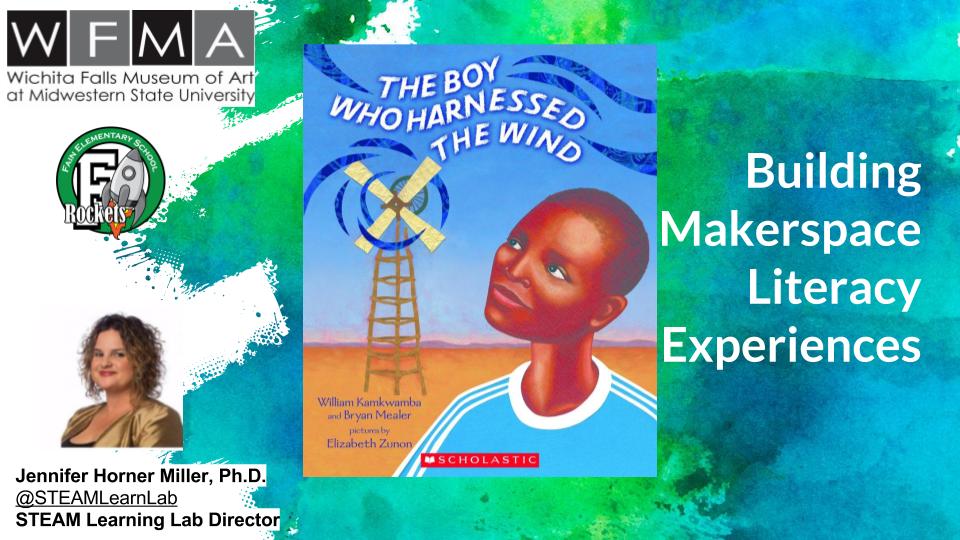
    A recent example of this in practice was provided to elementary teachers during a workshop in north Texas recently. Teachers read the book, The Boy Who Harnessed the Wind.  This book was selected as there is both a chapter version and young readers edition of the true story.  Also, William’s story connects to so many STEM principles that we often see in a makerspace. After reading the story, teachers identified main ideas and concepts, inferences were made, and filled out an upgraded KWL 21st Century Style chart that I have found to be very helpful from Silvia Tolisano (2015). Afterwards, teachers made an artifact serving 1 of four career STEAM roles using the following challenge cards. Afterwards, teachers would reflect via writing.  A link to the presentation and challenge card concept can be located below.

    The following week we implemented this strategy in a Navajo school in northern Arizona. Students were very eager to learn about topics presented and built windmill prototypes and took on a makerspace project using the challenge card concept. Cards were adapted to bring in diversity topics of the Elements, to honor Navajo beliefs and culture.  Navajo students will share their project soon with a larger community.

    Papert, S., & Harel, I. (1991). Situating constructionism. Constructionism36(2), 1-11.

    Tucker‐Raymond, E., Gravel, B. E., Wagh, A., Wilson, N., Manderino, M., & Castek, J. (2016). Making It Social: Considering the Purpose of Literacy to Support Participation in Making and Engineering. Journal of Adolescent & Adult Literacy, 60(2), 207-211.

  • Understanding Diversity Through Makerspace

    Understanding Diversity Through Makerspace

    Makerspace environments not only foster innovation, collaboration, critical thinking, and problem solving, activities strongly support cognitive pluralism and serves as a platform to create unity in diverse education systems. Leaders in education must begin to recognize that learners may have different cognitive architectures, therefore being disposed to reason differently or form and revise beliefs and desires differently (“Cognitive pluralism – Oxford Reference”, 2017). In other words, learning is not a standardized process. Yes, it is important to measure progress, but we must recognize the process of doing so is much more complicated than just charting a biased data set. As Time magazine’s Rana Foroohar (2016) correctly points out, “big data comes with the biases of its creators.”

    Makerspace Encourages Communication, Discourse, and Conflict Resolution

    Makerspaces serve to promote a stronger cultural understanding through the art of making. Community discourse encourages an exchange of cultural perspectives. As each learner attempts to apply the design process of a makerspace project based learning activity, students share research perspectives, debate on approaches, learn about other cultural perspectives, design an make an artifact within a community, and receive feedback from peers. If teachers encourage a written reflection about the process of making after makerspace, students can learn conflict resolution skill sets, a vital 21st century skill. Johnson, Johnson, and Tjoosvoid (2006) describe strategies to encourage skilled disagreement.  When students participate in claim evidence reasoning activities, “students learn that criticizing an idea is not criticizing those who propose ideas-that their worth as human beings is separate from their ideas” (Koppelman, 2014, p. 60).

    14922235_10154426388370743_2183760338966339176_n

    Makerspaces Encourage Self-Confidence for Diverse Students

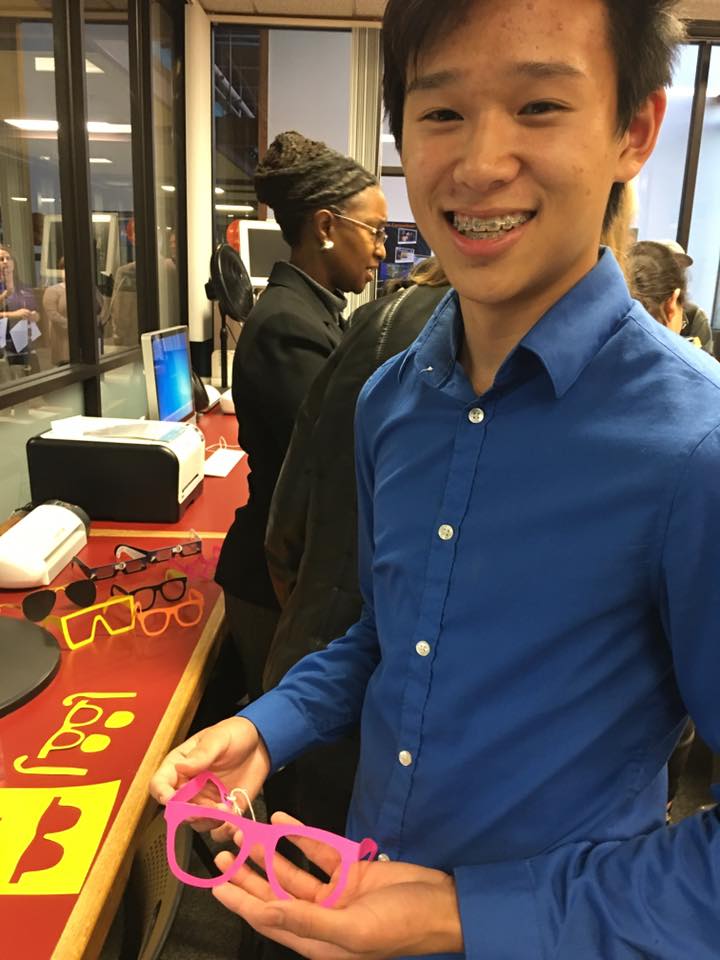
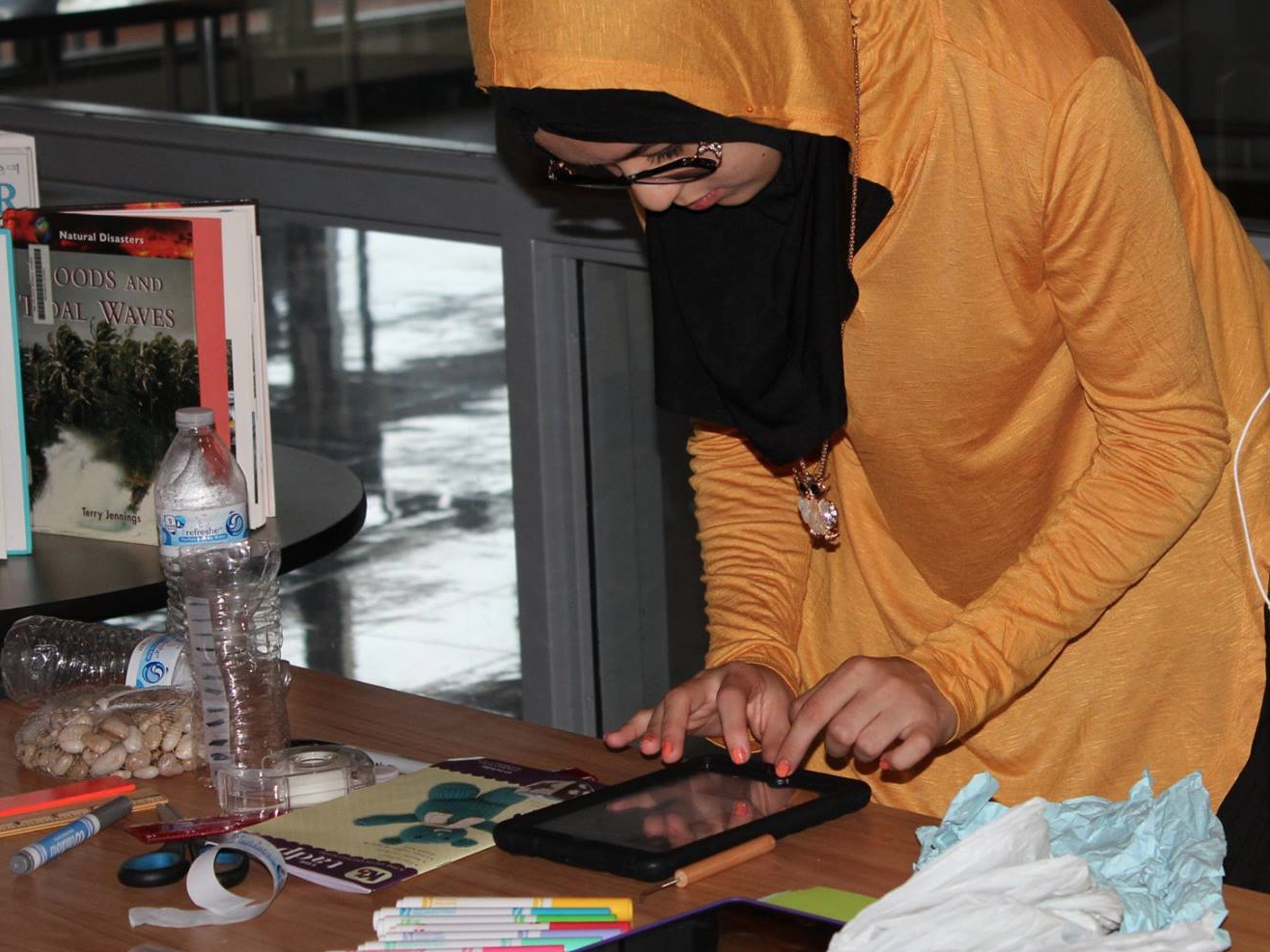
    We know attitudes can influence success or failure in learning. Learning may not happen easily unless students have positive attitudes toward learning the content. Makerspaces using a four station approach, in which students solve the problem as an artist, journalist, scientist, or engineer, may offer the ability for diverse students to select a comfortable and safe approach toward learning. This multicultural approach serves to not only improve the attitude toward learning, but provides a strategy to improve the self-efficacy of diverse students.

    12079958_10153520286560743_5465554661638601068_o.jpg


    Cognitive pluralism – Oxford Reference. (2017). Oxfordreference.com. Retrieved 14 September 2017, from http://www.oxfordreference.com/view/10.1093/oi/authority.20110803095622312.

    Foroohar, R. (2017). Big Data Comes With the Biases of Its Creators. Time.com. Retrieved 14 September 2017, from http://time.com/4477557/big-data-biases/.

    Koppelman, K. L. (2014). Understanding human differences: Multicultural education for a diverse America (4th ed.). Pearson.

    Johnson, D.W., Johson, R.T., & Tjosvold, D. (2006), Constructive controversy: The value of intellectual opposition. In M. Deutsch, P. Coleman, & E.C. Marcus (Eds.), The handbook of conflict resolution (2nd ed. pp. 65-85). San Francisco, CA: Jossey-Bass.