Category: Litearcy

  • 3 Ways to Address the Equity Gap in Educational Technology Post-Covid 19

    3 Ways to Address the Equity Gap in Educational Technology Post-Covid 19

    Over 50 million K-12 public school students learned remotely this past year, with 37% of students located in rural communities lacking broadband compared to 25% of suburban households and 21% of urban households lacking connectivity. Texas ranked highest in the nation, with 34% of students lacking broadband connection and 24% of students lacking access to a device (Chadra, Chang, Day, et. al, 2020). Post COVID-19 presents the immediate need to rethink digital leadership approaches to begin to address the digital divide presented by equity and accessibility issues. Research indicates  English learners, students with disabilities, students experiencing homelessness, and students in foster care in middle and high school were all less likely than their peers to access district school platforms in the spring (O’Keefe & Repeka, 2020). Many schools in remote areas of far west and south Texas were fully remote in 2021. In fact, New Mexico schools were mandated to remote learning until late March 2021. What did we learn from this experience? How could leaders improve the strategic plan process to better address the needs of our students, specifically underrepresented populations, students with disabilities and remote schools serving at-risk populations?

    Recognize and identify where the digital divide exists in your community.

    Accessibility issues can no longer be defined in terms of physical access. The pandemic has shown that schools must approach  the use of distance education and digital learning from an equity lens. Age does not define digital fluencies or abilities to apply digital skills to communicate effectively. The term ‘digital divide’ traditionally was used to describe inequities in access to devices and broadband, but this definition fails to capture gaps in educational experiences, curricula, and social, cultural, and economic realities of many (Gorski, 2005). This issue has long been debated in literature but school closures during the pandemic magnified preexisting socio-economic and education disparities on a massive scale, revealing large inequities in access to resources and learning quality (Vishkale, 2020). Schools must begin to truly identify gaps in accessibility to include physical access, technology mediums used,  equity, resources, digital learning, and digital literacy experiences. Strategic planning often fails to provide clarity and efforts to truly identify and address digital divide gaps could greatly equip learners with digital skills. The main factors contributing to the digital inequities may not be identified as physical access only but rather a divide in digital skills/literacy to the extent in which populations are divided and excluded (Li & Li, 2021).

    Invest in teachers and measure professional development efforts.

    The pandemic has presented teachers with a renewed insight on the importance of participation in digital learning development, as now they are aware of their own digital skills, abilities, and limitations (Toto & Limon, 2021). This presents an opportunity for organizations to foster stronger development approaches and to identify gaps in digital competencies, teacher capabilities, and abilities to use technology to communicate well, or digital fluencies. Schools can look to the ISTE standards,  Common Framework for Teaching Digital Competence, or TPACK as a starting point. TCEA is a leader in this area and is an essential partner in the solution for districts to begin addressing this issue. Investment in technology training cannot be an afterthought during the strategic plan process and is a required component to equip students with future-ready skills. Measuring the quality of teacher training and resources can provide insights into how financial allocation of professional development is impacting student engagement, use, and academic performance.

    Live interaction for accelerated instruction will continue to matter.

    Gaps in learning will require strategic planning to heavily invest in accelerated instruction platforms and approaches. Overcoming traditional barriers will be required of administrators to support positive learning experiences as an evidence-making approach within the multi-tiered system. Quality engagement with personalized feedback using technology can have a large impact toward addressing gaps. For example, Houston Community College is offering students virtual support through online advising and tutoring services via a virtual lobby. These types of initiative can go a long way to improving our response using technology as leaders.

    Chandra, S., Chang, A., Day, L., Fazlullah, A., Liu, J., McBride, L., … & Weiss, D. (2020). Closing the K–12 digital divide in the age of distance learning. Common Sense and Boston Consulting Group: Boston, MA, USA.

    Gorski, P. (2005). Education equity and the digital divide. AACE Review (Formerly AACE Journal), 13(1), 3-45.

    Korman, H., O’Keefe, B., & Repeka, M., (2020, October 21). Missing in the Margins: Estimating the Scale of the Covid-19 Attendance Crisis. Bellwether Education Partners. Retrieved from: https://bellwethereducation.org/publication/missingmargins-estimating-scale-covid-19-attendance-crisis#Why%20aren’t%20students%20attending%20school.

    Vishkaie, R. (2020). The pandemic, war, and sanctions: Building resilience for the digital divide in education. Interactions, 27(4), 36-37.

    Li, S., & Li, E. (2021, July). The Impact of Digital Divide on Education in USA Amid COVID-19 Pandemic. In International Conference on Human-Computer Interaction (pp. 571-576). Springer, Cham.

    Toto, G. A., & Limone, P. (2021). From Resistance to Digital Technologies in the Context of the Reaction to Distance Learning in the School Context during COVID-19. Education Sciences, 11(4), 163.

  • Leveraging Multisensory Approaches When Teaching Phonological Awareness Tasks

    Birsh (2018) defines phonemic awareness using The Partnership of Reading’s definition “as the ability to notice think about and work with the individual sounds in words (2003, p. 2). Phonemic awareness is an essential toward learning how to read as it helps children connect the spoken word to written language Birsh (2018). How does multisensory approaches facilitate phonemic awareness in children? Farrell & White (2018) suggest that “multisensory strategies guide students to in simultaneously linking input from eye, ear, voice, and hand to enhance learning during the carefully sequenced teaching of all systems of language” (p. 47). Phonological stimulation must begin as early as possible. Sensory stimulation through a multisensory approach of increased “auditory modeling and feedback, tactile stimulation of the articulators, visual feedback through clinician modeling, picture models of articulatory placement and the use of mirrors build cognitive connections to phonological awareness”  Pierettie, Kaul, Zarchy, & O’Hanion (2015) Adoption of multisensory approaches assists teachers in facilitating multiple avenues toward improved cognition and fully involve students to an improved learning experience.

    What does a multisensory approach to teach phonemic awareness look like in an early learning environment? Segmenting is a phonemic awareness task introduced later in the hierarchy of teaching phonemic awareness. Children learn segmenting of phonemes as they learn to identify and sort objects beginning with the same sound and later progress to focus on words with the same ending sound. An auditory task that teachers could incorporate besides saying a new vocabulary word through segmenting and blending might be to give directions using in a robot voice. Students could also make a bead slide, in which children use beads to move on a string to break the word into individual sounds as the teacher and children say the sound aloud. Teachers can use shoelaces and beads to complete this activity. This activity leverages both auditory and kinesthetic activities to assist with teaching segmentation. Games are a fun approach toward teaching the segmenting phonemic awareness task and can incorporate auditory, kinesthetic, and visual cues. For example, using “Elkonin boxes to tap a finger or place a chip in a designated box to match the number of syllables to a word” (Paulson, 2018). After a teacher models this activity, students can take turns saying and moving a chip or token. Over time the visual cue or box can eventually be eliminated from this activity.

    Strengthening cognition through multisensory approaches during early literacy will promote successful decoding when reading, which will allow for additional time and energy to be focused on reading comprehension (Pierettie, Kaul, Zarchy, & O’Hanion, 2015). Understanding how to leverage multisensory approaches to strengthen phonological awareness in early childhood programs can lead to an improved early intervention program. An emphasis on multisensory approaches within new teacher training could assist in building a stronger phonemic awareness early literacy program.

    Pieretti, R. A., Kaul, S. D., Zarchy, R. M., & O’Hanlon, L. M. (2015). Using a multimodal approach to facilitate articulation, phonemic awareness, and literacy in young children. Communication Disorders Quarterly, 36(3), 131-141.

    Birsh, J. R. & Carreker, S. Multisensory teaching of basic language skills (4th Ed). Baltimore, MD: Paul H. Brookes Publishing Co.

    Farrell, M., White, N. C. (2018). Structured literacy instruction. In Birsh, J. R. & Carreker, S. Multisensory teaching of basic language skills (4th Ed). Baltimore, MD: Paul H. Brookes Publishing Co.

    Paulson, L. H. (2018). Teaching phonemic awareness. In Birsh, J. R. & Carreker, S. Multisensory teaching of basic language skills (4th Ed). Baltimore, MD: Paul H. Brookes Publishing Co.


  • Screeners to Assess Literacy Skills in Primary Grades

    Hess and Marzola (2018) shed light on the importance and benefits of administering screeners in early childhood as screeners can “predict future reading performance” or used to assist the early literacy teacher in flexible grouping and instructional design (p. 269). Screeners afford the opportunity to improve instruction through improved and targeted invention approaches offered early on in a child’s educational experience. These benefits provide numerous added value to preschool children’s academic success (Farver, Nalcmoto and  Lonigan, 2007) , but assessing each literacy skill set should be conducted in a “manner appropriate to the grade level of the child and evaluated for bias to ensure results do not stem from cultural and linguistic differences” (p. 269).

    What are the common focus skill sets for primary screeners? Hess and Mazola (2018) suggest focus skills should center on phonics, phonemic awareness, and listening processing skills  in kindergarten. Screeners measuring fluency and reading comprehension are not appropriate for this grade level. As a child moves into first grade, phonemic awareness and decoding skills monitoring should continue, with a focus placed on oral reading fluency and vocabulary as the child progresses. Reading comprehension can be measured toward the end of 1st grade. As a child moves into 2nd and 3rd grade, instructors should continue to closely monitor phonemic decoding, fluency, vocabulary, and reading compression (Hess and .Mazola, 2018). ELL children are at substantial risk of early academic reading problems and currently there is limited data on early identification and intervention for these children and a need for further research exploring primary ELL screeners, early language and literacy intervention approaches for ELL populations (Farver, Nakamoto, and Lonigan, 2007).

    Screening provides an early opportunity to meet the literacy needs of primary students. Through improved and early screening, targeted instruction can assist in making great academic gains early on, reducing the many negative consequences of delaying intervention. Improving training on the use of screeners along with an improved understanding on how to evaluate the quality of screening approaches can benefit schools and early childhood programs.

    Hess, L. & Marzola, E. (2018). Assessment of Reading Skills.  In Birsh, J. R. & Carreker, S. Multisensory teaching of basic language skills (4th Ed). Baltimore, MD: Paul H. Brookes Publishing Co.

    Farver, J. M., Nakamoto, J., & Lonigan, C. J. (2007). Assessing preschoolers’ emergent literacy skills in English and Spanish with the Get Ready to Read! screening tool. Annals of Dyslexia, 57(2), 161–178. https://doi.org/10.1007/s11881-007-0007-9

  • Exploring Lower Level versus Higher Level Cognitive Processes

    Exploring Lower Level versus Higher Level Cognitive Processes

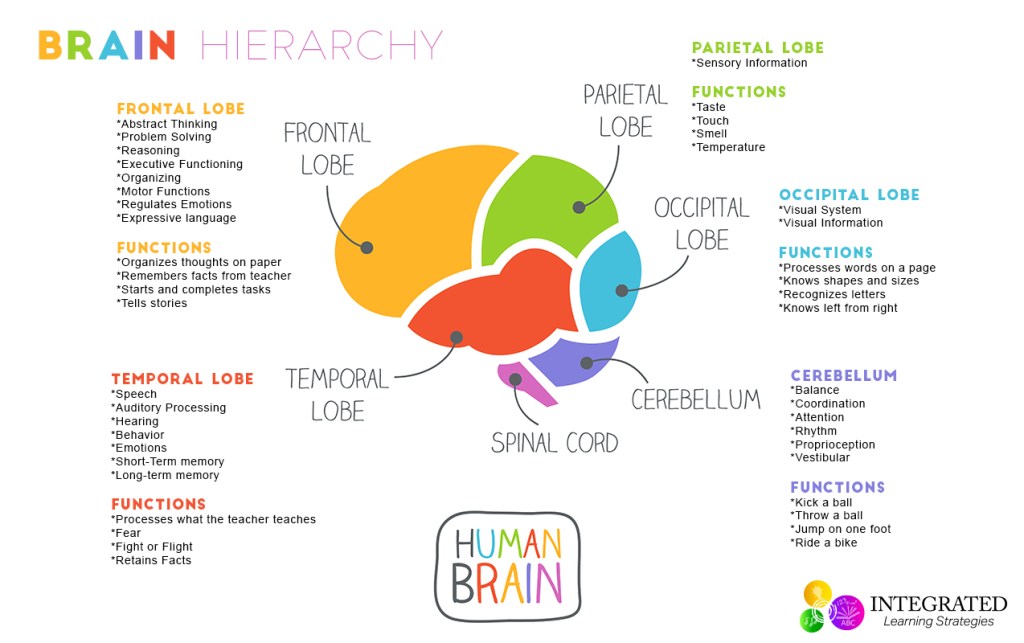
    Nassaji (2003) describes reading as a “multivariate skill set that involves a complex and integrated combination of cognitive processes ranging from low level processing abilities involved in decoding a variety of mediums, visuals, and print and encoding visualizations to higher level skills of syntax, semantics, discourse, and text representation of ideas with a reader’s global knowledge” (p. 261). Working memory is central toward improving reading skill sets according to literature. Gabe (2009) provides a direct link to lower level cognitive skill sets and working memory, to include the ability to suppress information, the “syntactic and semantic processing, such as decoding, that stores relevant information to assist reading comprehension,” and the ability to use text information to build a representation of main concepts (p. 35).

    Teachers can use strategies to improve lower level processing to assist early readers and ELL learners with phonetic and visualization approaches. An example of this can be found in the Rosetta Stone application. When evaluating a learning application, it is important to look for apps that can improve lower level processing. Rosetta Stone, uses phonetic principals with a strong audio component and visuals when introducing letters in their beginning modules. Other alternative applications like Memrise sometimes lack all of these elements. Memrise, for example, includes an audio component to assist with phonetic principles to improve lower level processing but fails to use visualization to assist with a stronger cognitive word association compared to Rosetta Stone. In essence, working memory is the vehicle in which lower level processing assists with the reader automatically comprehending communications using skill sets to include not only letter-sound correspondences but also word recognition as well as grammar knowledge and structures (Grabe, 2009).

    Higher level processing “extract explicit and implicit information from text and integrate this text-based information with prior knowledge” (Hannon, 2012, p. 125). Cognitive skill sets associated with higher level processing are more controversial. In fact, little research exists exploring multiple processing levels in advanced reading (Nassaji, 2003). Grabe (2009) provides a strong example of the complex cognitive skill sets required during higher level processing to include inferencing, suppression of information, restructuring to summarize information, linkage to prior knowledge network, and the ability to overlap elements. These outcomes rely on a higher level processing ability to create a mental representation of knowledge, improving reading comprehension and utilizing both working and long term memory.

    Literature highlights the need for continued research in this area. Grabe (2009) provides a solid argument toward the importance of teachers designing tasks to assist students toward creating a situation model and text model to improve reading performance to include activities that promote discourse, constructivist strategies like the KWHL strategy to tap into prior knowledge, inferencing and goal setting.

    In my past experiences, we incorporated the SCAN tool to utilize discourse, encouraging teachers to design lessons that have student take on a perspective to defend after reading text. For professional development, teachers were introduced to a real world problem and event. Teachers then took on a role to solve a science problem thinking as a corporate representative, a scientist, a concerned citizen, or an environmentalist. We used the discussion tool to teach how to integrate technology to assist with a discourse activity. This assisted in teachers understanding deep scientific concepts that related to the mission. Some of this can be seen at http://scan-werecriticaltothinking.blogspot.com/2012/03/do-you-walk-walk.html.

    brain-hierarchy-learning-levels-pinterest

    Grabe, W. (2009). Reading in a second language: Moving from theory to practice (pp. 21-58). New York: Cambridge University Press.

    Nassaji, H. (2003). Higher–level and lower–level text processing skills in advanced ESL reading comprehension. The Modern Language Journal, 87(2), 261-276.

    Hannon, B. (2012). Understanding the relative contributions of lower‐level word processes, higher‐level processes, and working memory to reading comprehension performance in proficient adult readers. Reading Research Quarterly, 47(2), 125-152.

  • Reflective Teaching ~ Exploring My Makerspace Literacy Research Approaches and Classroom Practice

    Currently, I teach six graduate education courses at Sul Ross State University, which is a small rural university serving 898 graduate students and a little over 2,000 undergraduate students. The institution is a Hispanic serving institution, serving low income students (Jenkins, et al., 2017). I am working with many rural schools in the Big Bend area to include Presidio ISD. Presidio ISD is a STEM school, and serves a population of 1,350 students to include demographics of 96.6 % Hispanic students and 93.4% economically disadvantaged students (2015). Presdio ISD is located on the Rio Grande river, located on the Texas-Mexican border. In addition, I am working with Maathon ISD, which is a rural district serving over 70 students to include a demographic population of 67 % Hispanics and 87 % economically disadvantaged students (2015). I am also working with several districts in the Trans-Pecos area.

    My learning goals this academic year is to grow as an educator and continue improving my Ph.D. research initiatives at the University of North Texas investigating makerspace literacy environments that centers around a project-based learning 4 career STEAM model targeting elementary and middle school programs.  My knowledge regarding the reading process has definitely changed and improved this semester. Perhaps the most significant change includes reevaluating my approach to really center on balanced literacy approaches that really think about transactional theory in action during professional development and instructional design approaches. Transactional theory centers on “how readers respond to the books that engage them and how these experiences can be enacted in classrooms” (Galda, 2013, p. 6). Transactional theory is rooted in Vygotsky’s social constructivism and principles of language and cognition, “which centers of teaching reading and writing highlighting creation of environments and activities in which students are motivated and encouraged to draw on their own resources to make live meanings” (Rosenblatt, 2013, p. 148).

    infinity_1_orig

    What will I eliminate in the future? I will eliminate some of the STEM quantitative measures I have used in the past. These instruments were only used to show interest and attitude toward STEM and never measured the impact on the overall impact of literacy. Previously, I would give this instrument before and after a STEM makerspace camp or at the beginning of a semester and at the end of a semester to gauge interest. I utilized the makerspace project-based learning model and only measured the impact of interest. The model did incorporate reading prior to the makerspace PBL and a written reflection after the experience. The pre and posttest utilized in two published studies found statistically significant findings but failed to measure the impact on reading and literacy.  The learner would take the STEM Semantic pre-test, read text from their content area, participate in a KWLH 21st century learning activity, participate in a makerspace project-based learning activity using challenge cards mapped to curriculum, and reflect via writing about the experience. At the end, learners would take another post-test, the STEM Semantic survey. I have not really considered the empirical design approaches to include journaling during the entire makerspace process and/or video recordings to include in portfolios in research approaches. In the past, I have used only quantitative measures to gauge student or teacher interest and confidence levels pre and post over a period of time. While the instruments we used at the University of North Texas are widely accepted as strong and valid instruments, I now realize that a mixed method approach to include journaling throughout the experience and video interviews and reflections would add further depth to capture the impact of the STEAM makerspace challenge cards before and after literacy events. In addition, I feel this would really add to the field of sociolinguistic issues discussed this semester. I now have a stronger understanding on how to leverage native language and family cultural heritages in the makerspace model to not only improve literacy in English Language Learners but also to value the funds of knowledge to this process.

    How can this approach help increase literacy opportunities for English Language Learners? First, I need to strengthen the collaborative dialogue, which I feel is strong in the KWLH activity. However, I can improve the scaffolding of my model to include previewing a picture book, vocabulary discussion, incorporating a story map, repeat reading of the story, compete the KWHL activity, and then encourage discourse after the makerspace activity. In addition, I can encourage video procedures and or reflections throughout the makerspace process. This will provide a visualization component that others may find beneficial and highlight the impact of the activity. Repeating readings can be used to measure fluency. The makerspace PBL activity using the challenge card concept could also include visualization to incorporate sociolinguistics highlighted in this course.

    Tan, Barton, & Schenkel (2018) describe the impact of “meaningful and prolonged engagement toward focused complex projects through making experiences and found that children’s rich funds of knowledge anchored in children’s existing social networks provide community enthnography as a pedagogical approach (p. 77). Bringing in the “community wisdom” through makerspace activities brought about rich conversations that can really leverage experiences connected to curriculum in their own community (Tan, Barton, & Schenkel, 2018, p. 81). Range & Schmidt (2014) highlight the importance of schools and community organizations to tap into prior knowledge in makerspace activities and suggest that “students drive the process of designing projects and soliciting makerspace community for help” (p. 8). While I agree this is true, I still think many students need facilitation of such projects through a focus that may connect to core curriculum content, showing that topics can be extended to real world scenarios relevant to their community.

    In conclusion, this course has helped me to really improve my understanding on how to better design literacy instructional design approaches to incorporate a large focus that centers on the transactions of the reader, text, language, culture, authentic making design process, writing, and reflection. I hope to revamp my approaches to really center on how such creative processes might not only engage interest in STEM but also build to improve cognition approaches toward multiple literacies in a mobile makerspace research environment that investigates reader response theory, or transactional theory

    Galda, L. g. (2013). Learning From Children Reading Books: Transactional Theory and the Teaching of Literature. Journal Of Children’s Literature, 39(2), 5-13.

    Jenkins, R. W., Stedman, S. W., Teusher, D. D., DeLaGarza, H. R., Acosta, A., Anwar, S. J., Paredes, R. A. (2017). Texas Public Higher Education Almanac.

    Marathon ISD, (2015) Retrieved April 13, 2018 from https://schools.texastribune.org/districts/marathon-isd/marathon-isd/.

    Presidio ISD. (2015). Retrieved April 13, 2018, from https://schools.texastribune.org/districts/presidio-isd/.

    Range, E., & Schmidt, J. (2014). Explore, plan, create: Developing a makerspace for your school community. School Library Monthly, 30(7), 8-10.

    Rosenblatt, L. Transactional theory of reading and writing. In J.B. Cobb, & M. K. Kallus (Eds.), Historical, Theoretical, and Sociological Foundations of Reading in the United States (pp. 13-66). Boston, MA: Pearson.

    Tan, E., Barton, A. C., & Schenkel, K. (2018). Equity and the Maker Movement. Science and Children, 55(7), 76-81.


  • Round as a Tortilla Makerspace STEAM Literacy Event

    Moll, Amanti, Neff, & Gonzalez (2011) describes the importance of education programs leveraging a child’s fund of knowledge through connecting with families and involving a holistic approach toward learning activities and learning environments. Makerspaces can serve as a quality environment to facilitate activities to incorporate balanced literacy approaches to meet the needs of diverse learners. Range & Schmidt (2014) suggests “successful makerspaces, particularly in education environments, balance practicality with creativity and collaboration to serve the needs of the school community” (p. 8). Tan, Barton, & Schnekel (2018) highlight that “children’s funds of knowledge were recruited by engaging them in community ethnography, which informs of the making design process” (p. 77) via a makerspace environment. The purpose of this activity is to align a purposeful makerspace activity to topics explored in Pre-K and kindergarten using the book by Thong & Parra (2015), Round as a Tortilla.


    Repeated Reading Strategy

    Day One

    1. The teacher will introduce the, Round is a Tortilla, to their students. The teacher will show the front cover, back cover and conduct a picture walk.  Remember to read the story enthusiastically, and with expression.
    2. After reading, ask why questions to allow time for students to make inferences and to measure understanding of story events.
    3. Begin the a KWHL: What do we know? What do we want to know? How will we find out? What have we learned? How will we find out?

    Send home a Round as  Tortillia Makespace STEAM Event letter to invite parents to the school library and to participate in making items from the story. Include 4 challenge card ideas in the letter with a link to the video. Invite the makerspace community. Your librarian should be able to help you facilitate this process.

    Day Two

    The teacher will conduct the second read-aloud to enrich reading comprehension and provide further engagement opportunities through a book talk, and highlight vocabulary.

    1. Add more frequent questions.
    2. Ask children questions to think beyond the story with completing a KWHL, What have we learned?
    3. Introduce 4 STEAM Makerspace Challenge Cards and Makerspace activities. Here are some ideas. Encourage students to make their own challenge card but remind students that cards should connect to elements found in the story.
      1. Journalist: Be a storyteller and make a story about shapes in your community.
      2. Scientist: Be a scientist and investigate the process of making masa and round tortillas. Be a computer scientist: Make a game with squares and other shapes.
      3. Artist: Make a weave of shapes to use as a rectangular flag as represented in the story. Make an oval necklace.
      4. Engineer: Engineer a sail for a boat that you make.

    Day Three:  Makerspace STEAM event in the library. Students will make items that represent elements in the story with their parents and makerspace community.

    Repeat the reading of the story. After the activity, ask the children, What have you learned?

    This activity connects to Moll’s ideas of knowledge as it involves the child’s entire community in the literacy process. Children can learn how their culture connects to classroom topics through the art of making. Elders can help children learn how to weave, code, build, and apply STEAM principals through everyday activities.

  • Reframing Social Constructionism Through Purposeful Makerspaces

    USE-GADGETS-AVENTURES-IN-DESIGNSocial constructionism “relies on the centrality of language to mediate what people come to understand about their lived experiences” (Avermann, 2011, p. 205). Constructionist environments support “active learning” approaches in which learners are engaged in building their own public objects or artifacts. Active learning emphasizes cognitive processes occurring during the actual construction of the object. The public nature of the final object or artifact is also understood to be important (Beynon & Roe, 2004). The “maker movement emphasizes learning through direct experiences, hands-on projects, inventions, and is based on a constructionist learning theory even if members and advocates of the movement are unaware of the theory” (Stager, 2013). Papert (2000) advocates that Piaget’s belief of all learning takes place in discovery is accurate. However, Papert extends this idea to suggest that setting learners “to the task of re-empowering the ideas of being learned is also a step toward re-empowering the idea of learning by discovery” (p. 723). Papert (1999) underscores the importance of Piaget’s theory of constructivism and the nature of knowledge. Challengers of Piaget’s constructivism often refer to experiments demonstrating knowledge acquired by infants. However, Papert stresses “Piaget as a giant in the field of cognitive theory, the difference between what a baby brings and what the adult has is so immense that the new discoveries do not significantly reduce the gap but only increase the mystery” (Papert, 1999, p. 105). Papert’s Knowledge Machine” introduced the world to a new theory of learning, constructionism, which “synthesized revised insights into human development, systems theory (cybernetics) and how we think about learning (epistemology)” (Maser, 2013). Technology based modeling and methods of teaching with technologies deliver alternative methods to teaching, providing learners with choices that engage the learner in an improved learning experience (Burbaite, Stuikys, & Damasevicius, 2013). While at MIT, Papert developed Logo, designed to introduce children to programing and robotics as early as 4th grade. Children received instant feedback from a real and physical response to their creation using technology.  Papert envisioned robotics as being extremely influential to children at a young age. Learners perform higher when engaged in an activity that is meaningful to them, and robotics along with programing languages encourages curiosity and experimentation beyond the actual syntax (Pierce, 2013). Papert led many research projects to study the effects of constructionist theories with at risk populations and in high-risk environments. These projects attempted to build an alternative approach to the learning environment. Despite obstacles, students proved to be successful. Experiences from Papert’s work towards building a community of learning centered on constructionism continues to guide the future design of learning environments (Stager, 2013).
    Constructionists follow constructivist theory, believing that children through personal experiences construct and reconstruct knowledge. Both viewpoints endorse the objective to push learners to consider a variety of perspectives and viewpoints within the world. Doing so advances cognitive abilities of learners by provoking learners to consider and expand a deeper understanding about themselves within their environments. However, constructionism emphasizes active and situational learning in which connectedness with the environment is “key to learning” (Acerman, 2001).  Unlike constructivists, constructionists stress the importance of a learner to use their ideas to attempt to solve a real problem coming from a personal perspective, thus making the environment meaningful.  Papert stresses that active and situational experience provides idea power or being one with what you are doing. Constructionism is “powerful in its use, powerful in its connections, powerful in its roots and its fit with personal identify” (Papert, 2000). Noss and Clayston (2015) provide characteristics of constructionism agenda, which is beneficial toward beginning to address the many misunderstandings and issues presenting the framework of constructionism. Characteristics include “modeling, accessibility to digital technologies, layering problem solving activities, designing socially relevant learning, and “knowledge made visible by being represented in a language with which learners can express themselves” (Noss & Clayston, 2015, p 287).

    Makerspace environments can lend themselves to social constructionism following Noss & Clayston’s (2015) characteristics as learning can be designed to socially engage our youth through relevant problem solving activities or challenges. Products and the making process allow learners to socially share their perspectives using language and cultural experiences native to their background. These are the types of activities I have been designing. I have been working and traveling for the last week attempting to take ideas to a mobile makerspace outreach bus to expand research from my previous makerspace projects. .

    This new project seeks to build upon previous NASA MMS research conducted by me through past funding and research that incorporated NASA’s MMS Makerspace Mobile Training Outreach programs, NASA MMS STEAM camp programs, the NASA MMS Challenge, MMS Transmedia book, and MMS Educators Guide. Previous programs provided global professional development for the last four years at ISTE, SITE, Makerspace, ASCD, and TCEA. The mobile STEAM makerspace outreach program developed last year seeks to expand NASA’s MMS Challenge incorporated at NASA’s MMS Launch Event in March 2015 at the Kennedy Space Center, which would serve underrepresented indigenous populations in creative approaches to enhance elementary and middle school community STEM programs. A collaboration between NASA outreach programs, university, community museums, scientific foundations, and industry could assist in building an outreach program exploring in a comparative study general perceptions, confidence levels, and self-efficacy in STEM content areas and career pathways. Improvements in teacher professional development programs would increase the overall student STEM experience in lower and middle school programs.  End results would lead to a highly confident and skilled STEM elementary and middle school workforce, encouraging more students to consider entering a STEM career pathway.

    Ackermann, E. (2001). Piaget’s constructivism, Papert’s constructionism: What’s the difference. Future of learning group publication5(3), 438.

    Avermann, D.  (2011). Some “Wonderings about literacy in teacher education.  In J.B. Cobb, & M. K. Kallus (Eds.), Historical, Theoretical, and Sociological Foundations of Reading in the United States (pp. 13-66). Boston, MA: Pearson.

    Beynon, M., & Roe, C. (2004). Computer support for constructionism in context. IEEE International Conference on Advanced Learning Technologies, 2004.

    Maser, M. (2013, 01 8). Papert led revolution in learning; visionary saw potential of students using computers to explore thte world and themselves. The Vancouver Sun

    Noss, R., & Clayson, J. (2015). Reconstructing Constructionism. Constructivist Foundations10(3), 285-288.

    Papert, S., & Harel, I. (1991). Situating constructionism. Constructionism, 36, 1-11.

    Papert, S. (1999). Papert on piaget. Número especial “The Century’s Greatest Minds,” Time, 29, 105.

    Papert, S. (2000). What’s the big idea? Toward a pedagogy of idea power. IBM Systems Journal, 39(3.4), 720–729. doi:10.1147/sj.393.0720

    Stager, G. S. (2013). Papert’s Prison Fab Lab : Implications for the maker movement and education design, 487–490.


  • Learning to Read

    How did I learn to read? This is a good question to consider when thinking about the process of reading. Teresa Horner, a middle school librarian aide, taught me how to read at a very early age. Mrs. Horner is also my mother and avid reader, which enriched my opportunities toward becoming a successful reader. My mother took a big interest and engaged me every day with rhyming and song. Before I could read, I remember memorizing Baring-Goud & Baring-Gould’s Mother Goose (1967) nursery songs that we would sing together. Later we graduated to Dr. Seuss’s children books and rhymes. I learned to listen while other read to me and to interact with the reader via song. The public library always offered a summer reading program and my mother would escort all four of her children to the program each summer. As a kindergartner, we were able to have our parents read to us to sign off on our program. Participants were rewarded in some way, but I do not remember what the reward was. We were encouraged to read 10 books each summer, attend a weekly meeting, and participated in a party afterwards. As an early reader, we participated in literacy circles, met colorful authors and guest readers, and created artistic representations of the books we read during public library programs. I began to learn to read early in life, 4 to 5 years of age, with learning the alphabet. As the textbook mentions, pictures and song influenced both my ability to engage and comprehend readings. My first grade teacher, Mrs. Fortune, provided us with books that we would take home to read. They were very simple and required parent involvement. As we progressed to second, third, fourth, and fifth grade, I remember my mother encouraging us to read more. As a family, we would read chapter books to include the Boxcar Boys, Nancy Drew Mystery Stories,  and Little House on the Prairie. Again, she took me to the public library each week and we would check out books together as a family. I don’t remember my school librarian at all and don’t remember the school library being a fun learning environment. The public library was always of interest to me.

    reading-77167.jpeg

    Baring-Gould, W. S., & Baring-Gould, C. (1967). The annotated Mother Goose: nursery rhymes old and new. New American Library.

    Cobb, J. B., & Kallus, M. K. (2011). Historical, theoretical, and sociological foundations of reading in the united states. Boston, MD: Pearson Education Inc.