Category: literacy

  • Leveraging Multisensory Approaches When Teaching Phonological Awareness Tasks

    Birsh (2018) defines phonemic awareness using The Partnership of Reading’s definition “as the ability to notice think about and work with the individual sounds in words (2003, p. 2). Phonemic awareness is an essential toward learning how to read as it helps children connect the spoken word to written language Birsh (2018). How does multisensory approaches facilitate phonemic awareness in children? Farrell & White (2018) suggest that “multisensory strategies guide students to in simultaneously linking input from eye, ear, voice, and hand to enhance learning during the carefully sequenced teaching of all systems of language” (p. 47). Phonological stimulation must begin as early as possible. Sensory stimulation through a multisensory approach of increased “auditory modeling and feedback, tactile stimulation of the articulators, visual feedback through clinician modeling, picture models of articulatory placement and the use of mirrors build cognitive connections to phonological awareness”  Pierettie, Kaul, Zarchy, & O’Hanion (2015) Adoption of multisensory approaches assists teachers in facilitating multiple avenues toward improved cognition and fully involve students to an improved learning experience.

    What does a multisensory approach to teach phonemic awareness look like in an early learning environment? Segmenting is a phonemic awareness task introduced later in the hierarchy of teaching phonemic awareness. Children learn segmenting of phonemes as they learn to identify and sort objects beginning with the same sound and later progress to focus on words with the same ending sound. An auditory task that teachers could incorporate besides saying a new vocabulary word through segmenting and blending might be to give directions using in a robot voice. Students could also make a bead slide, in which children use beads to move on a string to break the word into individual sounds as the teacher and children say the sound aloud. Teachers can use shoelaces and beads to complete this activity. This activity leverages both auditory and kinesthetic activities to assist with teaching segmentation. Games are a fun approach toward teaching the segmenting phonemic awareness task and can incorporate auditory, kinesthetic, and visual cues. For example, using “Elkonin boxes to tap a finger or place a chip in a designated box to match the number of syllables to a word” (Paulson, 2018). After a teacher models this activity, students can take turns saying and moving a chip or token. Over time the visual cue or box can eventually be eliminated from this activity.

    Strengthening cognition through multisensory approaches during early literacy will promote successful decoding when reading, which will allow for additional time and energy to be focused on reading comprehension (Pierettie, Kaul, Zarchy, & O’Hanion, 2015). Understanding how to leverage multisensory approaches to strengthen phonological awareness in early childhood programs can lead to an improved early intervention program. An emphasis on multisensory approaches within new teacher training could assist in building a stronger phonemic awareness early literacy program.

    Pieretti, R. A., Kaul, S. D., Zarchy, R. M., & O’Hanlon, L. M. (2015). Using a multimodal approach to facilitate articulation, phonemic awareness, and literacy in young children. Communication Disorders Quarterly, 36(3), 131-141.

    Birsh, J. R. & Carreker, S. Multisensory teaching of basic language skills (4th Ed). Baltimore, MD: Paul H. Brookes Publishing Co.

    Farrell, M., White, N. C. (2018). Structured literacy instruction. In Birsh, J. R. & Carreker, S. Multisensory teaching of basic language skills (4th Ed). Baltimore, MD: Paul H. Brookes Publishing Co.

    Paulson, L. H. (2018). Teaching phonemic awareness. In Birsh, J. R. & Carreker, S. Multisensory teaching of basic language skills (4th Ed). Baltimore, MD: Paul H. Brookes Publishing Co.


  • Why We Should Begin to Address Digital Disconnect for ELL Learners

    Gunderson (2013) highlights how technologies can create new opportunities and improve ELL literacies as long as barriers are addressed to improve teachers’ self-efficacy with a focus on  technology skills and confidence in professional development, funding to address equity issues, and curriculum in place to address “Digital Disconnect” in schools. Many opportunities exist to improve L2 academic performance. Park & Warschuer (2016) provide compelling evidence to suggest that activating background knowledge through integration of technology using hyperlinked media can begin to address gaps and provide valuable resources. The Multiliteracy Project is one project that caught my attention as students are able to contribute to a meaningful project in their first language and utilizes many diverse literacies that connect to my research interest. The Multiliteracy Project website, http://multiliteracies.ca/index.php/stat/register, connects students to projects around the world using many forms of literacies that promote social responsibility. Gunderson (2013) shares how hyperlinks in one project. Students produce Blue Sea Creatures hyperlinks. This could be of interest to ELL students, as they are curating content and researching to locate valid information and media, to share with others. We are working on Texas land forms and I could see how ELL learners could use this idea using hyperlinks to create their own website. We could utilize both Spanish and English in hyperlinks to provide additional information to users in Google Sites.

    Park & Warschaurer (2016)  provide strong evidence as to how multi-modal vocabulary support can assist ELL learners. Encouraging ELL learners to “express themselves in multiple ways” can provide significant gains in academic vocabulary acquisition (Park & Warschurer, 2016, p. 288). Gunderson (2013) provides many resources and ideas on how to leverage visual imagery to improve comprehensible input. Diccts.info, https://www.dicts.info/, offers users easy search features and includes a universal dictionary, basic vocabulary, picture dictionary, English dictionary, Phrases, Bilingual dictionaries, Flashcards, Vocabulary trainer, English thesaurus, and Examples of use feature. I began searching the words that are using and found that the picture dictionary is limited. For instance, the word mountain and range are both not included in search results.  Range is listed in results but does not populate a search result when selected. While this does serve as a good beginning resource, it highlights the issues facing teachers. I reviewed the PDictionary, http://pdictionary.com, and had a similar experience. I did locate cactus, which is a vocabulary word in this resource. These resources could be useful in teaching ELL students how to look up information, which Gunderson (2013) strongly encourages as a component of information literacy.

    As a strong advocate of information literacy, I appreciate Gunderson’s (2013) approach toward teaching critical literacy online. To me this is the largest issue and serves to begin to finally address the Digital Disconnect Gunderson (2013) discusses. So many classrooms and curriculum teach technology as a skill set but this approach sometimes misses the mark. Digital literacy is more than a skill set, it is a critical thinking approach to validating information prior to possibility creating meaning and products. Therefore, I agree that we must teach online critical literacy skills in all courses and begin to address how to search information, how to evaluate media, and how to read online. I really Gunderson’s (2011) practices of “teaching reading online to identify important questions, to locate information, to critically evaluate information, to synthesize information, and to communicate information” (p. 247). In essence, all teachers should be required to address how to accomplish reading online through these five actions. I can suggest that we begin to do this for  makerspace projects. One part of the makerspace process is research and through the making of the product, he will be creating and communicating his process online. So, I have decided to add a digital layer on the process.  This will strengthen is use of vocabulary as ELL learners will select how the student communicates to share final productions online.

    pexels-photo-278312.jpeg


    Gunderson, L., D’Silva, R., & Odo, D. M. (2013). ESL (ELL) literacy instruction: A guidebook to theory and practice. Routledge.

    Park, Y. and Warschauer M. (2016) Reading instruction in a technological age.  In X. Chen, V. Dronjic, & R. Helms-Park, Reading in a second language: Cognitive and psycholinguistic issues (pp. 282-302). New York: Routledge.

  • Reflective Teaching ~ Exploring My Makerspace Literacy Research Approaches and Classroom Practice

    Currently, I teach six graduate education courses at Sul Ross State University, which is a small rural university serving 898 graduate students and a little over 2,000 undergraduate students. The institution is a Hispanic serving institution, serving low income students (Jenkins, et al., 2017). I am working with many rural schools in the Big Bend area to include Presidio ISD. Presidio ISD is a STEM school, and serves a population of 1,350 students to include demographics of 96.6 % Hispanic students and 93.4% economically disadvantaged students (2015). Presdio ISD is located on the Rio Grande river, located on the Texas-Mexican border. In addition, I am working with Maathon ISD, which is a rural district serving over 70 students to include a demographic population of 67 % Hispanics and 87 % economically disadvantaged students (2015). I am also working with several districts in the Trans-Pecos area.

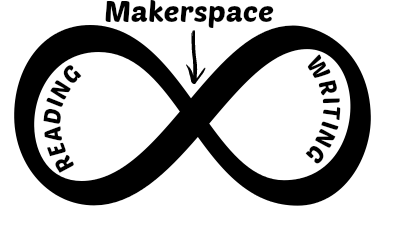
    My learning goals this academic year is to grow as an educator and continue improving my Ph.D. research initiatives at the University of North Texas investigating makerspace literacy environments that centers around a project-based learning 4 career STEAM model targeting elementary and middle school programs.  My knowledge regarding the reading process has definitely changed and improved this semester. Perhaps the most significant change includes reevaluating my approach to really center on balanced literacy approaches that really think about transactional theory in action during professional development and instructional design approaches. Transactional theory centers on “how readers respond to the books that engage them and how these experiences can be enacted in classrooms” (Galda, 2013, p. 6). Transactional theory is rooted in Vygotsky’s social constructivism and principles of language and cognition, “which centers of teaching reading and writing highlighting creation of environments and activities in which students are motivated and encouraged to draw on their own resources to make live meanings” (Rosenblatt, 2013, p. 148).

    infinity_1_orig

    What will I eliminate in the future? I will eliminate some of the STEM quantitative measures I have used in the past. These instruments were only used to show interest and attitude toward STEM and never measured the impact on the overall impact of literacy. Previously, I would give this instrument before and after a STEM makerspace camp or at the beginning of a semester and at the end of a semester to gauge interest. I utilized the makerspace project-based learning model and only measured the impact of interest. The model did incorporate reading prior to the makerspace PBL and a written reflection after the experience. The pre and posttest utilized in two published studies found statistically significant findings but failed to measure the impact on reading and literacy.  The learner would take the STEM Semantic pre-test, read text from their content area, participate in a KWLH 21st century learning activity, participate in a makerspace project-based learning activity using challenge cards mapped to curriculum, and reflect via writing about the experience. At the end, learners would take another post-test, the STEM Semantic survey. I have not really considered the empirical design approaches to include journaling during the entire makerspace process and/or video recordings to include in portfolios in research approaches. In the past, I have used only quantitative measures to gauge student or teacher interest and confidence levels pre and post over a period of time. While the instruments we used at the University of North Texas are widely accepted as strong and valid instruments, I now realize that a mixed method approach to include journaling throughout the experience and video interviews and reflections would add further depth to capture the impact of the STEAM makerspace challenge cards before and after literacy events. In addition, I feel this would really add to the field of sociolinguistic issues discussed this semester. I now have a stronger understanding on how to leverage native language and family cultural heritages in the makerspace model to not only improve literacy in English Language Learners but also to value the funds of knowledge to this process.

    How can this approach help increase literacy opportunities for English Language Learners? First, I need to strengthen the collaborative dialogue, which I feel is strong in the KWLH activity. However, I can improve the scaffolding of my model to include previewing a picture book, vocabulary discussion, incorporating a story map, repeat reading of the story, compete the KWHL activity, and then encourage discourse after the makerspace activity. In addition, I can encourage video procedures and or reflections throughout the makerspace process. This will provide a visualization component that others may find beneficial and highlight the impact of the activity. Repeating readings can be used to measure fluency. The makerspace PBL activity using the challenge card concept could also include visualization to incorporate sociolinguistics highlighted in this course.

    Tan, Barton, & Schenkel (2018) describe the impact of “meaningful and prolonged engagement toward focused complex projects through making experiences and found that children’s rich funds of knowledge anchored in children’s existing social networks provide community enthnography as a pedagogical approach (p. 77). Bringing in the “community wisdom” through makerspace activities brought about rich conversations that can really leverage experiences connected to curriculum in their own community (Tan, Barton, & Schenkel, 2018, p. 81). Range & Schmidt (2014) highlight the importance of schools and community organizations to tap into prior knowledge in makerspace activities and suggest that “students drive the process of designing projects and soliciting makerspace community for help” (p. 8). While I agree this is true, I still think many students need facilitation of such projects through a focus that may connect to core curriculum content, showing that topics can be extended to real world scenarios relevant to their community.

    In conclusion, this course has helped me to really improve my understanding on how to better design literacy instructional design approaches to incorporate a large focus that centers on the transactions of the reader, text, language, culture, authentic making design process, writing, and reflection. I hope to revamp my approaches to really center on how such creative processes might not only engage interest in STEM but also build to improve cognition approaches toward multiple literacies in a mobile makerspace research environment that investigates reader response theory, or transactional theory

    Galda, L. g. (2013). Learning From Children Reading Books: Transactional Theory and the Teaching of Literature. Journal Of Children’s Literature, 39(2), 5-13.

    Jenkins, R. W., Stedman, S. W., Teusher, D. D., DeLaGarza, H. R., Acosta, A., Anwar, S. J., Paredes, R. A. (2017). Texas Public Higher Education Almanac.

    Marathon ISD, (2015) Retrieved April 13, 2018 from https://schools.texastribune.org/districts/marathon-isd/marathon-isd/.

    Presidio ISD. (2015). Retrieved April 13, 2018, from https://schools.texastribune.org/districts/presidio-isd/.

    Range, E., & Schmidt, J. (2014). Explore, plan, create: Developing a makerspace for your school community. School Library Monthly, 30(7), 8-10.

    Rosenblatt, L. Transactional theory of reading and writing. In J.B. Cobb, & M. K. Kallus (Eds.), Historical, Theoretical, and Sociological Foundations of Reading in the United States (pp. 13-66). Boston, MA: Pearson.

    Tan, E., Barton, A. C., & Schenkel, K. (2018). Equity and the Maker Movement. Science and Children, 55(7), 76-81.


  • What is critical literacy?

    What is critical literacy?

    Morris (2011) suggests that critical literacy fosters a global approach toward meeting equipping learners towards a greater understanding of literacies to include not only “linguistic, visual, aural, spatial, emotive, and gesture forms but to also recognize literacy as it is applied in a historical and cultural context” (p. 293). Ensuring that all literacies associated toward becoming a global citizen require us to consider how we facilitate future-ready instructional outcomes that are not a standardized process, but instead encourage creativity in not only the learner but also as an instructional designer or artistic teacher. Critical literacy requires an understanding toward facilitating a community that applies social justice. Nicolini (2008) suggests that such approaches “demand discussions regarding ethics and government” (p. 77). Dialogue facilitates an understanding of injustices, clairity, and empathy, which builds knowledge towards environmental, economic, pedagogical, political, social, and cultural transformations, or critical literacy (Morris, 2011). Why is this important?

    Blotz, Henriksen, & Mishra (2015) show that empathy is in decline and is an important characteristic  of creative thinkers. We often talk about this as a skill set that is in decline and needed. However, strategies that encourage empathy and creativity are rarely provided in professional development trainings. Perhaps it is due to a lack of understanding of  pedagogy and anthology to center on what critical literacy is, how it is important, and what we could do to facilitate learning in this area. Perhaps Morris (2011) said it best, “critical literacy attempts to make clear how education, under the guise of accountability schemes, is presently being reduced to domesticating factories of high-stakes testing linking standardized assessment and curriculum that undermines the possibilities for a democratic culture in numerous ways by deskilling teachers an eliminating creative processes and projects” (p. 298). This minimizes our ability to rely on the importance on cultural influences and historical approaches which produces new knowledge.

    Boltz, L., Henriksen, D., & Mishra, P. (2015). Rethinking Technology & Creativity in the 21st Century: Empathy through Gaming – Perspective Taking in a Complex World. Techtrends: Linking Research & Practice To Improve Learning59(6), 3-8.

    Morris, D.  (2011). Critical literacy: crisis and choices in the current arrangement. In J.B. Cobb, & M. K. Kallus (Eds.), Historical, Theoretical, and Sociological Foundations of Reading in the United States (pp. 13-66). Boston, MA: Pearson.

    Nicolini, M. (2008). Chatting with Letters: Developing Empathy and Critical Literacy through Writing Communities. The English Journal, 97(5), 76-80.

    7149966049_9b7a43b2a9

  • Reframing Social Constructionism Through Purposeful Makerspaces

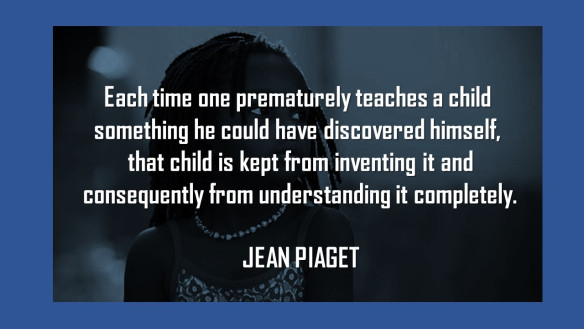
    USE-GADGETS-AVENTURES-IN-DESIGNSocial constructionism “relies on the centrality of language to mediate what people come to understand about their lived experiences” (Avermann, 2011, p. 205). Constructionist environments support “active learning” approaches in which learners are engaged in building their own public objects or artifacts. Active learning emphasizes cognitive processes occurring during the actual construction of the object. The public nature of the final object or artifact is also understood to be important (Beynon & Roe, 2004). The “maker movement emphasizes learning through direct experiences, hands-on projects, inventions, and is based on a constructionist learning theory even if members and advocates of the movement are unaware of the theory” (Stager, 2013). Papert (2000) advocates that Piaget’s belief of all learning takes place in discovery is accurate. However, Papert extends this idea to suggest that setting learners “to the task of re-empowering the ideas of being learned is also a step toward re-empowering the idea of learning by discovery” (p. 723). Papert (1999) underscores the importance of Piaget’s theory of constructivism and the nature of knowledge. Challengers of Piaget’s constructivism often refer to experiments demonstrating knowledge acquired by infants. However, Papert stresses “Piaget as a giant in the field of cognitive theory, the difference between what a baby brings and what the adult has is so immense that the new discoveries do not significantly reduce the gap but only increase the mystery” (Papert, 1999, p. 105). Papert’s Knowledge Machine” introduced the world to a new theory of learning, constructionism, which “synthesized revised insights into human development, systems theory (cybernetics) and how we think about learning (epistemology)” (Maser, 2013). Technology based modeling and methods of teaching with technologies deliver alternative methods to teaching, providing learners with choices that engage the learner in an improved learning experience (Burbaite, Stuikys, & Damasevicius, 2013). While at MIT, Papert developed Logo, designed to introduce children to programing and robotics as early as 4th grade. Children received instant feedback from a real and physical response to their creation using technology.  Papert envisioned robotics as being extremely influential to children at a young age. Learners perform higher when engaged in an activity that is meaningful to them, and robotics along with programing languages encourages curiosity and experimentation beyond the actual syntax (Pierce, 2013). Papert led many research projects to study the effects of constructionist theories with at risk populations and in high-risk environments. These projects attempted to build an alternative approach to the learning environment. Despite obstacles, students proved to be successful. Experiences from Papert’s work towards building a community of learning centered on constructionism continues to guide the future design of learning environments (Stager, 2013).
    Constructionists follow constructivist theory, believing that children through personal experiences construct and reconstruct knowledge. Both viewpoints endorse the objective to push learners to consider a variety of perspectives and viewpoints within the world. Doing so advances cognitive abilities of learners by provoking learners to consider and expand a deeper understanding about themselves within their environments. However, constructionism emphasizes active and situational learning in which connectedness with the environment is “key to learning” (Acerman, 2001).  Unlike constructivists, constructionists stress the importance of a learner to use their ideas to attempt to solve a real problem coming from a personal perspective, thus making the environment meaningful.  Papert stresses that active and situational experience provides idea power or being one with what you are doing. Constructionism is “powerful in its use, powerful in its connections, powerful in its roots and its fit with personal identify” (Papert, 2000). Noss and Clayston (2015) provide characteristics of constructionism agenda, which is beneficial toward beginning to address the many misunderstandings and issues presenting the framework of constructionism. Characteristics include “modeling, accessibility to digital technologies, layering problem solving activities, designing socially relevant learning, and “knowledge made visible by being represented in a language with which learners can express themselves” (Noss & Clayston, 2015, p 287).

    Makerspace environments can lend themselves to social constructionism following Noss & Clayston’s (2015) characteristics as learning can be designed to socially engage our youth through relevant problem solving activities or challenges. Products and the making process allow learners to socially share their perspectives using language and cultural experiences native to their background. These are the types of activities I have been designing. I have been working and traveling for the last week attempting to take ideas to a mobile makerspace outreach bus to expand research from my previous makerspace projects. .

    This new project seeks to build upon previous NASA MMS research conducted by me through past funding and research that incorporated NASA’s MMS Makerspace Mobile Training Outreach programs, NASA MMS STEAM camp programs, the NASA MMS Challenge, MMS Transmedia book, and MMS Educators Guide. Previous programs provided global professional development for the last four years at ISTE, SITE, Makerspace, ASCD, and TCEA. The mobile STEAM makerspace outreach program developed last year seeks to expand NASA’s MMS Challenge incorporated at NASA’s MMS Launch Event in March 2015 at the Kennedy Space Center, which would serve underrepresented indigenous populations in creative approaches to enhance elementary and middle school community STEM programs. A collaboration between NASA outreach programs, university, community museums, scientific foundations, and industry could assist in building an outreach program exploring in a comparative study general perceptions, confidence levels, and self-efficacy in STEM content areas and career pathways. Improvements in teacher professional development programs would increase the overall student STEM experience in lower and middle school programs.  End results would lead to a highly confident and skilled STEM elementary and middle school workforce, encouraging more students to consider entering a STEM career pathway.

    Ackermann, E. (2001). Piaget’s constructivism, Papert’s constructionism: What’s the difference. Future of learning group publication5(3), 438.

    Avermann, D.  (2011). Some “Wonderings about literacy in teacher education.  In J.B. Cobb, & M. K. Kallus (Eds.), Historical, Theoretical, and Sociological Foundations of Reading in the United States (pp. 13-66). Boston, MA: Pearson.

    Beynon, M., & Roe, C. (2004). Computer support for constructionism in context. IEEE International Conference on Advanced Learning Technologies, 2004.

    Maser, M. (2013, 01 8). Papert led revolution in learning; visionary saw potential of students using computers to explore thte world and themselves. The Vancouver Sun

    Noss, R., & Clayson, J. (2015). Reconstructing Constructionism. Constructivist Foundations10(3), 285-288.

    Papert, S., & Harel, I. (1991). Situating constructionism. Constructionism, 36, 1-11.

    Papert, S. (1999). Papert on piaget. Número especial “The Century’s Greatest Minds,” Time, 29, 105.

    Papert, S. (2000). What’s the big idea? Toward a pedagogy of idea power. IBM Systems Journal, 39(3.4), 720–729. doi:10.1147/sj.393.0720

    Stager, G. S. (2013). Papert’s Prison Fab Lab : Implications for the maker movement and education design, 487–490.


  • Considering Cognitive Science and Instructional Design on Reading

    Considering Cognitive Science and Instructional Design on Reading

    Personal learning theories on how children and adults best learn are often deeply rooted in past experiences, knowledge, and personal convictions (Ackermann, 2001). We had the unique opportunity to actually hear our great scholar’s explain questions of why and how to address learning as a science. Good (2011) was correct to point out the importance of teachers understanding the cognitive science and theories behind the learning process. This is essential toward improving the instructional design that Skinner speaks of in the video. Learning theories related to how children learn have existed since ancient times. Traditional behavioral learning theories stress the importance of the instructor. Knowledge is transmitted from the mind of the teacher, through lectures and words, imprinted to the student. Learning in a behaviorist’s perspective is a passive experience centered on memorization. Active learning theories evolved from traditional approaches. Piaget’s “Constructivism” continues to have far reaching implications to many modern theories. Constructivism centers on the thought that “knowledge is constructed within the learner’s mind on the basis of existing knowledge and new experiences” (Mavridis, Al Rashdi, Al Ketbi, Al Ketbi, & Marar, 2009). It was wonderful to view Piaget explain his own theories in the video Piaget on Piaget.

    What do I believe about the science of learning?

    Cognitive development and deep understanding are the foci of constructivism rather than emphasizing behaviors and skills (Fosnot & Perry, 1996).  Social Constructivism, an extension of Piaget’s learning theory, stresses that learning is a meaningful and collaborative process employing a variety of perspectives (Smith & Ragan, 2005). Papert’s “Constructionism is a learning theory that adopts constructivist views, but also holds that learning happens most effectively when people are active in making objects to share in the real world” (Mavridis et al., 2009). Constructionism is a learning theory that considers the design as part of the building process. Constructionism allows learners to “dive into unknown situations,” introducing new perspectives (Ackerman, 2001). Constructionism principles outlined by Burbaite, Stuikys, and Damasevicius (2013) provide a framework to approaching e-learning environments.Prior knowledge impacts learning and knowledge is constructed, connecting to constructivist learning theory.Learning and knowledge occurs through the design of meaningful and authentic projects, creating an internal desire to learn.Learning is a process centering on integration of concepts from different realms of knowledge.Building and manipulating objects engage learners to connect and explore the world.Reflection on a learner’s form of understanding is a key component to learning. The above principals center on Papert’s ideas that “learning by making” is effective, allowing learners to construct, or elaborate, thereby providing richness and deeper learning experiences (Papert & Harel, 1991).Constructionist environments support “active learning” approaches in which learners are engaged in building their own public objects or artifacts. Active learning emphasizes cognitive processes occurring during the actual construction of the object. The public nature of the final object or artifact is also understood to be important (Beynon & Roe, 2004). The “maker movement emphasizes learning through direct experiences, hands-on projects, inventions, and is based on a constructionist learning theory even if members and advocates of the movement are unaware of the theory” (Stager, 2013). Papert (2000) advocates that Piaget’s belief of all learning takes place in discovery is accurate. However, Papert extends this idea to suggest that setting learners “to the task of re-empowering the ideas of being learned is also a step toward re-empowering the idea of learning by discovery” (p. 723). Papert (1999) underscores the importance of Piaget’s theory of constructivism and the nature of knowledge.How does this theory assist with understanding toward reading and cognitive processing?To be honest this is the area of improvement that I am working on. I have a strong cognitive science background, but Vaden (2013) presents us with a strong argument as to why teachers need to understand “neurological functioning of struggling readers” (p. 174) Brain science is fascinating and knowing how to address cognitive and behavioral skills during instruction can prove to be invaluable to any educator. For instance, strategies associated with word recognition should center around linking symbols with sounds, as research has linked “fluency to associating symbols with sounds” (Vaden, 20130, p. 181). It is exciting to learn that exposure to quality instructional design can profoundly increase reading comprehension.
    How does this theory assist with understanding toward reading and cognitive processing?To be honest this is the area of improvement that I am working on. I have a strong cognitive science background, but Vaden (2013) presents us with a strong argument as to why teachers need to understand “neurological functioning of struggling readers” (p. 174) Brain science is fascinating and knowing how to address cognitive and behavioral skills during instruction can prove to be invaluable to any educator. For instance, strategies associated with word recognition should center around linking symbols with sounds, as research has linked “fluency to associating symbols with sounds” (Vaden, 20130, p. 181). It is exciting to learn that exposure to quality instructional design can profoundly increase reading comprehension. How can we provide this type of quality instructional experience? I believe we need to improve teaching education programs that address learning as a science, require quality professional development programs, and improve our instructional approaches to target issues and personalize intervention.


    Ackermann, E. (2001). Piaget’s constructivism, Papert’s constructionism: What’s the difference. Future of learning group publication5(3), 438.

    Beynon, M., & Roe, C. (2004). Computer support for constructionism in context. IEEE International Conference on Advanced Learning Technologies, 2004.

    Burbaite, R., Stuikys, V., & Damasevicius, R. (2013, July). Educational robots as collaborative learning objects for teaching Computer Science. In System Science and Engineering (ICSSE), 2013 International Conference on (pp. 211-216). IEEE.

    Edley, N. (2001). Unravelling Social Constructionism. Theory & Psychology, 11(3), 433–441.

    Fosnot, C. T., & Perry, R. S. (1996). Constructivism: A psychological theory of learning. Constructivism: Theory, perspectives, and practice, 8-33.

    Good, K. (2013). Intersections of educational psychology and the teaching of reading:  connections in the classroom. In J.B. Cobb, & M. K. Kallus (Eds.), Historical, Theoretical, and Sociological Foundations of Reading in the United States (pp. 13-66). Boston, MA: Pearson.

    Mavridis, N., Al Rashdi, A., Al Ketbi, M., Al Ketbi, S., & Marar, A. (2009, December). Exploring behaviors & collaborative mapping through Mindstorms robots: A case study in applied social constructionism at senior-project level. In Innovations in Information Technology, 2009. IIT’09. International Conference on (pp. 284-288). IEEE.

    Papert, S., & Harel, I. (1991). Situating constructionism. Constructionism, 36, 1-11.

    Papert, S. (1999). Papert on piaget. Número especial “The Century’s Greatest Minds,” Time, 29, 105.

    Papert, S. (2000). What’s the big idea? Toward a pedagogy of idea power. IBM Systems Journal, 39(3.4), 720–729.

    Smith, P. L., & Ragan, T. J. (2005). Foundations of Instructional Design. In, Instructional Design.

    Stager, G. S. (2013). Papert’s Prison Fab Lab : Implications for the maker movement and education design, 487–490.

    Vanden, S. R. (2013) The brain and reading. In J.B. Cobb, & M. K. Kallus (Eds.), Historical, Theoretical, and Sociological Foundations of Reading in the United States (pp. 13-66). Boston, MA: Pearson.

  • Learning to Read

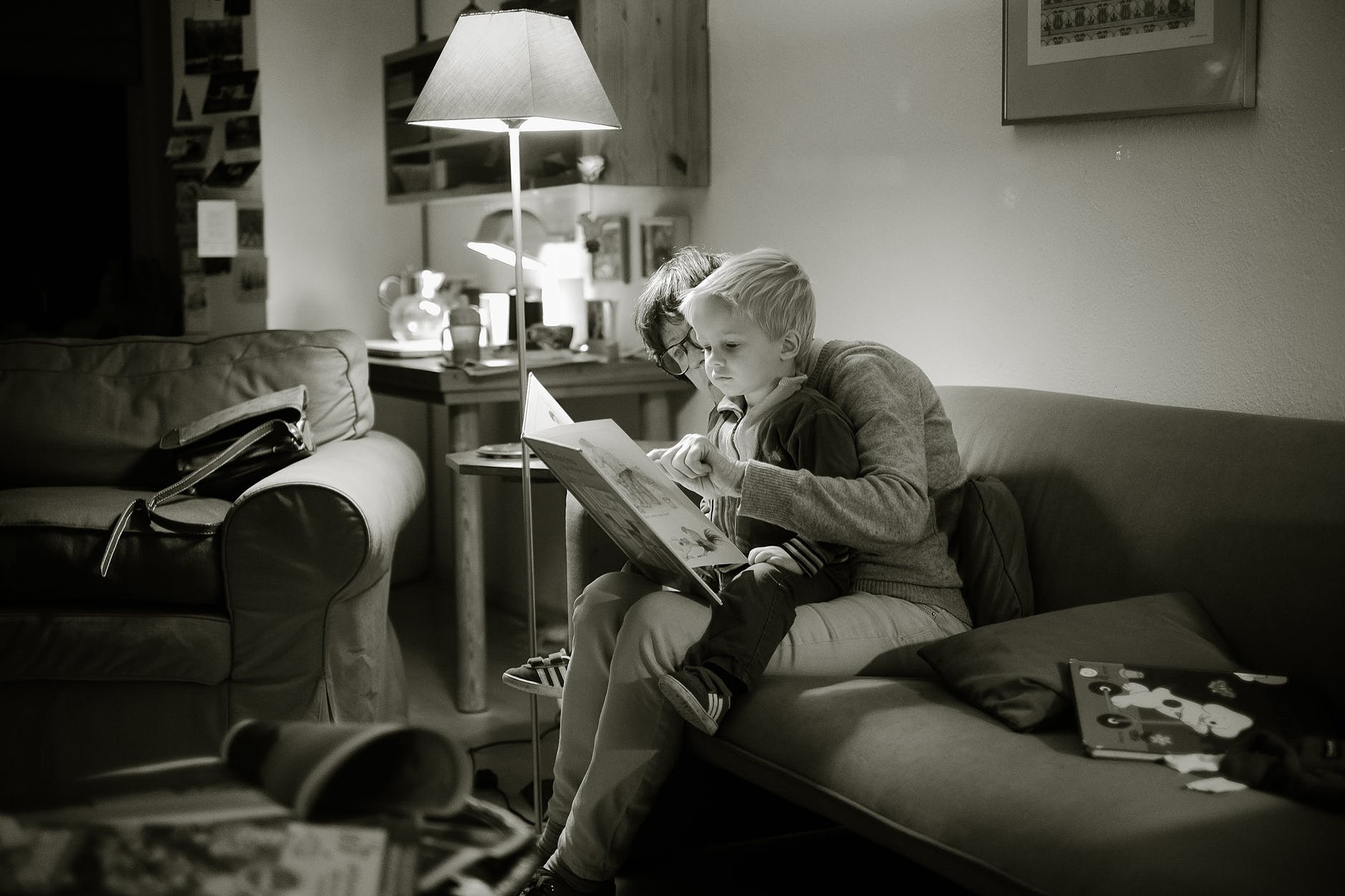
    How did I learn to read? This is a good question to consider when thinking about the process of reading. Teresa Horner, a middle school librarian aide, taught me how to read at a very early age. Mrs. Horner is also my mother and avid reader, which enriched my opportunities toward becoming a successful reader. My mother took a big interest and engaged me every day with rhyming and song. Before I could read, I remember memorizing Baring-Goud & Baring-Gould’s Mother Goose (1967) nursery songs that we would sing together. Later we graduated to Dr. Seuss’s children books and rhymes. I learned to listen while other read to me and to interact with the reader via song. The public library always offered a summer reading program and my mother would escort all four of her children to the program each summer. As a kindergartner, we were able to have our parents read to us to sign off on our program. Participants were rewarded in some way, but I do not remember what the reward was. We were encouraged to read 10 books each summer, attend a weekly meeting, and participated in a party afterwards. As an early reader, we participated in literacy circles, met colorful authors and guest readers, and created artistic representations of the books we read during public library programs. I began to learn to read early in life, 4 to 5 years of age, with learning the alphabet. As the textbook mentions, pictures and song influenced both my ability to engage and comprehend readings. My first grade teacher, Mrs. Fortune, provided us with books that we would take home to read. They were very simple and required parent involvement. As we progressed to second, third, fourth, and fifth grade, I remember my mother encouraging us to read more. As a family, we would read chapter books to include the Boxcar Boys, Nancy Drew Mystery Stories,  and Little House on the Prairie. Again, she took me to the public library each week and we would check out books together as a family. I don’t remember my school librarian at all and don’t remember the school library being a fun learning environment. The public library was always of interest to me.

    reading-77167.jpeg

    Baring-Gould, W. S., & Baring-Gould, C. (1967). The annotated Mother Goose: nursery rhymes old and new. New American Library.

    Cobb, J. B., & Kallus, M. K. (2011). Historical, theoretical, and sociological foundations of reading in the united states. Boston, MD: Pearson Education Inc.


  • Reflection on Reading in the 20th Century


    What is the difference between the look-say and the phonics approaches to teaching reading. What did the first grade studies tell us about these methods?

    Mitford Mathews’s reading method words-to-reading, or look-say, introduces a large amount of vocabulary words as sight words to the reader. For instance, the teacher would introduce a letter and then provide a list of words and ask the learner to “note or listen for similarity between sounds of letters in each word” (Cobb & Kallus, 2011, p. 16). Matthews look-say method was widely accepted for most of the 20th century. After sight words are introduced, the student would be introduced to analytic phonics, or generalizations, which were applied to a particular sound correspondence.  The idea that readers would respond more rapidly as they recognize whole words, or look-say, rather than a letter-sound relationship.

    Phonics approaches to reading teach the student the sound to say each time they observe a symbol, or a sound to a letter approach. The learner is then motivated to decode words that they encounter. Prior to the first grade studies, reading began in first grade. Sight words, or the look-say method, was used, and analytic phonics introduced. Vocabulary was tightly controlled in grades 1-3, and children worked in small groups. However, the first grade studies highlighted a need to revamp the entire education system, as Chall found that an early code emphasis would be beneficial toward word recognition at an earlier age. As a result, a greater emphasis and intensity was placed on phonics at an earlier age. A change in curriculum was implemented. No longer did schools employ the Dick and Jane approach in first grade. Students were introduced to a wider library collection, to include a focus on children’s literature, with little vocabulary restriction.

    Look at the examples of texts in the table on p. 29. What was the underlying assumption about how reading should be taught for each type of text?

    Each example provides an opportunity for educators to explore how to best help a student learn to read, not to to focus on teaching a student to read, an idea expanded upon by Frank Smith (1971). Smith valued the importance of literacy experiences on cognition and stressed the importance of value texts for early readers.  He also suggested that a mistake was an opportunity to explore the inner workings of the child’s mind, with a focus on cognitive processes and strategies. Each example provides a strategy using value text to assist the teacher. Example one employs patterns, language rhyming,  so that the early reader can predict what is coming next and then understands the meaning. It reminds me of the same principles and strategies that we currently utilize when using a program like flocabulary. It is a great way to introduce vocabulary to students. Students are engaged and can predict what is coming next using language rhyming. The other two examples rely on high frequency words and are the best approach toward engaging beginning readers. Example two utilize rhythm patterns, repetition, and rendition so that the learner can interpreting and interacting with text. Decoding text, the third example, utilize phonics and is not the preferred choice. A beginner can learn one or two words from repetition but do they really know what the words mean? Example one incorporates an improved approach because it encompasses a language rhyme and patterns to help the emerging reader make sense of the words read. It is interesting to me that Smith (1971) warns of the dangers of relying heavily of visuals when so much screen time is placed in front of our students in K-12 environments.

    How does the notion of integrated curriculum relate to the ideas proposed by sociolinguistics?

    Both rely on the premise that perspectives, rooted in cultural heritages, should be valued and contribute toward improving knowledge acquisition through a global lens. Both examples create a more meaningful approach, as differences are valued and not seen as a shortcoming. For example, integrating curriculum can break down barriers between core content areas so that diverse learners can make sense of how each content area contributes to the “real world”. Sociolinguistics adopts this same concept, as the idea values dialects. Integrating dialects exposes learners to new cultures and communities of thought through perspectives. Learners can learn dialects from each other, and as a result, learners develop a better understand of how language differences can contribute toward a better understanding of community. Both approaches create a more globally competent student. In addition, both integrated curriculum and sociolinguistics adopt the idea that reading and language is best understood when put to use for another purpose, learning activity, or event.

    Cobb, J. B., & Kallus, M. K. (2011). Historical, theoretical, and sociological foundations of reading in the united states. Boston, MD: Pearson Education Inc.

    Smith, F. (1971). Understanding Reading: A Linguistic Analysis of Reading and Learning to Read. New York: Holt, Rinehart and Winston.