Category: Uncategorized

  • Considering the Science of Phenomenology and Linguistic Analysis in Learning Technologies

    How do students learn?  How can we continue to foster creative thinking?  Children who are very young are full of questions and often eager to explore and learn.  How does the physical classroom environment and school experience influence learning?

    How does the examination of life experiences contribute to learning?  How can learning technology improve data capture and themes in a K12 environment?


    Østergaard, Dahlin, & Hugo (2008)  discuss how phenomenological can be used during lab observation exercises.  “Teachers need to establish forums in which the diversity of interpretations can be discussed and contrasted with the canonical views, which the teacher may have to contribute him- or herself.  Phenomenology has a considerable potential as a method for investigating learning as a whole.  (Østergaard, Dahlin, & Hugo, 2008).


  • Giving students a voice….

    One way to engage students is by giving students a voice. Technology can really help facilitate learning because it provides multiple communication channels that the teacher can use to give students a voice (who may not otherwise engage), which empowers them to take ownership in their learning. A larger audience can allow for the student to extend learning outside of the classroom. Technology is not the answer to academic issues. We must use it in a meaningful way that motivates students to think. Our task is to create a new generation of problem solvers and critical thinkers. Technology must facilitate higher order thinking activities. You can find a lot of “junk” technology activities that are not engaging or fun, especially linear activities.

    Some other thoughts: We have to be careful not to crush student ideas, voices, etc. We don’t always “know” better. Stand and deliver style of teaching does fit is some cases, but we need to spend less time presenting and more time allowing kids to If you truly value student voice, they must know that their ideas can direct the path to learning. Think about how you can give your students a global voice. How do we build a career focus, or career voice, to produce college ready graduates? Students must know that you believe in them. We must show that we like what we are teaching and what we teach. Choose learning technologies that give students a voice and allow them to contribute not just work linearly to contribute only to themselves, you, or a grade. Are we spending all of our time on compliance and standardization? Don’t be boring, push beyond the easy and comfortable. Students are often willing to choose boring over taking a risk. Expect students to do exciting things. Recognize boring and redirect, remove the safe option. Foster joy, we should all be laughing more because kids learn in a happy environment. An expert recently told me that we should incorporate the 5 model, Engage, Explore, Explain, Elaborate, Evaluation. Their suggestion was to move the first 3 online, and that will save you time for elaboration and evaluation. The flip concept is only a system, the strategy of 5 e is still needed from you. You and your relationship with students is still the most important motivating factor. If you want to use a flip system, you must question, elaborate, and evaluate in class. Videos alone will not address learning issues. You must expect students to do their part and follow through. It does work and is working in many areas in the nation and state. However, teaching is still the most important component.

    Some ideas:

    1. Creating a how to video and blog (written) evaluation reflections: Great alternative formal assessment tool. I am very proud of Debra Miller’s leadership in creating a video to publish on the junior high web page. A parent called this morning very excited to see the video. Keep up the excellent work.

    2. Twitter: Students from one district last night led a state wide twitter chat on giving students a voice. Twitter widgets on your website really interest students. Teaching students how to act professionally online can be modeled in this way. Check out #txed hash tag to view how students led a very professional collaborative discussion on this topic. We have Dublin High School students using twitter and I enjoy seeing students contributing to increase school spirit. How can we get kids to begin contributing about core subject on instructional content?

    3. Skype: Skype in the classroom is a great way to find partners to allow for students to collaborate, present, use higher level questioning, and elaboration on evaluation of ideas. This is an excellent way to bring “experts” into your classroom.

    4. Offsite curriculum center: We have access to produce content to showcase to the community. How can you take advantage of this? Need ideas, let me know. I was very impressed with Donna Lewis’s 2nd grade and 3rd grade students. The entire class was highly engaged with her yesterday, check out one production example: http://animoto.com/play/Fxc4wpIsQwEYUTyr6l6zxw
    5. Empower students to be creative and help them to understand that they matter.
    6. Consider your physical learning space. How can you redesign learning spaces so that they are “fun”?   I got to visit with students earlier this week at the high school and they expressed how that action created a more relaxing and fun atmosphere.

    7. Problem solving and failure with a voice: Robotics is a way to get kids motivated and you would be surprised at how these kits can fit your exiting curriculum. Lego released a writing curriculum this week that encourages creative writing and academic vocabulary development. The production that is created by the team gives students a voice by allowing them to showcase a robot to a wider audience. It is great to see so many students enjoying problem solving activities using robotics.  Dublin High School, and photos from Dublin Intermediate and Junior High students who are so excited to be part of the after school robotics club. We have 47 students participating weekly in an optional after school program. These students are having fun expanding in writing journals, collaborating, thinking and problem solving. . We learn from failure. Research on this topic: http://hbr.org/2011/04/strategies-for-learning-from-failure/ar/1

    8. Portfolios are a great way to showcase student work and online portfolios gives students a large voice that they can then take to a wider audience. This is a great way to give students a career voice. With project share, students have an Epsilen portfolio account that can allow all teachers to “showcase” a student production that they can then add to their existing portfolio.

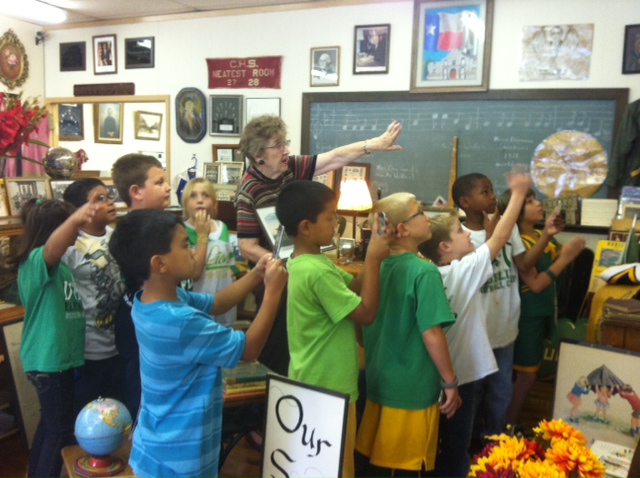
    It was fun taking students with their teacher, Mrs. Donna Lewis, to the Dublin Historical Museum recently.  Students really enjoyed learning about museum artifacts, conducting research, using their iPods to record photographs, and creating a movie to publish for a wider audience.  Learning really can be fun!

    Image

  • Reflections on Jacques Derrida and the Deconstructionist Movement

    The history and context of vocabulary must be analyzed when evaluating texts.  Universally valued human rights should include an equal opportunity to quality information and education.  With technologies the planet now could have access to discourse,  common ideas, historical textual contexts, and exposures to new identities.  How often do classrooms analyze all hidden assumptions and perspectives on a subject?  How can we improve K12 analysis of information using technology to provide meaning to vocabulary?  Words are only useful to students who have established meaning or an understanding of how these words in the past, present, and future are used.   How can we use art to help establish meaning?


  • Are We Leveraging Technologies To Maximize Learning Outcomes?

    After reading materials for this course and attending TCEA Area 10 and 11 conference this week, I am convinced now more than ever that it is necessary to reevaluate the role of technology to facilitate appropriate instructional delivery. The strong and positive teacher/student relationship is still the most important contributor to learning. Lateral learning technologies often lack meaningful experiences, but do serve as a means to replace weak teacher. Technologies may transfer information, but often the transfer of information does not equate to an improved learning experience.

    Students in tomorrow’s world must become problem solvers, critical thinkers, and global contributors. In a world that is full of information, our schools need teachers who understand how to leverage technologies to increase communication and conversation on meaningful core subject content and its relevance to “real world” problems. Possible solutions and problem solving parameters should be debated and alternative formal evaluation techniques should be implemented. Learning technologies can be utilized to measure alternative formal assessment under the guidelines of NCLB, but states continue to utilize a standardized approach.

    With the availability of Project Share in Texas, instructors in this area have an opportunity to utilize student portfolios and provide an alternative formal assessment to show yearly progress over time. How could we facilitate this approach? With the recent debate in the state of Texas surrounding STAAR, Texas’s new formal standardized testing system, it might be time to ask how Texas could leverage its technology resources to show adequate yearly progress for grades 3-12 using learning technologies available within Project Share. The portfolio piece may be a way to provide meaningful contributions to formal assessments.

    TCEA Area 10 and 11 conference started with Carl Hooker challenging the audience to give students a voice and choice. Carl also proposed for instructional leaders to consider the physical environment and shared how Google uses physical space to engage employees, which improves productivity. How can we recreate our physical classroom and building space so that the environment is engaging and fun? How can we give students a museum experience? Why is this important?

    Communication channels are everything. Consider how your environment and communications have changed. How do we create an environment to promote curiosity? Audiences for communication have changed due to technology improvements.  In fact, Texas is very lucky to have a systemized state communication channel connecting all districts through Project Share.

    My largest take away from Carl’s keynote was the very moving video created by his students. Carl’s example of giving students a voice and choice was very moving and educators need to focus more on how students are allowed to communicate. Texas should leverage its resources to allow for more collaboration amongst students across Texas, the nation, and the planet.

  • Capacity to Store Information and it Affect on Truths….

    Currently, positivism is viewed “as a single reality independent of humans, and that the methods of natural science should be adopted in research on social, specifically educational, questions” (Mackenzie, 2011, p. 534).  Education research, in many circles, currently adopts this idea of truth.  However, historically “all fields until about fifty years ago and still in philosophy and the philosophy of science view the term as a rejection of the correspondence theory of truth, the denial of, or more correctly agnosticism about, the existence of a single reality independent of human beings” (Mackenzie, 2011, p. 534). The physical world and the laws of nature are immutable.  It exists independently of human’s wants or desires and is mostly beyond human control.  Humans are part of nature, and human activity is part of the natural process. 

    Social researches are often biased and have little understanding of the laws of natural sciences.  As Mackenzie (2011) points to standardized methods often blended with qualitative research ignore the evolution of language and original meanings.  Social researchers can be biased against the laws of natural sciences and selection (p. 535). 

    Humans banished many medieval superstitions that were based on observations, but humans lacked experiences and misunderstood phenomenon being observed.  Humans’ attempts to explain natural processes, natural laws independent of human existence, have proven to be mistruths.

    Natural laws are discovered through science.  Language stores science and the evolution of technology stores language.  As a result, humans have an increasing knowledge of science and an increasing knowledge of truth in a direct proportion.  The more humans experiment with science, the more we will understand the truths surrounding the sciences.  Habermas’s (1971) paradigm of the stone does prove that truths do exist in natural law (p. 265). 

    Fantasy worlds existed but in a limited context.  Monks could live in a fantasy world, but this choice was limited.  Oral tradition, cave art, the Bible, the Torah, the Koran and anime are all storage mediums for the fantasy world.  Affordable and collaborative technologies increase the human ability to exist in a fantasy world.  The natural world continues to exist, changed only by nature’s timeframe.  Man is part of nature and all of our technologies are part of the natural world.  After human consciousness ceases to exist, there will still be truth and order in the universal world. 

    Habermas, J. (1971). Knowledge and Human Interests, J. J. Shariro, trans. (Boston, MA, Beacon Press).

    Mackenzie, J. (2011). Positivism and Constructivism, Truth and “Truth.” Educational Philosophy and Theory, 43(5), 534-546.


  • Learning Technologies, Effective or Not Effective?

    Attempting to understand the evolution of learning technologies is complicated.  Thomas Edison’s idea of moving pictures spawned many learning opportunities produced new knowledge and learning technologies.  The market model of research has produced a new world where information is cheaper and easily obtained.

    Why is it so hard to get schools to adopt learning technologies?  This is not a new question or concern.  From literature review, it was interesting to learn that the overhead projector is one of the few examples of learning technologies implemented in the school industry first.  The challenge facing instructional designers to try new ideas and approaches and to encourage use is not a new phenomenon, which I find encouraging as an instructional technologist.

    Research approaches and opportunities are numerous as the adaption process continues to be a struggle.  Reflecting on my personal experience, I found it difficult to even locate a 1:1 K5 campus in Texas two years ago.  Motivational factors that can improve the adoption process need to be studied to ensure that change is productive and leads to newly acquired direction and knowledge.  How can we better match the needs of users?  How can we better include users in the selection of learning technologies?

    Blended approaches that consider global perspectives are often philosophical in nature.  Philosophical reflections from descriptive, normative, and analytic methods assist in developing new questions and ideas to then quantify.

    Educational research follows natural laws of science.  Educational research is a field of science that attempts to define the human ability to transfer knowledge from one individual to another individual, from one individual to a group, from a group to a single individual, a group to another group.  Learning technologies are carriers or storage vessels used to aide individuals ability to transfer knowledge.

    Descriptive studies using surveys are often biased, contain leading questions, and many do leave out nonresponders.  Surveys have to be purposeful.  Interviews, observational research, and questionares must focus on questioning techniques and population.  Approaches using visuals to summarize data was interesting to me.  The arts again lends itself to be the universal medium to foster communications.    


  • Academic Vocabulary Tech Strategies Taking STEAM

    I wanted to share some resources that I came across from my literature review this weekend that addresses a topic that all teachers are working with this school year. I found the information very useful and thought I would pass it along.

    Some key resources and ideas:

    1. Learn from Visual Display of Word Relationships with Text. Many of you are already using http://www.wordle.net/ or http://www.tagxedo.com/.

    Questions that you can use in with the tools could be the following:  How do these words go together? Why do you think the Wordle designer chose this shape of word cloud? What superordinate terms reflect the main ideas? Creating with art can inspire kids to learn more and give the lesson a meaningful purpose. Besides printing the Wordle for peers and the school to enjoy, you can also embed in a class blog, share via social media, or insert in a PowerPoint.

    Another free word cloud tool is WordSift, http://www.wordsift.com/

    2. Take a Digital Vocab Field Trip: TrackStar allows you to collect a series of websites and annotate them so you that students can follow the online journey. Literary field trips are also popping up in Google earth.

    3. Games: There are many vocabulary games that you can utilize with your smart board. http://www.vocabulary.co.il/ , http://www.sheppardsoftware.comhttp://www.vocabulary.com/

    4. Have students use media to express vocabulary knowledge. Many teachers practiced this during STEAM camp. Animoto, Prezi, SlideShare, Keynote, PowerPoint are all easy ways to foster creativity and build academic vocabulary. One easy way to create academic flash cards or photos is to save an individual slide in PowerPoint as a picture.

    5. Take advantage of online word reference tools that are also teaching tools. I use this every day and find that it is a wonderful way to increase your own vocabulary.  Check out SAT Vocabulary Word Videos.

    Try www.visualthesaurus.com, which  includes a Behind the Dictionary and Teachers at Work feature.

    Dictionary.com is a another resource that we have downloaded as an app on many devices.

    6. Develop Strategic Digital Readers with On-Demand” Vocabulary Help. One way to facilitate this is to support reading and world learning with just in time vocabulary reference support. I have a very long list of these tools if you are interested.

    7. Use Language Translators to Provide Just in Time help for ELs. Yahoo! Kids dictionary supports 90 languages and includes a translator, and students need to know how to utilize this option. The value of a translator is that it supports learning words as they occur naturally in authentic texts and allow students to view bilingual versions of a text side by side so they can use their first language knowledge to develop their English vocabulary. Babelfish, Google translator, Bing Translator are not always perfect but they are a great start.

    8. Increase Reading Volume by Reading Digital Text: Reading current events is a great way to tap into digital reading. Time for Kids, Weekly Reader, National Geographic Kids, National Geographic Kids’ blogs, Science News for Kids are some current event resources.

    9. Text To speech tools and audio books: Anything viewed in Safari can be read to an audience aloud.

    10. Combine Vocabulary Learning to Social Service

    Students desire to to create, participate in global communities, and utilize web 2.o and social media environments. Free Rice, is a great way to give students the opportunity to give back to the planet and extend their learning experience to a greater cause.

    GratefulGram  is a tool that I think can help facilitate the same ideology.

    Take Action: Analyze your current vocabulary instruction and the needs of you students. What current low tech task might be replaced or embraced with an eVoc strategy that uses multimedia? Are there gaps in your students’ vocabulary learning skills that can be supported with a digital tool? Be sure to include time for sharing students’ new knowledge about words, strategies for using digital tools and media, and their creative products. Remember, we have computers in an offsite curriculum center where we can showcase student work. View your integration of technology and vocabulary as an opportunity for exploration and inquiry. How might you share what you are learning with other teachers? Do not forget how much fun words can be, especially when evoked in a digital content.


    Dalton, B., & Grisham, D. L. (2011). eVoc Strategies: 10 Ways to Use Technology to Build Vocabulary. The Reading Teacher, 64(5), 306-317. doi:10.1598/RT.64.5.1
  • Learning with Media Reflections

    After reviewing Robert H. Kozma’s (1991) article entitled “Learning with Media,” I am convinced that the continued evolution of learning technologies and instructional design will further the need to scientifically explore how media influences the learner. Systemic and theoretical research approaches continue to provide insight on how media is influencing the learner’s ability to connect working memory to long term memory using images, both printed and electronic textbooks, video, gaming, social media, and other forms of hypermedia. Strategic targeting of needs to diverse learners to aide in academic growth using media provides the instructor with the ability to address a variety of abilities and learning styles.

    Including the arts element in an integrated STEM approach, (science, technology, engineering, and math), can aide in a greater understanding of how academic vocabulary applies to the topic at hand. Students conduct research of a term and create an artistic expression from their prior research. This activity deepens the learning experience to connect long term memory to working memory. Digital technologies and mediums can provide for the activity to be more engaging, allow for the student to teach others, and contributes to the overall learning process.

    STEAM ideas

    Kozmo is accurate in identifying how video, television, technologies provide a window of “cognitive engagement” (p. 194). Students strive to understand why content is important. Good teaching can occur when students understand that the subject at hand has a purpose. Teachers must explain how objectives and materials connect to real world scenarios that learners can relate to. Media allows for learners to become exposed to a variety of perspectives, encouraging critical thinking skills that are much needed. Ignoring technologies and media’s role in the learning process is prevents all stakeholders from the ability to tap into rich learning experiences. Media can both add or take away from a learners cognitive ability. Teachers still lack training and knowledge on how to design instruction that foster media related decisions. Teachers must also be empowered with the ability to be creative in the classroom and model life long learning.

    References

    Kozma, R. B. (1991). Learning with media. Review of Educational Research, 61(2), 179-211. Retrieved from http://search.ebscohost.com/login.aspx?direct=true&db=eric&AN=EJ429464&site=ehost-live&scope=site