A process piloted in rural Texas employing ‘the arts” to assist low income student to become more engaged and excited about STEM topics related to space weather is described below. The program inspired students to reflect on vocabulary to a larger community via digital art. Students later were able to participate in lab activities to further explore topics related to magnetism and solar energy.
Category: Uncategorized
-
When Someone Else Takes Credit
Words of wisdom: “Every challenge has become an opportunity to dig even deeper wells of personal integrity and practical wisdom.”
-
You can survive.
Torgunn Karoline Moe is an enthusiastic mathematician and singing mother, working hard to lead a happy life. She holds a Ph.D. in Mathematics from the University of Oslo and is currently working as a subject librarian in mathematics and researcher at the University of Oslo Library, University of Oslo. This is a heartfelt post that I thought needed to be published. Many of us face extreme difficulties getting through a PhD and sometimes it’s just good to know that other people have been there before – and survived. When I started my PhD journey a few years ago, I never imagined that I would finish on the operating table.
It’s now been a year since I defended my PhD. I’m proud to say I survived. I passed, too, but that hasn’t really sunk in yet. When I took on the challenge of doing my PhD in pure mathematics, I knew…
View original post 841 more words
-
6100 Course Reflection
As a result of the 6100 course, I have developed a personal theory of learning, applied instructional design approaches employing my personal theory of learning, and created a research proposal exploring teacher STEM perceptions in online and conventional learning environments. I have a deeper understanding of how Piaget’s theory of constructivism connects to Vygotsky’s theory of social constructivism to Paper’s theory on constructionism. Prior to this course, I did not have a strong background in learning theory as it applies to instructional design approaches. Also, I was able to create two instructional activities with two colleagues exploring topics associated with alternative energy and fabrication printing employing the 5E instructional model and product based learning instructional model. Both activities included considerations for online instructional delivery. In addition, I was able to improve my ability to provide professional development using the Canvas learning management system (LMS).
I was able to participate as a student in an online course that modeled true social presence, cognitive presence, and teacher presence. Instructors met with students twice a week, coaching students on advanced learning theory topics. Without the consistent feedback and collaborative exchanges received by both peers and instructors, I would possess required skill sets needed to complete a PhD study. My understanding of learning theory was very vague, and the collaborative synchronous meetings helped me fill in the missing gaps. I was redirected to improve my understanding of how to apply learning theory to instructional design models, and began to approach instructional design differently.
During this course, I was able to further my research in STEM and STEAM research initiatives and found that little to no research exists regarding online STEM professional development approaches. This is a huge finding for me, as I now have a clearer understanding on the direction my studies could go as I approach dissertation study. I hope to utilize instructional design activities developed this spring using a professional development STEAM Camp K12 MOOC (Massive Open Online Course), which was released for registration in Canvas’s Open Network yesterday. I would like to compare teacher STEM perceptions in online MOOC professional development to face-to-face professional development and hope to complete a mixed methods study doing so this summer.
Finally, I learned how to overcome obstacles and persevere during this process. The workload required this spring was heavy, but the work load is preparing me for the final dissertation study. My writing process has improved this spring, which is another benefit to blog postings required in the 6100 course. I was able to strengthen my connections with my online peers, through a stronger collaborative exchange. Activities required in this course paired me with three other cadre colleagues in which I had yet to work with. Our products and learning artifacts were strong and I enjoyed getting to know Bob Kaiser, Jarred Vanscoder, and October Smith this semester. Collaborative exchanges and discourse provided additional depth to my learning experience.
To sign up for the Canvas STEAM Camp Professional development MOOC, visit Canvas’s Open Network. Registration is up and the course begins June 2, 2014 and last for a 5 week period.
-
MOOCS: An Alternative to Professional Development and Lifelong Learning
What do you think the future of MOOCs is? What about mobile learning?Are these things you feel are going to be beneficial or will there be a backlash?
Richard Ferdig’s (2014) insight on how the rapid explosion of Massive Online Open Courses (MOOCS) continues to transform online learning within higher ed and professional development programs is thought provoking. The MOOC K12 phenomenon presents leadership with emerging issues and challenges regarding the quality of online instruction and the rapid need to transform K12 institutions to embrace 21st century learning communities. It is important for K12 teachers and leaders to engage in the MOOC world and enroll in a few MOOCS to gain an understanding and perspective on the future of online education. Ferdig’s (2014) research is correct to point out three findings, which is intended to assist in integrating technology appropriately to meet such challenges.
- Not all MOOCS are created equally. Connected learning principles, cMOOCS , focus on knowledge creation, collaboration, and generation. xMOOCS, however, concentrate on knowledge dissemination. It is highly important that curriculum leaders, who in my opinion should be highly skilled in educational technology, evaluate MOOCS. Does the MOOC employ an instructional model aligning to pedagogical beliefs? Is feedback produced within the MOOC environment? How is learning accessed?
- MOOC participants are self starters, or self directed learners, which means the motivation element exists. How would this look in a K12 environment? Interactivity is a huge consideration. Peer support can assist in providing interactivity.
- MOOCS facilitate conversations, engaging a very diverse audience, which can deepen the learning experience.
Will MOOCS replace face to face institutions or online learning university programs? MOOC completion rates are low, as MOOCS are free. Students enrolled in a for credit course pay to attend school, which includes an economic motivator that is perhaps missing within the current MOOC environment (Billsberry 2013). All 21st century instructors will need to up their game and become top instructors, as students now have options. How can this be accomplished? Improved online instruction can exist with instructors improving conversation, facilitating and providing feedback in a timely fashion. Students will have the ability to preview what they pay for. Will MOOCS hurt postsecondary and for profit professional development organizations? My assessment is that MOOCS will push faculty, K12 instructors and leaders to become better. MOOCS will continue to provide equal access to knowledge and improve the overall online learning environment. This will continue to push the world into a new era, as knowledge will be attainable for the first time in third world counties. This could mean that K12 US education will need to refocus efforts on new ways to improve academic motivation as US students will now compete with a more educated global world. It is very unlikely that universities will begin closing their doors. However, maybe it is time for universities and K12 institutions to hire faculty and teachers who have a strong background in learning theory, instructional design, and ed tech. Serious conversations within K12 institutions on the purpose of why we are really here will need to be continued. Students will now have more options and school choices via online platforms to select a pathway to help them obtain a job, particularly secondary students. MOOCS will push all educational environments to reconsider approaches to meet student needs and skill sets needed in the 21st century.
Billsberry, J. (2013). MOOCs: Fad or Revolution? Journal of Management Education, 37(6), 739–746. doi:10.1177/1052562913509226
Ferdig, R. E. (2014). PREPARING FOR K-12 MOOCS. Tech & Learning, 34(6), 26-27.
-
My Personal Learning Theory Experiences: Taking it to the next level.
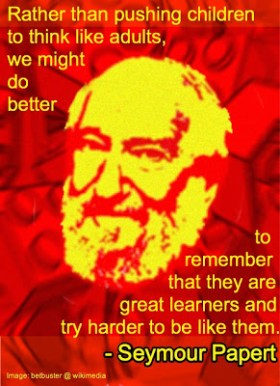
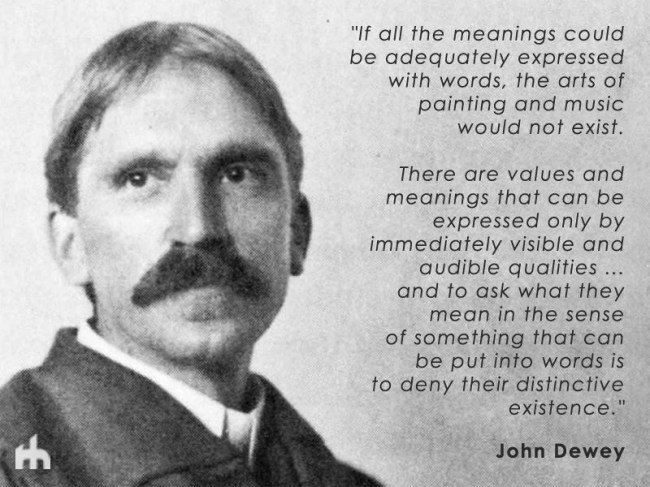
Feedback provided to me was very positive and constructive. During this process, I completely changed my theory of personal learning, growing as a student and advocate of improving instructional approaches. As pointed out in my paper, “The “maker movement emphasizes learning through direct experiences, hands-on projects, inventions, and is based on a constructionist learning theory even if members and advocates of the movement are unaware of the theory” (Stager, 2013). As a member and advocate of the maker movement, I realize that the above statement summarizes my personal approach to learning theory. All constructionists embrace constructivism. However, constructionism approaches extend to include a larger social element, highlighting the importance of creation via learning artifacts within an extended community. After improving my understanding of constructionism approaches, I revamped my theory of personal learning and located many articles and studies to learn more about constructionism research approaches. Feedback stressed what I already knew to be an issue, proofing. Considering that I revamped my theory of personal learning completely, I recognize that time spent towards proofing would improve the overall quality of my product. However, instructors also complimented me on the overall paper, which really surprised me and has motivated me to continue and press on. Task two has led me to continue my research towards constructionism approaches, as I have located over 25 articles and research studies surrounding constructionism studies. I have begun condensing my paper. In addition, I plan to include a wider perspective to include research giants of constructivists and constructionism, instead of only emphasizing Piaget and Papert. Also, it was suggested that I should quote the source of important contributions to the constructivist and constructionism field instead of quoting from articles reviewed. For example, I quoted an article that mentioned John Dewey’s personal theory of learning. I have now read John Dewey’s own writings and contributions, which provides legitimacy. Our final major task towards completing CECS 6100 includes creating a research proposal. I plan on utilizing materials from my experiences in CECS 6100 to conduct a study that focuses on constructionism approaches with teachers to compare STEAM (science, technology, engineering, the arts, and mathematics) professional development delivered via a MOOC and face to face. Materials I am developing are very relevant to my real world professional experiences at this time.
Stager, G. S. (2013). Papert’s Prison Fab Lab : Implications for the maker movement and education design, 487–490.


 Dr. Jennifer Miller-Ray