Assessment is an important component toward determining the success of curriculum, or learned curriculum. While I agree that it is horrible to witness what we see in our public school systems, a drill and kill approach toward learning, I feel that many leaders are missing the point. I wonder what would happen if states would just administer a pretest at the start of the school year to measure retention or what was learned as a result of the previous year? Leaders could then concentrate on instructional approaches toward closing and narrowing the gaps through strong vertical and horizontal alignments and creative teaching approaches.
Is the current system failing our students, our teachers, our parents, our future employers?
Yes, we can probably all agree by now that the current system has failed our children. While there are many overreaching circumstances influencing the direction of the current school system, we cannot just ignore the importance of assessment. Assessment should not be treated as a four letter word among the education community. The problem is we are holding assessment as the end all be all. Our approach is currently failing students because assessments must be followed by high-quality, corrective instruction designed to remedy whatever learning errors the assessment identified (Guskey, 1997).
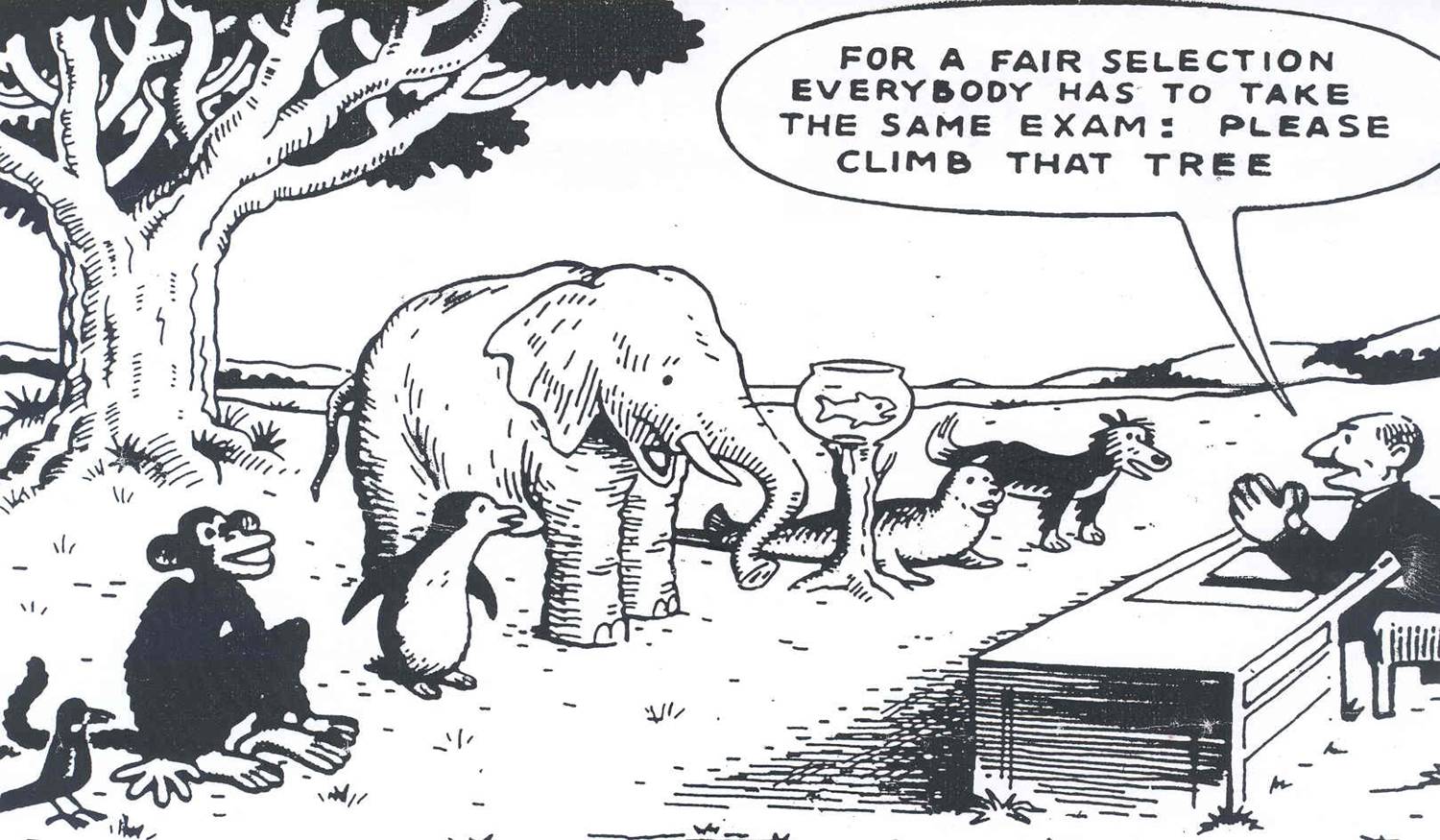
A friend and leader at a university located in north Texas framed the problem with the current situation recently. Her ideas and frustration are not unique to this area. She put it this way: “What the current high-stakes assessment system approach does in truth is ROB our children of time to process and learn so much more than they are being exposed to. If you take a good look at the curriculum, you see developmentally inappropriate curriculum tested and also lots of little stuff that in the long run is not very important or relevant. Also, we psychologically damage kids who don’t test well by sending the message they aren’t “good enough.” That is a crime. I’m not saying let them get by without learning, but start where they are and go from there, not where they “should” be”.
Does this mean that we have no assessment?
Of course not. Our approach toward assessment is misguided. Cobb (2011) shares that “teachers accomplish accountability with daily, authentic, practical assessments that inform instruction” (p 193). Could alternative assessment approaches better serve us? Couldn’t we capture learning via authentic tasks and products throughout the year to show improvement through an alternative approach? How could we improve our system by trusting teachers with our accountability system, not large companies? Perhaps the standardized test could only serve as a guide at the start of the year with the teacher mapping out an instructional program and assessment plan using alternative approaches. Some ideas can be found below:
https://ctl.yale.edu/Formative-Summative-Assessments
https://radicalscholarship.wordpress.com/2017/06/22/rethinking-literacy-and-all-assessment/
Guskey, T. R. (1997). Implementing mastery learning (2nd ed.). Belmont, CA: Wadsworth.
Cobb (2011) Reading Assessment: Looking Backward, Living in the Present Climate of Accountability, Crafting a Vision for the Future In J.B. Cobb, & M. K. Kallus (Eds.), Historical, Theoretical, and Sociological Foundations of Reading in the United States (pp. 552-580). Boston, MA: Pearson/

 Dr. Jennifer Miller-Ray