Tag: Learning

  • Assessment for Learning Vs. Assessment of Learning

    Assessment is an important component toward determining the success of curriculum, or learned curriculum. While I agree that it is horrible to witness what we see in our public school systems, a drill and kill approach toward learning, I feel that many leaders are missing the point. I wonder what would happen if states would just administer a pretest at the start of the school year to measure retention or what was learned as a result of the previous year?  Leaders could then concentrate on instructional approaches toward closing and narrowing the gaps through strong vertical and horizontal alignments and creative teaching approaches.

    Is the current system failing our students, our teachers, our parents, our future employers?

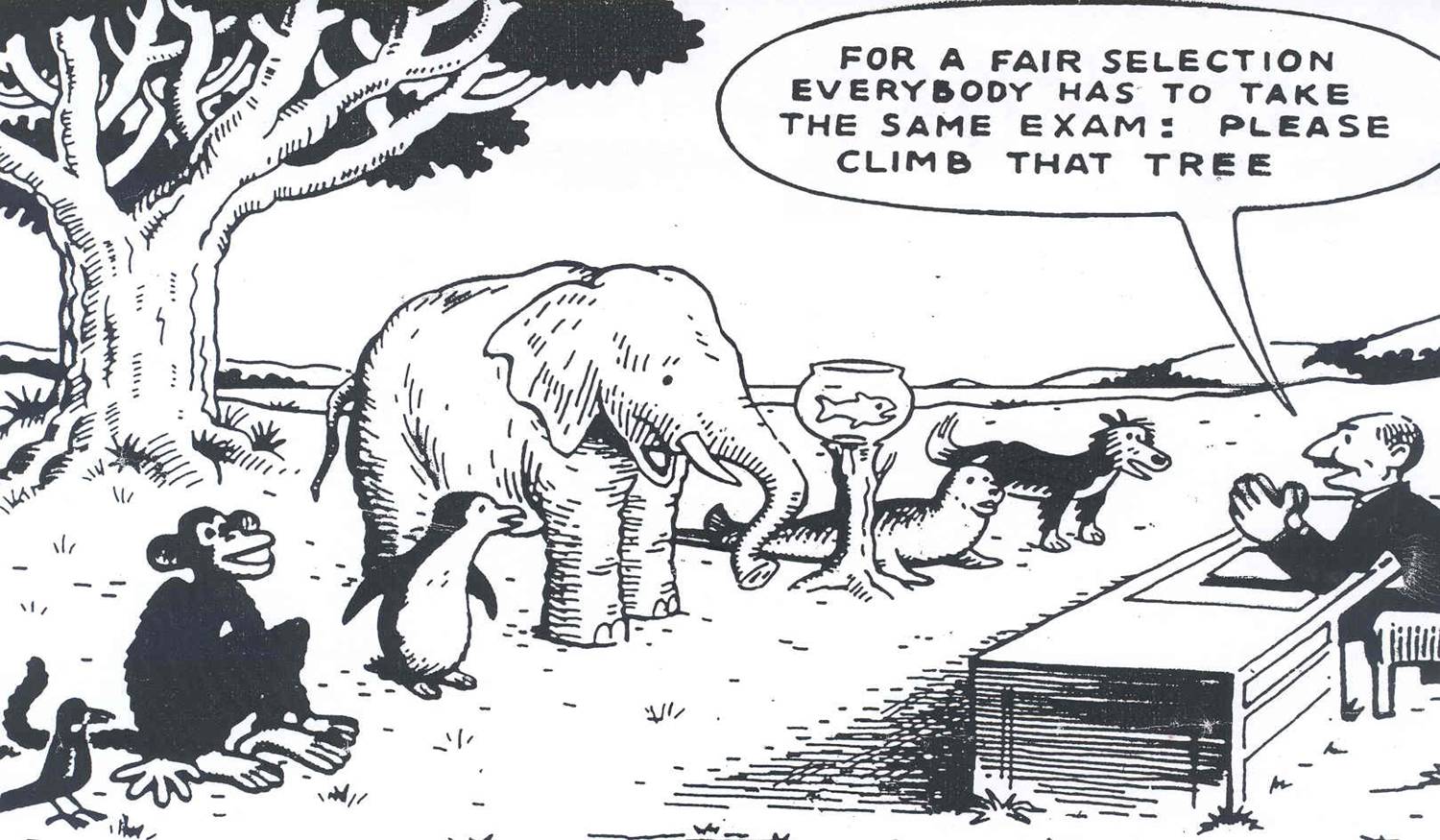
    Yes, we can probably all agree by now that the current system has failed our children. While there are many overreaching circumstances influencing the direction of the current school system, we cannot just ignore the importance of assessment. Assessment should not be treated as a four letter word among the education community. The problem is we are holding assessment as the end all be all. Our approach is currently failing students because assessments must be followed by high-quality, corrective instruction designed to remedy whatever learning errors the assessment identified (Guskey, 1997).

    assessment

    A friend and leader at a university located in north Texas framed the problem with the current situation recently. Her ideas and frustration are not unique to this area. She put it this way: “What the current high-stakes assessment system approach does in truth is ROB our children of time to process and learn so much more than they are being exposed to. If you take a good look at the curriculum, you see developmentally inappropriate curriculum tested and also lots of little stuff that in the long run is not very important or relevant. Also, we psychologically damage kids who don’t test well by sending the message they aren’t “good enough.” That is a crime. I’m not saying let them get by without learning, but start where they are and go from there, not where they “should” be”.

    Does this mean that we have no assessment?

    Of course not. Our approach toward assessment is misguided. Cobb (2011) shares that “teachers accomplish accountability with daily, authentic, practical assessments that inform instruction” (p 193). Could alternative assessment approaches better serve us? Couldn’t we capture learning via authentic tasks and products throughout the year to show improvement through an alternative approach? How could we improve our system by trusting teachers with our accountability system, not large companies? Perhaps the standardized test could only serve as a guide at the start of the year with the teacher mapping out an instructional program and assessment plan using alternative approaches. Some ideas can be found below:

    https://ctl.yale.edu/Formative-Summative-Assessments

    https://radicalscholarship.wordpress.com/2017/06/22/rethinking-literacy-and-all-assessment/ 
    Guskey, T. R. (1997). Implementing mastery learning (2nd ed.). Belmont, CA: Wadsworth.

    Cobb (2011) Reading Assessment: Looking Backward, Living in the Present Climate of Accountability, Crafting a Vision for the Future In J.B. Cobb, & M. K. Kallus (Eds.), Historical, Theoretical, and Sociological Foundations of Reading in the United States (pp. 552-580). Boston, MA: Pearson/

  • Round as a Tortilla Makerspace STEAM Literacy Event

    Moll, Amanti, Neff, & Gonzalez (2011) describes the importance of education programs leveraging a child’s fund of knowledge through connecting with families and involving a holistic approach toward learning activities and learning environments. Makerspaces can serve as a quality environment to facilitate activities to incorporate balanced literacy approaches to meet the needs of diverse learners. Range & Schmidt (2014) suggests “successful makerspaces, particularly in education environments, balance practicality with creativity and collaboration to serve the needs of the school community” (p. 8). Tan, Barton, & Schnekel (2018) highlight that “children’s funds of knowledge were recruited by engaging them in community ethnography, which informs of the making design process” (p. 77) via a makerspace environment. The purpose of this activity is to align a purposeful makerspace activity to topics explored in Pre-K and kindergarten using the book by Thong & Parra (2015), Round as a Tortilla.


    Repeated Reading Strategy

    Day One

    1. The teacher will introduce the, Round is a Tortilla, to their students. The teacher will show the front cover, back cover and conduct a picture walk.  Remember to read the story enthusiastically, and with expression.
    2. After reading, ask why questions to allow time for students to make inferences and to measure understanding of story events.
    3. Begin the a KWHL: What do we know? What do we want to know? How will we find out? What have we learned? How will we find out?

    Send home a Round as  Tortillia Makespace STEAM Event letter to invite parents to the school library and to participate in making items from the story. Include 4 challenge card ideas in the letter with a link to the video. Invite the makerspace community. Your librarian should be able to help you facilitate this process.

    Day Two

    The teacher will conduct the second read-aloud to enrich reading comprehension and provide further engagement opportunities through a book talk, and highlight vocabulary.

    1. Add more frequent questions.
    2. Ask children questions to think beyond the story with completing a KWHL, What have we learned?
    3. Introduce 4 STEAM Makerspace Challenge Cards and Makerspace activities. Here are some ideas. Encourage students to make their own challenge card but remind students that cards should connect to elements found in the story.
      1. Journalist: Be a storyteller and make a story about shapes in your community.
      2. Scientist: Be a scientist and investigate the process of making masa and round tortillas. Be a computer scientist: Make a game with squares and other shapes.
      3. Artist: Make a weave of shapes to use as a rectangular flag as represented in the story. Make an oval necklace.
      4. Engineer: Engineer a sail for a boat that you make.

    Day Three:  Makerspace STEAM event in the library. Students will make items that represent elements in the story with their parents and makerspace community.

    Repeat the reading of the story. After the activity, ask the children, What have you learned?

    This activity connects to Moll’s ideas of knowledge as it involves the child’s entire community in the literacy process. Children can learn how their culture connects to classroom topics through the art of making. Elders can help children learn how to weave, code, build, and apply STEAM principals through everyday activities.

  • Reframing Social Constructionism Through Purposeful Makerspaces

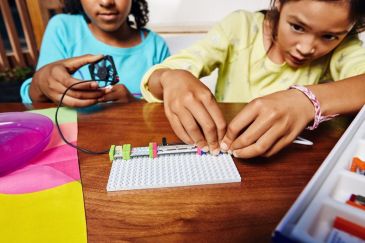
    USE-GADGETS-AVENTURES-IN-DESIGNSocial constructionism “relies on the centrality of language to mediate what people come to understand about their lived experiences” (Avermann, 2011, p. 205). Constructionist environments support “active learning” approaches in which learners are engaged in building their own public objects or artifacts. Active learning emphasizes cognitive processes occurring during the actual construction of the object. The public nature of the final object or artifact is also understood to be important (Beynon & Roe, 2004). The “maker movement emphasizes learning through direct experiences, hands-on projects, inventions, and is based on a constructionist learning theory even if members and advocates of the movement are unaware of the theory” (Stager, 2013). Papert (2000) advocates that Piaget’s belief of all learning takes place in discovery is accurate. However, Papert extends this idea to suggest that setting learners “to the task of re-empowering the ideas of being learned is also a step toward re-empowering the idea of learning by discovery” (p. 723). Papert (1999) underscores the importance of Piaget’s theory of constructivism and the nature of knowledge. Challengers of Piaget’s constructivism often refer to experiments demonstrating knowledge acquired by infants. However, Papert stresses “Piaget as a giant in the field of cognitive theory, the difference between what a baby brings and what the adult has is so immense that the new discoveries do not significantly reduce the gap but only increase the mystery” (Papert, 1999, p. 105). Papert’s Knowledge Machine” introduced the world to a new theory of learning, constructionism, which “synthesized revised insights into human development, systems theory (cybernetics) and how we think about learning (epistemology)” (Maser, 2013). Technology based modeling and methods of teaching with technologies deliver alternative methods to teaching, providing learners with choices that engage the learner in an improved learning experience (Burbaite, Stuikys, & Damasevicius, 2013). While at MIT, Papert developed Logo, designed to introduce children to programing and robotics as early as 4th grade. Children received instant feedback from a real and physical response to their creation using technology.  Papert envisioned robotics as being extremely influential to children at a young age. Learners perform higher when engaged in an activity that is meaningful to them, and robotics along with programing languages encourages curiosity and experimentation beyond the actual syntax (Pierce, 2013). Papert led many research projects to study the effects of constructionist theories with at risk populations and in high-risk environments. These projects attempted to build an alternative approach to the learning environment. Despite obstacles, students proved to be successful. Experiences from Papert’s work towards building a community of learning centered on constructionism continues to guide the future design of learning environments (Stager, 2013).

    Constructionists follow constructivist theory, believing that children through personal experiences construct and reconstruct knowledge. Both viewpoints endorse the objective to push learners to consider a variety of perspectives and viewpoints within the world. Doing so advances cognitive abilities of learners by provoking learners to consider and expand a deeper understanding about themselves within their environments. However, constructionism emphasizes active and situational learning in which connectedness with the environment is “key to learning” (Acerman, 2001).  Unlike constructivists, constructionists stress the importance of a learner to use their ideas to attempt to solve a real problem coming from a personal perspective, thus making the environment meaningful.  Papert stresses that active and situational experience provides idea power or being one with what you are doing. Constructionism is “powerful in its use, powerful in its connections, powerful in its roots and its fit with personal identify” (Papert, 2000). Noss and Clayston (2015) provide characteristics of constructionism agenda, which is beneficial toward beginning to address the many misunderstandings and issues presenting the framework of constructionism. Characteristics include “modeling, accessibility to digital technologies, layering problem solving activities, designing socially relevant learning, and “knowledge made visible by being represented in a language with which learners can express themselves” (Noss & Clayston, 2015, p 287).

    Makerspace environments can lend themselves to social constructionism following Noss & Clayston’s (2015) characteristics as learning can be designed to socially engage our youth through relevant problem solving activities or challenges. Products and the making process allow learners to socially share their perspectives using language and cultural experiences native to their background. These are the types of activities I have been designing. I have been working and traveling for the last week attempting to take ideas to a mobile makerspace outreach bus to expand research from my previous makerspace projects. .

    This new project seeks to build upon previous NASA MMS research conducted by me through past funding and research that incorporated NASA’s MMS Makerspace Mobile Training Outreach programs, NASA MMS STEAM camp programs, the NASA MMS Challenge, MMS Transmedia book, and MMS Educators Guide. Previous programs provided global professional development for the last four years at ISTE, SITE, Makerspace, ASCD, and TCEA. The mobile STEAM makerspace outreach program developed last year seeks to expand NASA’s MMS Challenge incorporated at NASA’s MMS Launch Event in March 2015 at the Kennedy Space Center, which would serve underrepresented indigenous populations in creative approaches to enhance elementary and middle school community STEM programs. A collaboration between NASA outreach programs, university, community museums, scientific foundations, and industry could assist in building an outreach program exploring in a comparative study general perceptions, confidence levels, and self-efficacy in STEM content areas and career pathways. Improvements in teacher professional development programs would increase the overall student STEM experience in lower and middle school programs.  End results would lead to a highly confident and skilled STEM elementary and middle school workforce, encouraging more students to consider entering a STEM career pathway.

    Ackermann, E. (2001). Piaget’s constructivism, Papert’s constructionism: What’s the difference. Future of learning group publication5(3), 438.

    Avermann, D.  (2011). Some “Wonderings about literacy in teacher education.  In J.B. Cobb, & M. K. Kallus (Eds.), Historical, Theoretical, and Sociological Foundations of Reading in the United States (pp. 13-66). Boston, MA: Pearson.

    Beynon, M., & Roe, C. (2004). Computer support for constructionism in context. IEEE International Conference on Advanced Learning Technologies, 2004.

    Maser, M. (2013, 01 8). Papert led revolution in learning; visionary saw potential of students using computers to explore thte world and themselves. The Vancouver Sun

    Noss, R., & Clayson, J. (2015). Reconstructing Constructionism. Constructivist Foundations10(3), 285-288.

    Papert, S., & Harel, I. (1991). Situating constructionism. Constructionism, 36, 1-11.

    Papert, S. (1999). Papert on piaget. Número especial “The Century’s Greatest Minds,” Time, 29, 105.

    Papert, S. (2000). What’s the big idea? Toward a pedagogy of idea power. IBM Systems Journal, 39(3.4), 720–729. doi:10.1147/sj.393.0720

    Stager, G. S. (2013). Papert’s Prison Fab Lab : Implications for the maker movement and education design, 487–490.


  • Choose Your Own Adventure.. My Summer Professional Learning Reflections

    Choose Your Own Adventure.. My Summer Professional Learning Reflections

    Anyone involved in public education knows that summers are full of opportunities for educators to embrace professional learning.  Educators and leaders are surrounded with many avenues to model life-long learning. No longer do we have to wait for PD to come to us. This year I had the opportunity to connect and grow my PLN for an entire two months. For the first time in five years, I was not enrolled in graduate courses or completing a dissertation,  free to just learn about any topic of interest and connect. I attended multiple conferences to include Texas ASCD Ignite, ISTE, Denton’s TIA, and immersed myself with exploring content in multiple museums, even visiting the Library of Congress to research the upcoming solar eclipse. Certain themes emerged this summer during my adventure.

    Creativity Matters

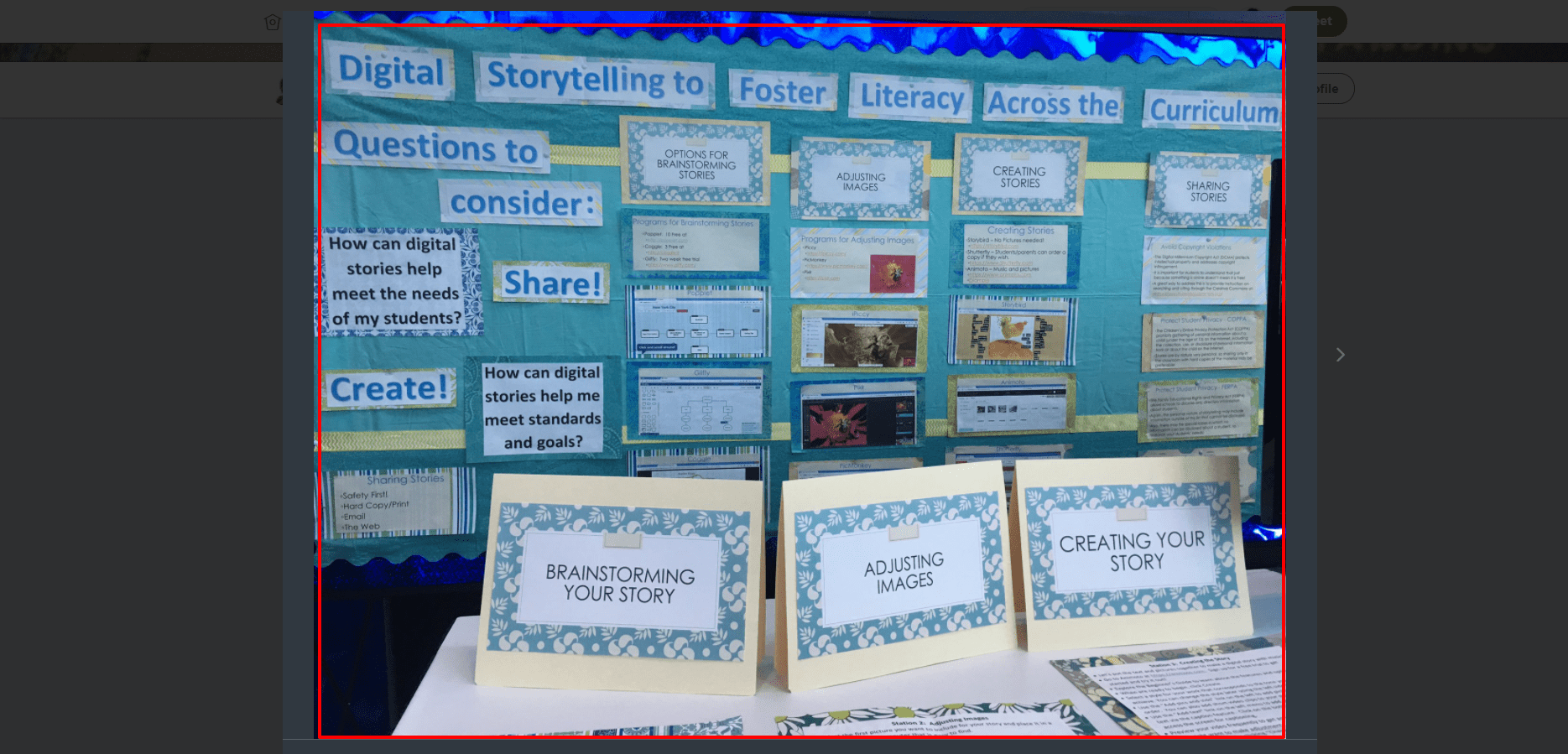
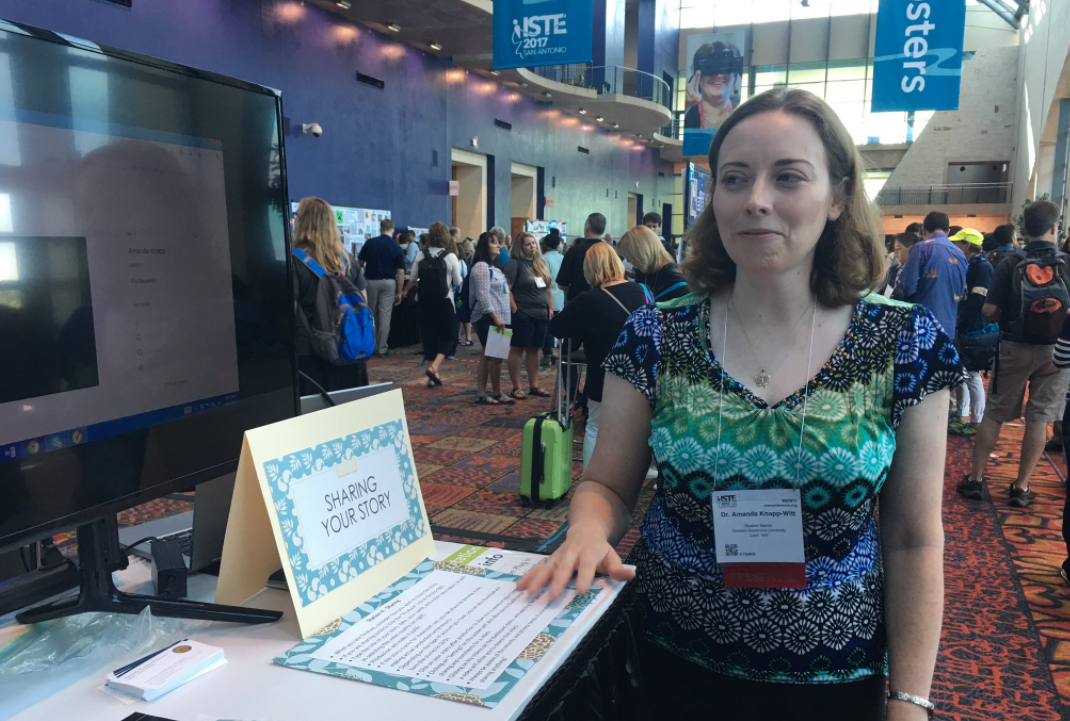
    With so many makerspace, STEM, and STEAM apps, and instructional approaches available to organizations and teachers, choices and program approaches can become overwhelming. It was exciting to see so many great project-based learning approaches centered around storytelling. Many schools are combining storytelling with gaming. For example, it was cool to see how students really engaged with Minecrafting a Colonial City. I liked the following process used toward incorporating digital storytelling with core curriculum.

    Dr Jennifer Miller steamlearnlab Twitter (2)

    Dr Jennifer Miller steamlearnlab Twitter (3)

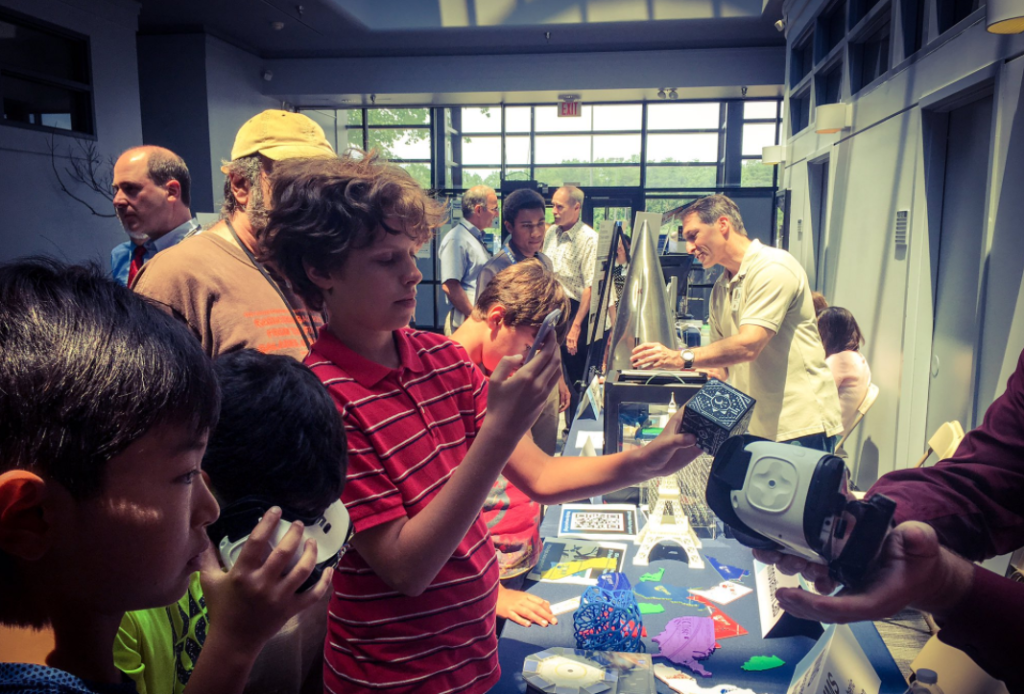
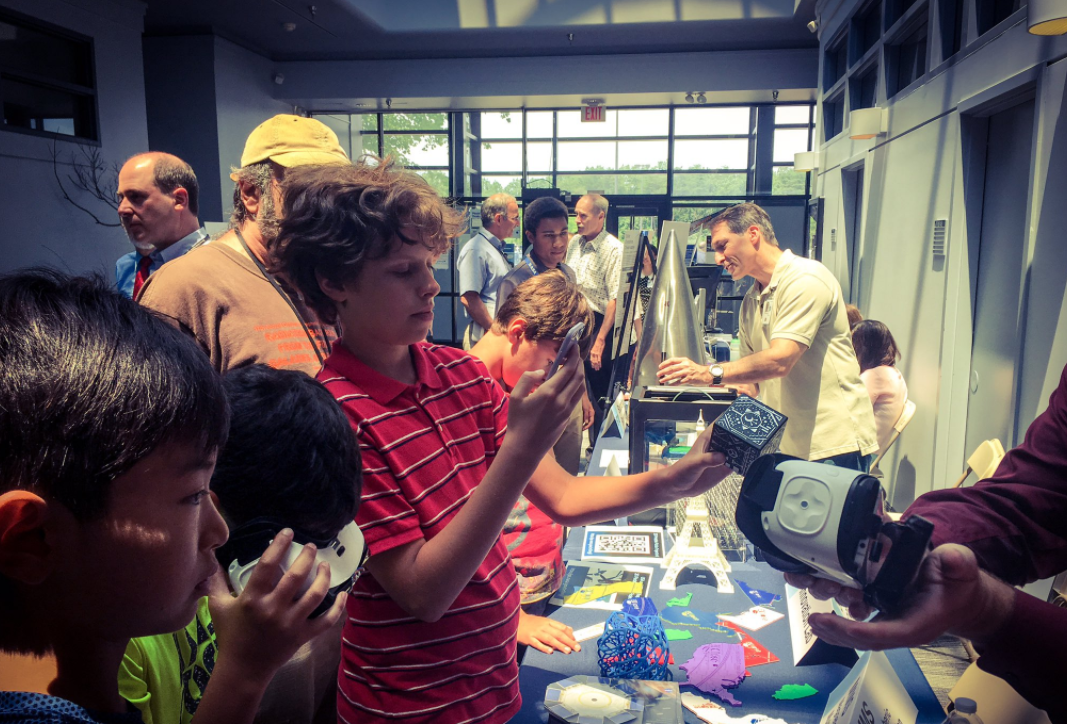
    Lewisville ISD has incorporated a mobile transportation lab, a collaborative unit, serving 70 libraries and STEAM labs. This provides an introduction to educators and students toward creative learning technology approaches. I visited NASA’s STEM Innovation Lab at Goddard Space Center and I was inspired by the many uses of the 3D printer. Learners of all ages were inspired to learn using 3D printed models, which encourages me to continue producing curriculum and 3D printing training programs.

    Dr Jennifer Miller steamlearnlab Twitter (4)

    Transparency Matters

    Eric Schlesinger always inspires. He recently provided a keynote at Denton TIA in which he reminded us that transparency really does matter. I have been a heavy user at times of social media, blogging, and at times have had to unplug. Often those whom are very plugged in are criticized for bragging. However, Eric reminds us that branding your story isn’t only ok, it is necessary toward being transparent and building trust. In fact, telling your story connects learning to stakeholders. He reminded us of the importance of being transparent and consistent with our posts. During the last two years, I had dropped my professional blog posts. After hearing him speak last week, I decided to pick up my blog and begin consistently posting once a week. Hopefully, this exercise will increase my ability to communicate digital learning and cognitive science approaches to all stakeholders. Change does not come from opinions. Change is brought about by the examples we set and our reactions toward others.

    Community Matters

    It is important to remember that the teacher makes the difference! It was very inspiring to see how teachers at WELD Re-4 School District deliver a creative conference in which students, business leaders, and educators provide professional learning sessions to the entire community. A result of this program included a new scholarship program,  innovations scholarships, which are provided toward students who demonstrate quality interactive student showcases.

    The final takeaway for this summer is that true learning is FUN! I am very grateful to have had this opportunity to learn and connect with so many around the world. This is going to be an amazing school year!


  • My Viewpoints Towards Personal Learning

    How well supported does your personal theory feel? What research could you do in order to support your theory? What methods would you employ?

  • Giving students a voice….

    One way to engage students is by giving students a voice. Technology can really help facilitate learning because it provides multiple communication channels that the teacher can use to give students a voice (who may not otherwise engage), which empowers them to take ownership in their learning. A larger audience can allow for the student to extend learning outside of the classroom. Technology is not the answer to academic issues. We must use it in a meaningful way that motivates students to think. Our task is to create a new generation of problem solvers and critical thinkers. Technology must facilitate higher order thinking activities. You can find a lot of “junk” technology activities that are not engaging or fun, especially linear activities.

    Some other thoughts: We have to be careful not to crush student ideas, voices, etc. We don’t always “know” better. Stand and deliver style of teaching does fit is some cases, but we need to spend less time presenting and more time allowing kids to If you truly value student voice, they must know that their ideas can direct the path to learning. Think about how you can give your students a global voice. How do we build a career focus, or career voice, to produce college ready graduates? Students must know that you believe in them. We must show that we like what we are teaching and what we teach. Choose learning technologies that give students a voice and allow them to contribute not just work linearly to contribute only to themselves, you, or a grade. Are we spending all of our time on compliance and standardization? Don’t be boring, push beyond the easy and comfortable. Students are often willing to choose boring over taking a risk. Expect students to do exciting things. Recognize boring and redirect, remove the safe option. Foster joy, we should all be laughing more because kids learn in a happy environment. An expert recently told me that we should incorporate the 5 model, Engage, Explore, Explain, Elaborate, Evaluation. Their suggestion was to move the first 3 online, and that will save you time for elaboration and evaluation. The flip concept is only a system, the strategy of 5 e is still needed from you. You and your relationship with students is still the most important motivating factor. If you want to use a flip system, you must question, elaborate, and evaluate in class. Videos alone will not address learning issues. You must expect students to do their part and follow through. It does work and is working in many areas in the nation and state. However, teaching is still the most important component.

    Some ideas:

    1. Creating a how to video and blog (written) evaluation reflections: Great alternative formal assessment tool. I am very proud of Debra Miller’s leadership in creating a video to publish on the junior high web page. A parent called this morning very excited to see the video. Keep up the excellent work.

    2. Twitter: Students from one district last night led a state wide twitter chat on giving students a voice. Twitter widgets on your website really interest students. Teaching students how to act professionally online can be modeled in this way. Check out #txed hash tag to view how students led a very professional collaborative discussion on this topic. We have Dublin High School students using twitter and I enjoy seeing students contributing to increase school spirit. How can we get kids to begin contributing about core subject on instructional content?

    3. Skype: Skype in the classroom is a great way to find partners to allow for students to collaborate, present, use higher level questioning, and elaboration on evaluation of ideas. This is an excellent way to bring “experts” into your classroom.

    4. Offsite curriculum center: We have access to produce content to showcase to the community. How can you take advantage of this? Need ideas, let me know. I was very impressed with Donna Lewis’s 2nd grade and 3rd grade students. The entire class was highly engaged with her yesterday, check out one production example: http://animoto.com/play/Fxc4wpIsQwEYUTyr6l6zxw
    5. Empower students to be creative and help them to understand that they matter.
    6. Consider your physical learning space. How can you redesign learning spaces so that they are “fun”?   I got to visit with students earlier this week at the high school and they expressed how that action created a more relaxing and fun atmosphere.

    7. Problem solving and failure with a voice: Robotics is a way to get kids motivated and you would be surprised at how these kits can fit your exiting curriculum. Lego released a writing curriculum this week that encourages creative writing and academic vocabulary development. The production that is created by the team gives students a voice by allowing them to showcase a robot to a wider audience. It is great to see so many students enjoying problem solving activities using robotics.  Dublin High School, and photos from Dublin Intermediate and Junior High students who are so excited to be part of the after school robotics club. We have 47 students participating weekly in an optional after school program. These students are having fun expanding in writing journals, collaborating, thinking and problem solving. . We learn from failure. Research on this topic: http://hbr.org/2011/04/strategies-for-learning-from-failure/ar/1

    8. Portfolios are a great way to showcase student work and online portfolios gives students a large voice that they can then take to a wider audience. This is a great way to give students a career voice. With project share, students have an Epsilen portfolio account that can allow all teachers to “showcase” a student production that they can then add to their existing portfolio.

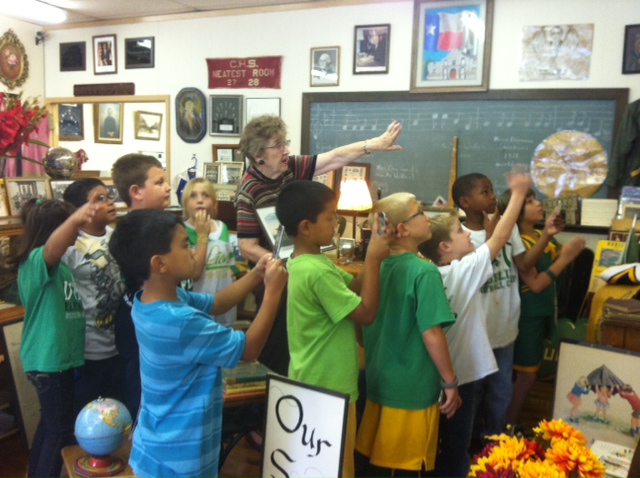
    It was fun taking students with their teacher, Mrs. Donna Lewis, to the Dublin Historical Museum recently.  Students really enjoyed learning about museum artifacts, conducting research, using their iPods to record photographs, and creating a movie to publish for a wider audience.  Learning really can be fun!

    Image

  • Are We Leveraging Technologies To Maximize Learning Outcomes?

    After reading materials for this course and attending TCEA Area 10 and 11 conference this week, I am convinced now more than ever that it is necessary to reevaluate the role of technology to facilitate appropriate instructional delivery. The strong and positive teacher/student relationship is still the most important contributor to learning. Lateral learning technologies often lack meaningful experiences, but do serve as a means to replace weak teacher. Technologies may transfer information, but often the transfer of information does not equate to an improved learning experience.

    Students in tomorrow’s world must become problem solvers, critical thinkers, and global contributors. In a world that is full of information, our schools need teachers who understand how to leverage technologies to increase communication and conversation on meaningful core subject content and its relevance to “real world” problems. Possible solutions and problem solving parameters should be debated and alternative formal evaluation techniques should be implemented. Learning technologies can be utilized to measure alternative formal assessment under the guidelines of NCLB, but states continue to utilize a standardized approach.

    With the availability of Project Share in Texas, instructors in this area have an opportunity to utilize student portfolios and provide an alternative formal assessment to show yearly progress over time. How could we facilitate this approach? With the recent debate in the state of Texas surrounding STAAR, Texas’s new formal standardized testing system, it might be time to ask how Texas could leverage its technology resources to show adequate yearly progress for grades 3-12 using learning technologies available within Project Share. The portfolio piece may be a way to provide meaningful contributions to formal assessments.

    TCEA Area 10 and 11 conference started with Carl Hooker challenging the audience to give students a voice and choice. Carl also proposed for instructional leaders to consider the physical environment and shared how Google uses physical space to engage employees, which improves productivity. How can we recreate our physical classroom and building space so that the environment is engaging and fun? How can we give students a museum experience? Why is this important?

    Communication channels are everything. Consider how your environment and communications have changed. How do we create an environment to promote curiosity? Audiences for communication have changed due to technology improvements.  In fact, Texas is very lucky to have a systemized state communication channel connecting all districts through Project Share.

    My largest take away from Carl’s keynote was the very moving video created by his students. Carl’s example of giving students a voice and choice was very moving and educators need to focus more on how students are allowed to communicate. Texas should leverage its resources to allow for more collaboration amongst students across Texas, the nation, and the planet.

  • Capacity to Store Information and it Affect on Truths….

    Currently, positivism is viewed “as a single reality independent of humans, and that the methods of natural science should be adopted in research on social, specifically educational, questions” (Mackenzie, 2011, p. 534).  Education research, in many circles, currently adopts this idea of truth.  However, historically “all fields until about fifty years ago and still in philosophy and the philosophy of science view the term as a rejection of the correspondence theory of truth, the denial of, or more correctly agnosticism about, the existence of a single reality independent of human beings” (Mackenzie, 2011, p. 534). The physical world and the laws of nature are immutable.  It exists independently of human’s wants or desires and is mostly beyond human control.  Humans are part of nature, and human activity is part of the natural process. 

    Social researches are often biased and have little understanding of the laws of natural sciences.  As Mackenzie (2011) points to standardized methods often blended with qualitative research ignore the evolution of language and original meanings.  Social researchers can be biased against the laws of natural sciences and selection (p. 535). 

    Humans banished many medieval superstitions that were based on observations, but humans lacked experiences and misunderstood phenomenon being observed.  Humans’ attempts to explain natural processes, natural laws independent of human existence, have proven to be mistruths.

    Natural laws are discovered through science.  Language stores science and the evolution of technology stores language.  As a result, humans have an increasing knowledge of science and an increasing knowledge of truth in a direct proportion.  The more humans experiment with science, the more we will understand the truths surrounding the sciences.  Habermas’s (1971) paradigm of the stone does prove that truths do exist in natural law (p. 265). 

    Fantasy worlds existed but in a limited context.  Monks could live in a fantasy world, but this choice was limited.  Oral tradition, cave art, the Bible, the Torah, the Koran and anime are all storage mediums for the fantasy world.  Affordable and collaborative technologies increase the human ability to exist in a fantasy world.  The natural world continues to exist, changed only by nature’s timeframe.  Man is part of nature and all of our technologies are part of the natural world.  After human consciousness ceases to exist, there will still be truth and order in the universal world. 

    Habermas, J. (1971). Knowledge and Human Interests, J. J. Shariro, trans. (Boston, MA, Beacon Press).

    Mackenzie, J. (2011). Positivism and Constructivism, Truth and “Truth.” Educational Philosophy and Theory, 43(5), 534-546.


  • Reflecting on Richard E. Clark’s Reconsidering Research on Learning from Media

    Just as there are many types of vehicles or modes of transportation in the world, there are many varieties of media and tools that can aide students to become both a producer and consumer of knowledge. In reviewing Richard Clark’s (1983) article entitled “Reconsidering Research on Learning from Media”, I found many interesting parallels to current discussions regarding quality and reliability of online media content.

    Clark (1983) stated that “media does not influence learning or student achievement under any circumstances.” He offers the analogy of media as a vehicle “delivering instruction” and compares media’s role to that of a “grocery truck delivering nutritious food.” Clark suggests that research scientists concentrate on media attributes to instructional design, attitudes towards media, and focus on instructional methods instead of media.

    The problem with Clark’s analogy, is found in the many generalizations. If the truck has a higher operation cost, that passes the cost to the consumer who now can’t afford quality food.

    In 1983, the world did not have the choices and technologies available today. Students are now not only consumers of media, but have the ability to contribute content to a global audience. The questions surrounding the issues of media are more complex. Nutritional content, accessibly, ease of intake, research, creation tools, and ease of feedback offer students new opportunities and learning approaches that were previously unavailable.

    Clark is correct in his assessment on the importance of the quality of instruction. The teacher is the most important contributor and can greatly influence learning. Another famous Clarke (1980) stated in Electronic Tutors, “Any teacher who can be replaced by a computer….should be”.

    Clark, R. E. (1983). Reconsidering research on learning from media. Review of Educational Research, 53(4), 445-459. Retrieved from http://search.ebscohost.com/login.aspx?direct=true&db=ehh&AN=18880403&site=ehost-live&scope=site

    Clarke, A. (1980). Electronic tutors .

  • The Power of Texas’s Project Share

    I am amazed at how many K12 Texas institutions are still not utilizing Project Share as a course management system.  While there is still room for improvement, especially the need for a quality LMS app tool, Project Share is still a great idea and resource to use in a blended learning environment.  Project Share is continuing to improve its product, with new features being introduced this fall.

    Questions you may have regarding Project Share.

    How will Project Share help my students?  

    1. Resources From Top Reliable Sources:  Students can access primary sources from The New York Time’s Content Knowledge Repository dating back to the mid 1850s.  This is a powerful learning tool that can radically enhance courses and bring LMS to an entire new level.
    2. Collaborative Work Environments:  Project share allows for groups to collaboratively problem solve, share, and model 21st century collaborative work environments.
    3. ePortfolios:  Project Share gives students and teachers a ready made system to publish and showcase work, build resumes, and blog about learning content.

    Can parents access content?

    Parents, students, teachers, and interested community partners can access content and locate resources on the new Project Share website.

    It is time to move past the debate as to why do we need Project Share.  It is time to Think Global and Act Local and unite behind the program!  Take your complaints to the source and let’s fix a great idea.  I have found that Project Share, Epsilen, and developers are very open to ideas of improvement.  Texas, let’s show the world how true 21st century mobile learning can truly benefit a learning community.