Tag: Learning Technologies

  • Choose Your Own Adventure.. My Summer Professional Learning Reflections

    Choose Your Own Adventure.. My Summer Professional Learning Reflections

    Anyone involved in public education knows that summers are full of opportunities for educators to embrace professional learning.  Educators and leaders are surrounded with many avenues to model life-long learning. No longer do we have to wait for PD to come to us. This year I had the opportunity to connect and grow my PLN for an entire two months. For the first time in five years, I was not enrolled in graduate courses or completing a dissertation,  free to just learn about any topic of interest and connect. I attended multiple conferences to include Texas ASCD Ignite, ISTE, Denton’s TIA, and immersed myself with exploring content in multiple museums, even visiting the Library of Congress to research the upcoming solar eclipse. Certain themes emerged this summer during my adventure.

    Creativity Matters

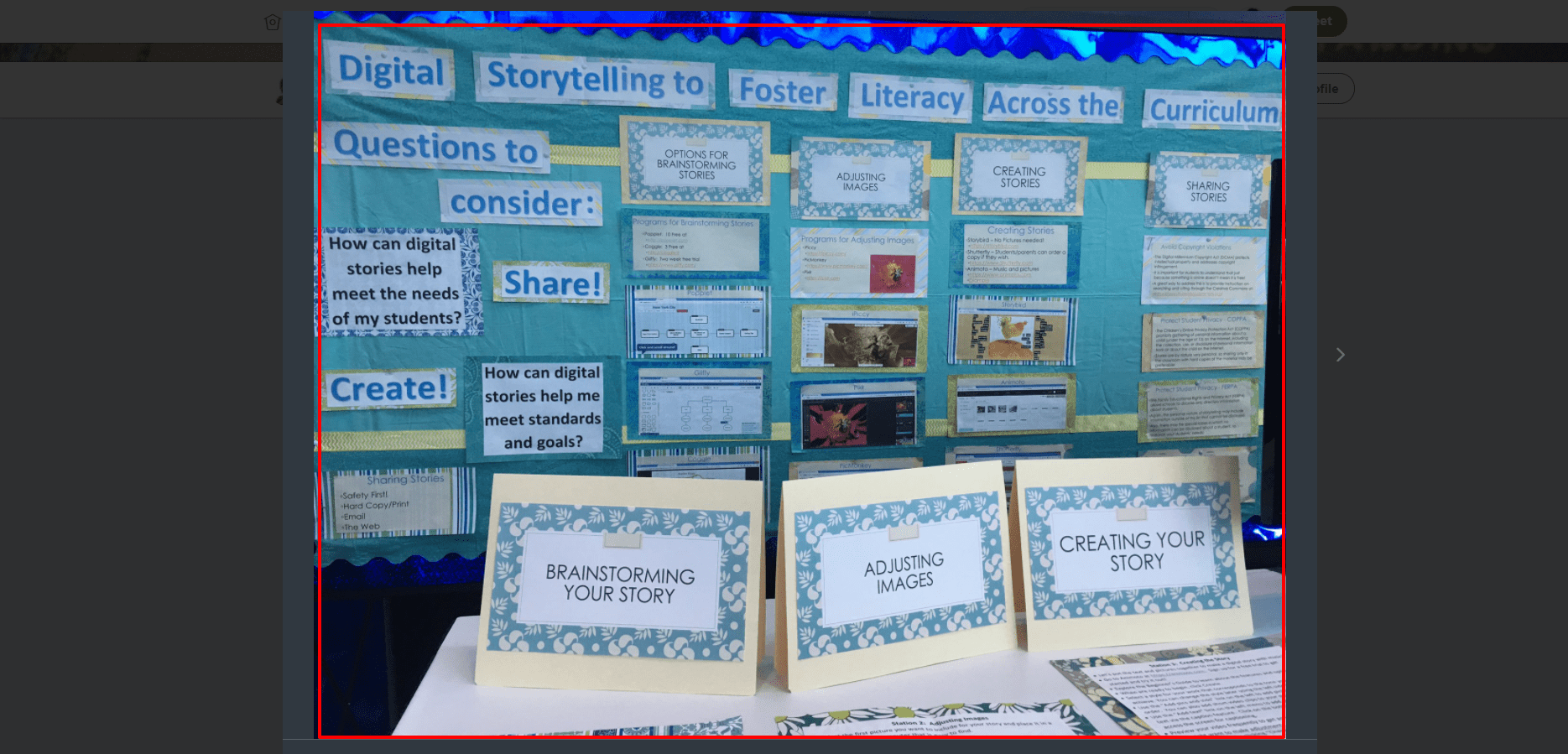
    With so many makerspace, STEM, and STEAM apps, and instructional approaches available to organizations and teachers, choices and program approaches can become overwhelming. It was exciting to see so many great project-based learning approaches centered around storytelling. Many schools are combining storytelling with gaming. For example, it was cool to see how students really engaged with Minecrafting a Colonial City. I liked the following process used toward incorporating digital storytelling with core curriculum.

    Dr Jennifer Miller steamlearnlab Twitter (2)

    Dr Jennifer Miller steamlearnlab Twitter (3)

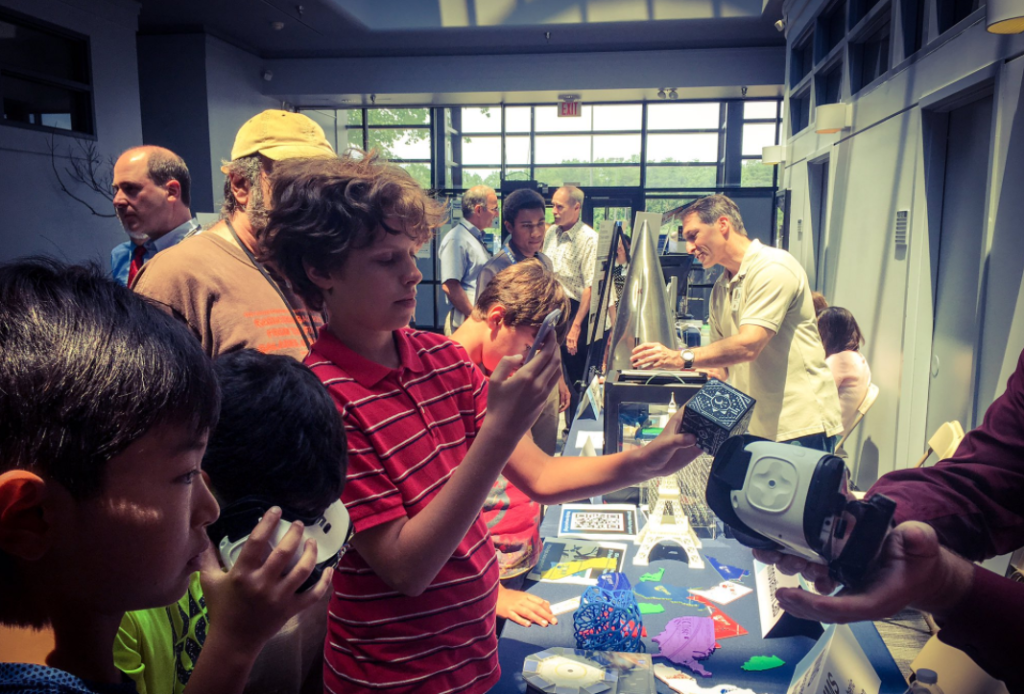
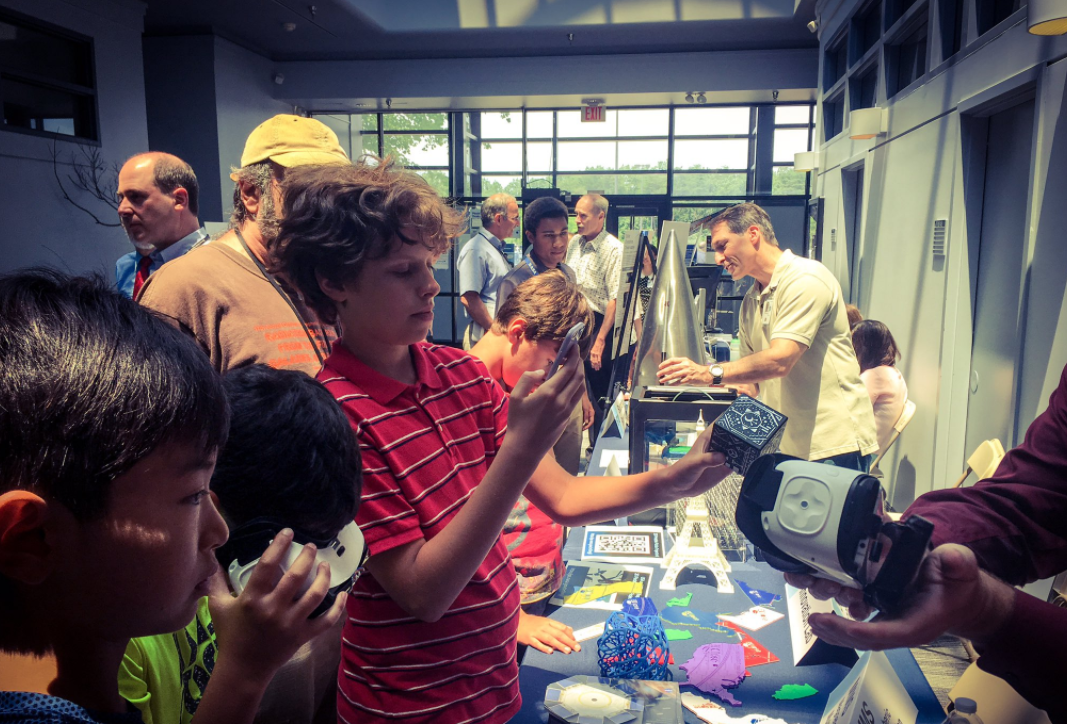
    Lewisville ISD has incorporated a mobile transportation lab, a collaborative unit, serving 70 libraries and STEAM labs. This provides an introduction to educators and students toward creative learning technology approaches. I visited NASA’s STEM Innovation Lab at Goddard Space Center and I was inspired by the many uses of the 3D printer. Learners of all ages were inspired to learn using 3D printed models, which encourages me to continue producing curriculum and 3D printing training programs.
    Dr Jennifer Miller steamlearnlab Twitter (4)

    Transparency Matters

    Eric Schlesinger always inspires. He recently provided a keynote at Denton TIA in which he reminded us that transparency really does matter. I have been a heavy user at times of social media, blogging, and at times have had to unplug. Often those whom are very plugged in are criticized for bragging. However, Eric reminds us that branding your story isn’t only ok, it is necessary toward being transparent and building trust. In fact, telling your story connects learning to stakeholders. He reminded us of the importance of being transparent and consistent with our posts. During the last two years, I had dropped my professional blog posts. After hearing him speak last week, I decided to pick up my blog and begin consistently posting once a week. Hopefully, this exercise will increase my ability to communicate digital learning and cognitive science approaches to all stakeholders. Change does not come from opinions. Change is brought about by the examples we set and our reactions toward others.

    Community Matters

    It is important to remember that the teacher makes the difference! It was very inspiring to see how teachers at WELD Re-4 School District deliver a creative conference in which students, business leaders, and educators provide professional learning sessions to the entire community. A result of this program included a new scholarship program,  innovations scholarships, which are provided toward students who demonstrate quality interactive student showcases.

    The final takeaway for this summer is that true learning is FUN! I am very grateful to have had this opportunity to learn and connect with so many around the world. This is going to be an amazing school year!


  • Constructionism Research Approaches

    How hard is it to develop a research method that both matches your theory and created curriculum? What was simple and what was difficult? It is difficult to consider how to best employ a research method to study a constructionism approach to online learning. The difficulty lies in the ability to provide a flexible or free approach to learning and at the same time foster increased engagement. Ackermann’a (2011) analysis of Papert’s theory of constructionism focuses on the “art of learning.” Improved communication technologies foster an increase in the ability for an audience to feel a sense of connectedness, which provides depth to the overall learning experience. Creating an environment that provokes discourse and produces a variety of perspectives promotes a change in thinking or knowledge transformation, improved cognitive presence. It is necessary that an instructor of facilitator to assist a community in exchanging perspectives or experiences. A mixed methods research approach would best accommodate a study related to my theory of learning. During the last week, I have developed an improved understanding of the differences of constructivism and constructionism. I believe in the importance of community and the role of energy that such a community produces to improve the overall cognitive experience. From a research perspective, measures in frequency of communication within the social learning community, video reflections, and interviews could provide an in depth look into how an online community best serves to meet professional development needs of teachers. Many MOOCS in existence fail a way for learners to express their ideas to a larger community. What are the perspectives of K12 teachers Ackermann (2004) correctly points out that knowledge transformation occurs as learners express or reflect using media to a larger community. Media does matter, and how that media is used within an online course also matters (Ackermann 2004). Papert’s Instructional Software Design Project utilized a mixed methods approach with fourth grade math course. A mixed method approach would best explore how learners create personal meaning through reflections shared within a social environment. The frequency and richness of such artifacts could be explored in greater depth.

    Ackermann, E. K. (2004). Constructing knowledge and transforming the world.A learning zone of one’s own: Sharing representations and flow in collaborative learning environments, 1, 15-37.

    Ackermann, E. (2001). Piaget’s constructivism, Papert’s constructionism: What’s the difference. Future of learning group publication, 5(3), 438.

    Harel, I., & Papert, S. (1990). Software design as a learning environment.Interactive learning environments, 1(1), 1-32.

    Stager, G.,S. (2007). Towards the construction of a language for describing the learning potential of computing activities.Informatics in Education, 6(2), 429Image

  • Learning Technologies, Effective or Not Effective?

    Attempting to understand the evolution of learning technologies is complicated.  Thomas Edison’s idea of moving pictures spawned many learning opportunities produced new knowledge and learning technologies.  The market model of research has produced a new world where information is cheaper and easily obtained.

    Why is it so hard to get schools to adopt learning technologies?  This is not a new question or concern.  From literature review, it was interesting to learn that the overhead projector is one of the few examples of learning technologies implemented in the school industry first.  The challenge facing instructional designers to try new ideas and approaches and to encourage use is not a new phenomenon, which I find encouraging as an instructional technologist.

    Research approaches and opportunities are numerous as the adaption process continues to be a struggle.  Reflecting on my personal experience, I found it difficult to even locate a 1:1 K5 campus in Texas two years ago.  Motivational factors that can improve the adoption process need to be studied to ensure that change is productive and leads to newly acquired direction and knowledge.  How can we better match the needs of users?  How can we better include users in the selection of learning technologies?

    Blended approaches that consider global perspectives are often philosophical in nature.  Philosophical reflections from descriptive, normative, and analytic methods assist in developing new questions and ideas to then quantify.

    Educational research follows natural laws of science.  Educational research is a field of science that attempts to define the human ability to transfer knowledge from one individual to another individual, from one individual to a group, from a group to a single individual, a group to another group.  Learning technologies are carriers or storage vessels used to aide individuals ability to transfer knowledge.

    Descriptive studies using surveys are often biased, contain leading questions, and many do leave out nonresponders.  Surveys have to be purposeful.  Interviews, observational research, and questionares must focus on questioning techniques and population.  Approaches using visuals to summarize data was interesting to me.  The arts again lends itself to be the universal medium to foster communications.