Tag: MOOC

  • 6100 Course Reflection

    As a result of the 6100 course, I have developed a personal theory of learning, applied instructional design approaches employing my personal theory of learning, and created a research proposal exploring teacher STEM perceptions in online and conventional learning environments. I have a deeper understanding of how Piaget’s theory of constructivism connects to Vygotsky’s theory of social constructivism to Paper’s theory on constructionism. Prior to this course, I did not have a strong background in learning theory as it applies to instructional design approaches. Also, I was able to create two instructional activities with two colleagues exploring topics associated with alternative energy and fabrication printing employing the 5E instructional model and product based learning instructional model. Both activities included considerations for online instructional delivery. In addition, I was able to improve my ability to provide professional development using the Canvas learning management system (LMS).

    I was able to participate as a student in an online course that modeled true social presence, cognitive presence, and teacher presence. Instructors met with students twice a week, coaching students on advanced learning theory topics. Without the consistent feedback and collaborative exchanges received by both peers and instructors, I would possess required skill sets needed to complete a PhD study. My understanding of learning theory was very vague, and the collaborative synchronous meetings helped me fill in the missing gaps. I was redirected to improve my understanding of how to apply learning theory to instructional design models, and began to approach instructional design differently.

    During this course, I was able to further my research in STEM and STEAM research initiatives and found that little to no research exists regarding online STEM professional development approaches. This is a huge finding for me, as I now have a clearer understanding on the direction my studies could go as I approach dissertation study. I hope to utilize instructional design activities developed this spring using a professional development STEAM Camp K12 MOOC (Massive Open Online Course), which was released for registration in Canvas’s Open Network yesterday. I would like to compare teacher STEM perceptions in online MOOC professional development to face-to-face professional development and hope to complete a mixed methods study doing so this summer.

    Finally, I learned how to overcome obstacles and persevere during this process. The workload required this spring was heavy, but the work load  is preparing me for the final dissertation study. My writing process  has improved this spring, which is another benefit to blog postings required in the 6100 course. I was able to strengthen my connections with my online peers, through a stronger collaborative exchange. Activities required in this course paired me with three other cadre colleagues in which I had yet to work with. Our products and learning artifacts were strong and I enjoyed getting to know Bob Kaiser, Jarred Vanscoder, and October Smith this semester. Collaborative exchanges and discourse provided additional depth to my learning experience.

    To sign up for the Canvas STEAM Camp Professional development MOOC, visit Canvas’s Open Network. Registration is up and the course begins June 2, 2014 and last for a 5 week period.
  • My Personal Learning Theory Experiences: Taking it to the next level.

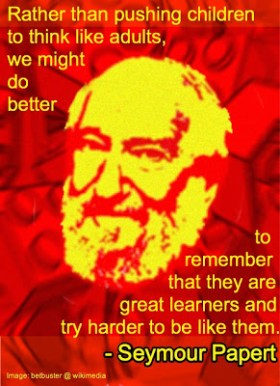
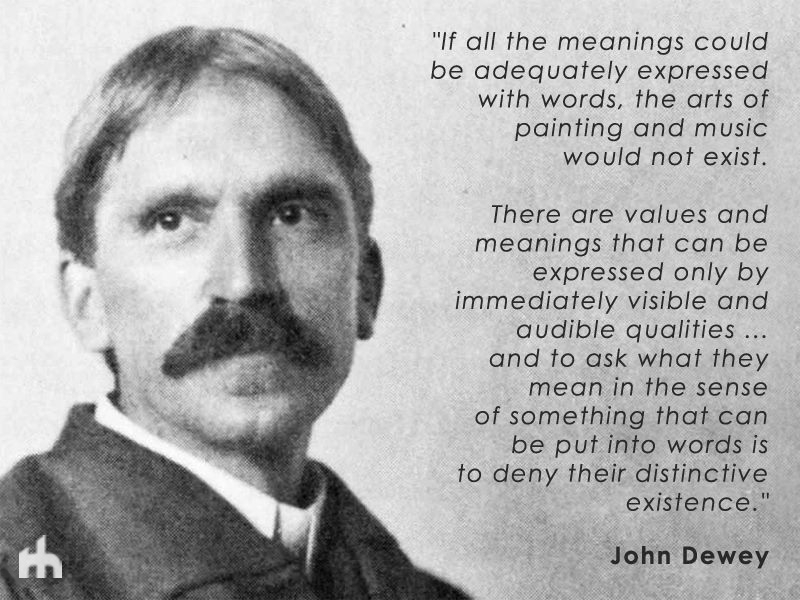
    Feedback provided to me was very positive and constructive. During this process, I completely changed my theory of personal learning, growing as a student and advocate of improving instructional approaches. As pointed out in my paper, “The “maker movement emphasizes learning through direct experiences, hands-on projects, inventions, and is based on a constructionist learning theory even if members and advocates of the movement are unaware of the theory” (Stager, 2013). As a member and advocate of the maker movement, I realize that the above statement summarizes my personal approach to learning theory. All constructionists embrace constructivism. However, constructionism approaches extend to include a larger social element, highlighting the importance of creation via learning artifacts within an extended community. After improving my understanding of constructionism approaches, I revamped my theory of personal learning and located many articles and studies to learn more about constructionism research approaches. Feedback stressed what I already knew to be an issue, proofing. Considering that I revamped my theory of personal learning completely, I recognize that time spent towards proofing would improve the overall quality of my product. However, instructors also complimented me on the overall paper, which really surprised me and has motivated me to continue and press on. Task two has led me to continue my research towards constructionism approaches, as I have located over 25 articles and research studies surrounding constructionism studies. I have begun condensing my paper. In addition, I plan to include a wider perspective to include research giants of constructivists and constructionism, instead of only emphasizing Piaget and Papert. Also, it was suggested that I should quote the source of important contributions to the constructivist and constructionism field instead of quoting from articles reviewed. For example, I quoted an article that mentioned John Dewey’s personal theory of learning. I have now read John Dewey’s own writings and contributions, which provides legitimacy. Our final major task towards completing CECS 6100 includes creating a research proposal. I plan on utilizing materials from my experiences in CECS 6100 to conduct a study that focuses on constructionism approaches with teachers to compare STEAM (science, technology, engineering, the arts, and mathematics) professional development delivered via a MOOC and face to face. Materials I am developing are very relevant to my real world professional experiences at this time.

    ImageImage


    Stager, G. S. (2013). Papert’s Prison Fab Lab : Implications for the maker movement and education design, 487–490.

  • Designing eLearning Experiences

    What is your personal perspective on the best manner of designing instruction for online teaching and learning? What is your process? Does it match any existing methods? If so, which? How did you learn to design instruction? Does your process for designing instruction match your larger theoretical perspective? Where is it the same? Where does it diverge?

    Dewey (1904) stressed that teaching requires a technique,requiring training in psychological insight, theory, and experience. The idea mentioned above still  holds true today in both virtual and face to face instructional environments. Papert (1993) suggests that new technologies enhances learning with students actively participating as creators of personal media, supporting diverse intellectual thoughts and styles. As a contributor and student advocate towards a revolution within eLearning and maker movement, I emphasize the topic of voice within instructional design. How is voice utilized within instructional environments? Too often, instructional voice is a passive or copied MOOC or eLearning response. In fact, often eLearning professionals lack instructional voice and ignore the need of learners to receive valuable feedback within the community. Likewise, universities eLearning attempt to copy courses and include faculty whom are often unwilling to embrace the online movement. As a student, I have participated and paid for a poor online course. The teacher failed at communication and course work was copied within the blackboard environment. As a participant, I felt lost and alone. In fact, I could of recieved the same quality of instruction watching YouTube videos.  Within this attempt, faculty fail students as teachers and provide little to no communication.   Facilitation is needed within both face to face and eLearning environments.

    Teaching, in both face to face or virtually, is an art. Teachers must tailor course objectives and instruction, building an engaging and meaningful community. Anderson (2004) provides an excellent description of the role of a teacher within an online community.  Effective eLearning environments must include three critical pieces:  cognitive presence, social presence, and teaching presence.

    It is important to understand that learning to design online instruction requires participating within online environments as an instructor, designer, and student. Doing so provides perspective and produces a quality eLearning teacher, or artist. Failing to participate fully as an online student, teacher, and designer reduces skills sets mentioned above which produces a poor eLearning contributor and creator.  Active learning requires active participation.

    The process of instructional design within such environments is challenging as a designer as creation components require instructors to select technologies that embrace a wide variety of accessibility features. Learning artifacts, authentic reflection pieces, and feedback mechanisms should provide users with a choice of mediums. It is important for the learner to apply content to their real world situation, capture a learning artifact, and share reflections with a wider or global audience using media technologies. The instructor must facilitate this process and a copied course approach does not facilitate such an approach. The above process requires a strong life-long commitment by faculty to be a learner and will require institutions to provide instructional technology training to a faculty population who often fail to embrace change via eLearning platforms.  Perhaps, the time has come for many organizations to recognize that old approaches, although still valid, must be altered to embrace a deeper eLearning experience that students richly deserve.


    Anderson, T. (2004). Teaching in an online learning context. Theory and practice of online learning, 273.

    Dewey, J. (1904). THE RELATION OF THEORY TO PRACTICE IN EDUCATION» 1».

    Papert, S. (1993). The children’s machine: Rethinking school in the age of the computer. Basic Books.