Tag: Online Learning

  • 6100 Course Reflection

    As a result of the 6100 course, I have developed a personal theory of learning, applied instructional design approaches employing my personal theory of learning, and created a research proposal exploring teacher STEM perceptions in online and conventional learning environments. I have a deeper understanding of how Piaget’s theory of constructivism connects to Vygotsky’s theory of social constructivism to Paper’s theory on constructionism. Prior to this course, I did not have a strong background in learning theory as it applies to instructional design approaches. Also, I was able to create two instructional activities with two colleagues exploring topics associated with alternative energy and fabrication printing employing the 5E instructional model and product based learning instructional model. Both activities included considerations for online instructional delivery. In addition, I was able to improve my ability to provide professional development using the Canvas learning management system (LMS).

    I was able to participate as a student in an online course that modeled true social presence, cognitive presence, and teacher presence. Instructors met with students twice a week, coaching students on advanced learning theory topics. Without the consistent feedback and collaborative exchanges received by both peers and instructors, I would possess required skill sets needed to complete a PhD study. My understanding of learning theory was very vague, and the collaborative synchronous meetings helped me fill in the missing gaps. I was redirected to improve my understanding of how to apply learning theory to instructional design models, and began to approach instructional design differently.

    During this course, I was able to further my research in STEM and STEAM research initiatives and found that little to no research exists regarding online STEM professional development approaches. This is a huge finding for me, as I now have a clearer understanding on the direction my studies could go as I approach dissertation study. I hope to utilize instructional design activities developed this spring using a professional development STEAM Camp K12 MOOC (Massive Open Online Course), which was released for registration in Canvas’s Open Network yesterday. I would like to compare teacher STEM perceptions in online MOOC professional development to face-to-face professional development and hope to complete a mixed methods study doing so this summer.

    Finally, I learned how to overcome obstacles and persevere during this process. The workload required this spring was heavy, but the work load  is preparing me for the final dissertation study. My writing process  has improved this spring, which is another benefit to blog postings required in the 6100 course. I was able to strengthen my connections with my online peers, through a stronger collaborative exchange. Activities required in this course paired me with three other cadre colleagues in which I had yet to work with. Our products and learning artifacts were strong and I enjoyed getting to know Bob Kaiser, Jarred Vanscoder, and October Smith this semester. Collaborative exchanges and discourse provided additional depth to my learning experience.

    To sign up for the Canvas STEAM Camp Professional development MOOC, visit Canvas’s Open Network. Registration is up and the course begins June 2, 2014 and last for a 5 week period.

  • MOOCS: An Alternative to Professional Development and Lifelong Learning

    What do you think the future of MOOCs is? What about mobile learning?Are these things you feel are going to be beneficial or will there be a backlash?

    Richard Ferdig’s (2014) insight on how the rapid explosion of Massive Online Open Courses (MOOCS) continues to transform online learning within higher ed and professional development programs is thought provoking. The MOOC K12 phenomenon presents leadership with emerging issues and challenges regarding the quality of online instruction and the rapid need to transform K12 institutions to embrace 21st century learning communities. It is important for K12 teachers and leaders to engage in the MOOC world and enroll in a few MOOCS to gain an understanding and perspective on the future of online education. Ferdig’s (2014) research is correct to point out three findings, which is intended to assist in integrating technology appropriately to meet such challenges.

    1. Not all MOOCS are created equally.  Connected learning principles, cMOOCS , focus on knowledge creation, collaboration, and generation. xMOOCS, however, concentrate on knowledge dissemination. It is highly important that curriculum leaders, who in my opinion should be highly skilled in educational technology, evaluate MOOCS. Does the MOOC employ an instructional model aligning to pedagogical beliefs? Is feedback produced within the MOOC environment? How is learning accessed? 
    2. MOOC participants are self starters, or self directed learners, which means the motivation element exists. How would this look in a K12 environment? Interactivity is a huge consideration. Peer support can assist in providing interactivity.
    3. MOOCS facilitate conversations, engaging a very diverse audience, which can deepen the learning experience.

    Will MOOCS replace face to face institutions or online learning university programs? MOOC completion rates are low, as MOOCS are free. Students enrolled in a for credit course pay to attend school, which includes an economic motivator that is perhaps missing within the current MOOC environment (Billsberry 2013). All 21st century instructors will need to up their game and become top instructors, as students now have options. How can this be accomplished? Improved online instruction can exist with instructors improving conversation,  facilitating and providing feedback in a timely fashion. Students will have the ability to preview what they pay for. Will MOOCS hurt postsecondary and for profit professional development organizations? My assessment is that MOOCS will push faculty, K12 instructors and leaders to become better. MOOCS will continue to provide equal access to knowledge and improve the overall online learning environment. This will continue to push the world into a new era, as knowledge will be attainable for the first time in third world counties. This could mean that K12 US education will need to refocus efforts on new ways to improve academic motivation as US students will now compete with a more educated global world. It is very unlikely that universities will begin closing their doors. However, maybe it is time for universities and K12 institutions to hire faculty and teachers who have a strong background in learning theory, instructional design, and ed tech. Serious conversations within K12 institutions on the purpose of why we are really here will need to be continued. Students will now have more options and school choices via online platforms to select a pathway to help them obtain a job, particularly secondary students. MOOCS will push all educational environments to reconsider approaches to meet student needs and skill sets needed in the 21st century.

    Billsberry, J. (2013). MOOCs: Fad or Revolution? Journal of Management Education, 37(6), 739–746. doi:10.1177/1052562913509226

    Ferdig, R. E. (2014). PREPARING FOR K-12 MOOCS. Tech & Learning, 34(6), 26-27.

  • What did you learn from your experience using social media and other open source tools?

    What did you learn from your experience using social media and other open source tools? Should they be used for teaching and learning? Tell the story of what you learned

    Social media has changed my approach to learning, both a student and as an educator. I can leverage social media to collaborate, research, publish, and extend learning beyond my local environment. Also, I am allowed to showcase a reflection to a wider audience and this motivates me to want to learn and share more. Self directed learning is empowering. The social element provided within social media environments allow for a more free flowing approach to communication (Taylor, King, & Nelson, 2012). The freedom of information via social media provides educational platforms to users and students across the world. This presents both advantages and disadvantages to learning.

    In a recent study, Fewkes & McCabe (2012) surveyed students and found that majority of participants, 73%, believed Facebook could be used as an educational tool,  citing benefits to include collaboration, homework assistance, productivity, and easier communication. However, only 27% of students surveyed had a teacher include Facebook in a learning activity. This to me signifies the largest issue facing schools. Teachers have had little training on how to integrate technology and social media into instructional activities. The learning curve is rapidly changing, Instructors need to not only learn how to utilize social media tools to advance their own personal learning, and they now must also leverage social media tools to facilitate a deeper learning experience. This requires strong professional development, time and support.

    It is important that a teacher be present online and involves students to become both producers and contributors within a social media environment. Ignoring social media doesn’t provide solutions and fails students. Teachers and schools must model 21st century skill sets to students. Educational programs should promote social media tools and demonstrate appropriate use to a wider community. How will students choose to utilize social media tools if they are not exposed to using tools to advance a quest for knowledge? Social media provides classrooms with an opportunity to increase cognitive presence, teacher presence, and social presence, providing a more meaningful learning experience.

    In 2010, I was a participating in a Twitter educational  chat when I began corresponding with other educators about integration practices. From this experience, I was provided a link to a program in which my life significantly changed. Due to a  Twitter PLN, I found myself two months later working on a curriculum packages with top ed tech and science teachers. Our product was shared with the world using a variety of tools via Twitter, Facebook, Skype, and Google+. A direct result of me participating in a self directed Twitter edtech chat, led me towards coauthoring curriculum and sharing experiences to the entire world. As a result, I decided to attempt to earn a PhD in Learning Technologies and cognitive systems. In addition, students in rural Texas received funding and recognition. Twitter has significantly changed the playing field. There is now a living conversation that continues on topics I am passionate about. I get to collaborate with like minded professionals about real world problems and we seek solutions. I have learned that I am not alone. There are many teachers eager to change the world and make a difference. Many instructional technologists feel alone and pioneers in the field often do find themselves struggling to meet demands. It is difficult to be in the trenches, but the reward of  learning outcomes shared within a social environment is worth is great.

    Hunter & Caraway (2014) illustrate the importance of participating in social networking, as tools are becoming a very popular place for 21st century youth to construct, articulate, and participate in their own reality. Young people are already involved in fundamental acts of teaching and learning and employ social media to do so. Hunter & Caraway (2014) conducted a study with 30 ELA ninth grade and 10th grade students in an urban area, using Twitter as a means to have students organize, facilitate, and disseminate topics related to literacy and literature. Students became more engaged, and participation increased. Students appreciated experiences and developed academic identities, which was previously missing.

    Hashtags provide students with a voice. I attempted to give students this ability in a rural town in Texas. I will never forget the day our Tweets landed a local DFW reporter in our classroom. We led a national campaign to help our rural community gain attention. Students developed a campaign and for 3 months began creating content, videos, and utilizing social media to save a local business. Students utilized the TwitterMapApp and we could see our message spreading over the world. Students became very engaged and began to care about learning. We could see visually see on Twitter and on the map the power of an idea and were able to view a movement take place. This was a powerful event in which I had the privilege of facilitating.

    I have learned that social media can be utilized to provide for a richer learning experience. It levels the playing field, provides students with the ability to construct new knowledge by giving students access to multiple perspectives. Reflections are very empowering, and it is important that K12 classrooms help students develop an academic identify online. I have learned that those who ignore this problem will find themselves still encountering issues associated with social media. Reimagning instructional approaches employing social media platforms are essential to producing a transformative 21st century learning environment.

    Be a participant, producer, reader, and contributor. Model appropriate learning and share experiences. Social media platforms serve to help push our students to become academic contributors.

    Hunter, J. D., & Caraway, H. J. (2014). Urban youth use twitter to transform learning and engagement. English Journal, 103(4), 76-82.

    Fewkes, A. M., & McCabe, M. (2012). Facebook: Learning Tool or Distraction?. Journal Of Digital Learning In Teacher Education, 28(3), 92-98.

    Taylor, R., Dr, King, F., Dr, & Nelson, G., Dr. (2012). Student learning through social media. Journal of Sociological Research, 3(2), 29-35.

  • Open Source tools and Social Media To Promote Learning Communities

    How useful do you find the open source tools and social media for learning? Is it your personal preference that drives this or the affordances? Would they be useful for others if you find it lacking? What would make them more useful?

    Social media and open source tools can be integrated to improve or disturb the overall cognitive process. Instructional design is often the critical component missing. Often instructional leaders or faculty either lack technical skill sets or instructional design skill sets, viewing technology as a separate component or department from learning. Clark’s (1983) assessment of media, or in this case social media, as vehicles “delivering instruction or a grocery truck delivering nutritious food”, remains true. Integrating media tools isn’t a new problem, as evidenced by the great Clark-Kozma debate. The tool or media in question, however, is now more engaging, productive, and full of great but also equally destructive learning potential, enhancing Kozma’s (1991) arguments that media, if used correctly, influences cognitive processing capabilities. Fewkes and McCabe (2012) offer insight on the uses of Facebook as a learning tool but also as a distraction. If educators do not have access to instructional support equipped with a background in learning technologies along with learning theory and pedagogical practices, classrooms might view Facebook as “entertainment” not “true intellectual engagement” (p. 93). In my opinion, this is why strong curriculum support is needed, requiring such skill sets mentioned above. Too much media also interferes with cognitive processing. A balanced approach to open source tools and social media integration is needed for true learning to occur. Confusion on just accessing on-demand technology, instead of focusing on learning outcomes leads to a failed learning experience.

    Fewkes and McCabe (2012) research suggest the following approaches to integrating Facebook in the classroom. A strong approach to in-service for staff development on the proper instructional use of digital technology and social media will help with instructional design approaches. Districts should not just focus on policy during training. All stakeholders should engage in conversation to consider barriers to create rich environments. Provide more freedom and trust, in a less controlled atmosphere, could produce an overall congruent vision and use of social media as a learning tool.

    Clark, R. E. (1983). Reconsidering research on learning from media. Review of Educational Research, 53(4), 445-459.

    Fewkes, A. M., & McCabe, M. (2012). Facebook: Learning Tool or Distraction?. Journal Of Digital Learning In Teacher Education, 28(3), 92-98.

    Kozma, R. B. (1991). Learning with media. Review of Educational Research Review of Educational Research J1 – Review of Educational Research, 61(2), 179.


  • Constructionism Approaches Within Canvas LMS

    Based on your experience putting your lesson into the Canvas LMS, what do you feel are the benefits of using such a structured space for teaching and learning? How well does the structure of an LMS fit with your theory of online learning?

    Creating a professional development spaces within a Canvas LMS supports my approach to online K12 STEM professional development. Canvas is a free LMS system that proves to be user friendly, integrates nicely with third party web tools, and includes excellent multimedia capabilities that are lacking in many other free LMS enviornments. Discussion tools can be used to create a social experience and allow for users to attach video feedback or embed external content and share experiences within a learning community in a very meaningful way. However, the space is only a tool and the content of the instructional activity itself, along with participants, and instructor encouragement must all be present for the lesson to be a productive and meaningful experience. The module component allows for clear organization. Pages offer customization approaches to allow for increased flexibility. The record and upload media feature within Canvas discussion tools will prove to be an effective tool to increase participant engagement. Collaboration tools to include Google Docs and Etherpad provide a layer of collaboration not found in many other LMS environments. Users can use Google Docs, for example, to create reflections or “artifacts”, to share with a larger community within Canvas. It is nice that Canvas works well with other media tools. Media used as a reflection tool provides the learner with the ability to produce a more meaningful perspective in which they can share within the online environment. However, Canvas does lack the embedding of social media tools, which I would find useful. I am embedding links and suggesting a community hashtag to utilize within the course to tap into social media components. The LMS can be utilized within a constructionism approach to online learning as it allows for connectedness. However, teacher presences along with clear directions and organization within the LMS must be present for the lesson within Canvas to be successful. Canvas LMS does have the ability within the learning environment to provide a means for learners to connect, share, and present alternative viewpoints. The ability for media to be incorporated as video to produce such collaboration is an added benefit to employing Canvas LMS. The following websites have assisted me in learning more about features available within Canvas.

    http://guides.instructure.com/

    https://github.com/instructure/canvas-lms/wiki

  • Perspectives On Personal Learning Theory

    To best engage students, learning should be a collaborative experience, where ideas are shared, debated, and possible new perspectives formed. Online experiences must include meaningful exchanges, where clear goals and expectations of outcomes are shared. Reflections should be public. Blended approaches offer advantages, using both asynchronous and synchronous tools to build a continuing dialogue of conversation promotes active learning within the virtual world.  This type of exchange can be just as effective as a face to face interaction, as long as the energy of the instructor and students continue through meaningful dialogue and conversation. In my opinion, learning is most effective when students are able to take information from a virtual environment and apply information to their physical or real world. Reflections capturing this activity and sharing the outcome to the online community via social media allows for a deeper and rich learning experience.

    Interested in learning more about second life? As with any resource, it is important to investigate worlds within second life. Many locations within second life are very interactive, providing students with a simulated and collaborative experience. However, many locations lack interactive components mentioned above. The following resources are useful to instructors interested in introducing secondary students.

    Second life has been around for over a decade and results from research provided in this world continue to stress the importance of collaboration within a virtual experience.  However, users often find themselves lost within the environment and users often choose not to explore within the environment.

    Will second life continue to be an important virtual space within the education community? Some believe that second life will be revived and given a second chance. I found perspectives on the future of second life interesting.

    http://gigaom.com/2013/06/23/second-life-turns-10-what-it-did-wrong-and-why-it-will-have-its-own-second-life/?post_id=648965742_10152146772235743#_=_

    http://singularityhub.com/2013/11/12/second-life-founder-philip-rosedale-is-quietly-creating-a-next-generation-virtual-world/

    Further research in how to best provide choices to students regarding TBLE input and output along with the frequency of interactive components is needed. In addition, instruments measuring assessment of the virtual post secondary environment from a student perspective is lacking within the academic community.  Qualitative approaches to include experimental case study approaches could assist in providing valuable insight on student perspectives regarding the effectiveness of an online learning environment.

    Image

  • Building Online Learning Communities: Synchronous vs. Asynchronous Tools

    Synchronous (i.e. Connect) vs. asynchronous tools (Forums): Which is better at fostering online learning? Why? What are your reasons and evidence for this?

    Stodel, Thompson, & McDonald (2006) stress the importance of maintaining and modeling a “social and cognitive presence” within the online learning community. Results from research cited in the above study indicated that learners engaged in interactive activities focusing on synchronous activities set the stage for a deeper learning experience. Linear asynchronous activities lessened the desire of participants to engage in learning activities. Face to face video using Skype, Google Plus, Adobe Connect, or GoToMeeting activities provide an opportunity in which the learning communities can foster a deeper collaboration experience, building a highly social and interactive exchange of energy. Questioning, reflection, and activities to encourage dialogue deepen the learning experience when utilizing a synchronous approach. Instructors should rely less on the lecture format when using a synchronous tool.  Again, it is important to foster interaction and social dialogue, which is easily accomplished using synchronous technologies.

    Is there a place for asynchronous activities? The above study also found that a creative text dialogue used within the introduction discussion board using a poem improved the social experience within the learning community. It is important to note that advantages do exist using asynchronous tools to include flexibility and improved written communication techniques. Perhaps, asynchronous actives could embrace text based social media tools to improve the overall learning experience. Professional learning discussions are often highly engaging using social media collaboration tools such as Twitter and Today’s Meet. Searls (2012) encourages online learners to reach out using asynchronous tools along with social media can lessen the feeling of isolation.  Often instructors are absent from discussion tools, which leads to an isolated learning experience.

    A blended approach to online learning using a balanced mixture of synchronous and asynchronous tools is the best option to building a rich and interactive learning environment. Instructors must be present and model social engagement consistently and frequently synchronously and asynchronously. Including an organized schedule of expectations and timeline of synchronous and asynchronous tools provides structure to improve the overall effectiveness of a learning exchange.

    Searls, D. B. (2012). Ten simple rules for online learning. PLoS Computational Biology8(9), e1002631.

    Stodel, E. J., Thompson, T. L., & MacDonald, C. J. (2006). Learners’ perspectives on what is missing from online learning: Interpretations through the community of inquiry framework. The International Review of Research in Open and Distance Learning, 7(3).

    Wang, F., & Hannafin, M. J. (2005). Design-based research and technology-enhanced learning environments. Educational Technology Research and Development53(4), 5-23.

    http://academictech.doit.wisc.edu/blend/facilitate/communicate

  • Considering Online Course Delivery: A Graduate Learning Technology Student Perspective

    Why have we moved so many courses online?

    Mobile platforms provide flexibility to a growing global market of adults seeking to improve skill sets needed within a 21st century workforce. Cellular applications used to access online learning content, along with the deliver of MOOCS, offer students convenient approaches to learning online. Globalization combined with an emerging demand from a previously absent third world population within the post secondary market will continue to push for increased access to online learning. Improvements in communication technologies along with increased access in rural environments allow for new markets and platforms to fulfill an ever increasing demand to online education.

    Online learning platforms include the following choices to training and higher ed institutions.

    Canvas is a free, very sleek and is attractive to users.  It is a very user friendly, providing simplicity.  Social media can be integrated within the system, which is very appealing to students and instructors.

    Schoology is an excellent approach to online learning and offers many advantages to students to include a simple and collaborative user interface.  Did I mention that it is also FREE?  Mobile applications are limited with this feature.

    Moodle includes a great new mobile app platform and continues to offer access to quality LMS to a growing online learning population. Moodle’s layout and mobile features has greatly improved and continues offer quality LMS options  globally for FREE.

    Blackboard has upgraded services and is offering a free online course management system, CoursSites.  However, unlike Moodle you are limited to 5 courses per log in.

    As students, do you feel like online courses are as good as face-to-face courses?

    As a student, having an instructor, human, actively participating within the course is a must.  The relationship between a teacher and a student is the most important factor in determining success.  Online courses can be as good as face to face courses when the instructor encourages online dialogue and communication within the course environment.  Video face to face weekly meetings, along with a simple and organized approach to delivery can provide this option.  A true learning community must exist in either learning environment.  This is why MOOCS will not completely replace instructors as students need a quality learning experience.

    What are the major differences between online and FTF courses for you as a student?

    A major difference between online and FTF courses is the frequency of interaction within the learning community.  Again, a MOOC does not provide frequent quality dialogue.  Students must be more disciplined when participating in an online environment, questioning and seeking solutions.  It is easier to do so within a face to face environment.  Learning curves exist when trying a new LMS platform or when updates to existing platforms occur.  Instructors can mitigate these issues by posting help features within the course.

    Whether you have taught one or not, what do you think the differences are for the instructor? How do we know if the formats require different skills or result in different learning outcomes? Do we?

    Instructors should choose features and integrate files that work across mobile platforms.  In addition, providing recordings to assist students who may need to refer back to information during the course is helpful.  Learning curves are perhaps larger for instructors, as technologies and LMS platforms change constantly.  University and corporate institutions should consider providing support and training options regularly to share best practices within the organization.

    Image

    Some links that I found  interesting regarding the growth of online learning are located below.

    http://www.uis.unesco.org/education/Pages/international-student-flow-viz.aspx

    http://edition.cnn.com/2013/06/21/business/opinion-koller-education-petersburg-forum/

    http://harvardmagazine.com/2013/12/harvard-mit-online-education-views-changing


  • Exploring ARCS and VoiceThread to Improve Online Learning Environments

    Write a reflection about the advanced instructional design model that your group chose for the project. Why did you choose it? How do you think you will approach it? How did you divide up the work among members of the group? What will be your timeline for completion?

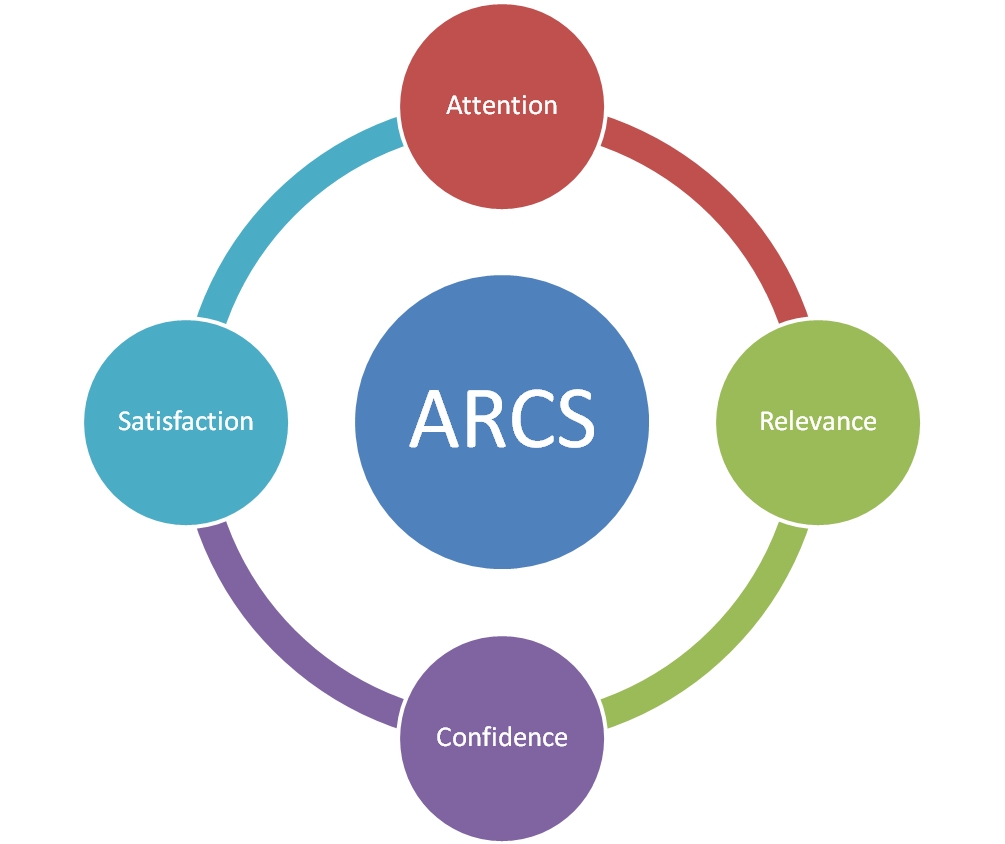
    Our group is investigating the ARCS instructional design model using VoiceThread because we are very interested in improving overall online lesson delivery, student motivation, and success in online learning environments.

    Often students lack self-motivation, do not feel confident in online learning environments,  lack of feedback, support, lack of community, or don’t a clear understanding of realistic course expectations.

    VoiceThread can provide a powerful communication tool to assist faculty in implementing the ARCS model of instructional design.  Our group will be building a ADV ID Model on the ARCS using voicethread and sharing via Google Sites.  

    Each member of the team will be working on a piece of the ARCS model, adding to resources, Works Cited, and the Evaluation piece.  

    Our timeline includes the following:

    3/18-3/23 – Planning and building ARCS VoiceThread Prototype

    3/28 – Design Document presented for group critique

    4/8-4/12 – Development of Activities, Assessment, Evaluation

    4/15 – Development complete including assessment and evaluation tools

    4/16- Implementation of beta group testing through link in Schoology

    4/28 – Collection of VoiceThread creation assessment and course prototype evaluation survey

    4/29-5/3 – Statistical Analysis of data

    5/6 – Group presentations of course prototype


    3/18-3/23 – Planning and building ARCS VoiceThread Prototype

    3/28 – Design Document presented for group critique

    4/8-4/12 – Development of Activities, Assessment, Evaluation

    4/15 – Development complete including assessment and evaluation tools

    4/16- Implementation of beta group testing through link in Schoology

    4/28 – Collection of VoiceThread creation assessment and course prototype evaluation survey

    4/29-5/3 – Statistical Analysis of data 5/6 – Group presentations of course prototype

    ARCS: A Conversation with John KellerImage


  • Considering How To Improve Virtual Learning

    Connecting is key to experiencing positive LMS experiences.  Instructional designers must consistently evaluate content.  Often faculty lack time to revisit learning approaches, but improving the quality of online learning platforms is crucial to growing post-secondary environments.  LMS must be systemic and continually evaluated.  Far too many virtual courses develop a learning repository for students and courses are not viewed as unique experiences.  This often leads to feelings of detachment from both the learner and instructor.  Content may become dated.  Instruction often lacks meaning.  Building stronger connections requires both collaboration and evaluation of instructional approaches.   Faculty often do not revise courses in LMS environments.  Approaches to holistic and consistent instructional design is needed for all learning environments, virtual and face to face.

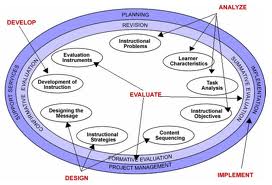
    The Kemp Model

    Image

    The Kemp Model is one approach to revising content within the learning environment.   The designer is free to begin with any Kemp Model element and instructors can be flexible as they do not have to present elements in any particular order.  Multidisciplinary approaches must be considered by faculty.  How can we reliably and consistently evaluate online learning environments?  How do we keep the element of creativity as we apply standardized evaluation techniques?  Models are tested.  Theories explain the whys surrounding learning outcomes and experiences related to an instructional model.

    ARCS Motivational Design

    The ARCS model appeals to me as it lends itself to a strong sense of community and student motivation.  Using experiences, visuals,  relevance, and strong collaboration exercises provide meaning. Satisfaction and confidence are two great elements for faculty to consider measuring.  The ability for users to form deeper short term and long term relationships is measurable.

    Image