Tag: Professional Development

  • Choose Your Own Adventure.. My Summer Professional Learning Reflections

    Choose Your Own Adventure.. My Summer Professional Learning Reflections

    Anyone involved in public education knows that summers are full of opportunities for educators to embrace professional learning.  Educators and leaders are surrounded with many avenues to model life-long learning. No longer do we have to wait for PD to come to us. This year I had the opportunity to connect and grow my PLN for an entire two months. For the first time in five years, I was not enrolled in graduate courses or completing a dissertation,  free to just learn about any topic of interest and connect. I attended multiple conferences to include Texas ASCD Ignite, ISTE, Denton’s TIA, and immersed myself with exploring content in multiple museums, even visiting the Library of Congress to research the upcoming solar eclipse. Certain themes emerged this summer during my adventure.

    Creativity Matters

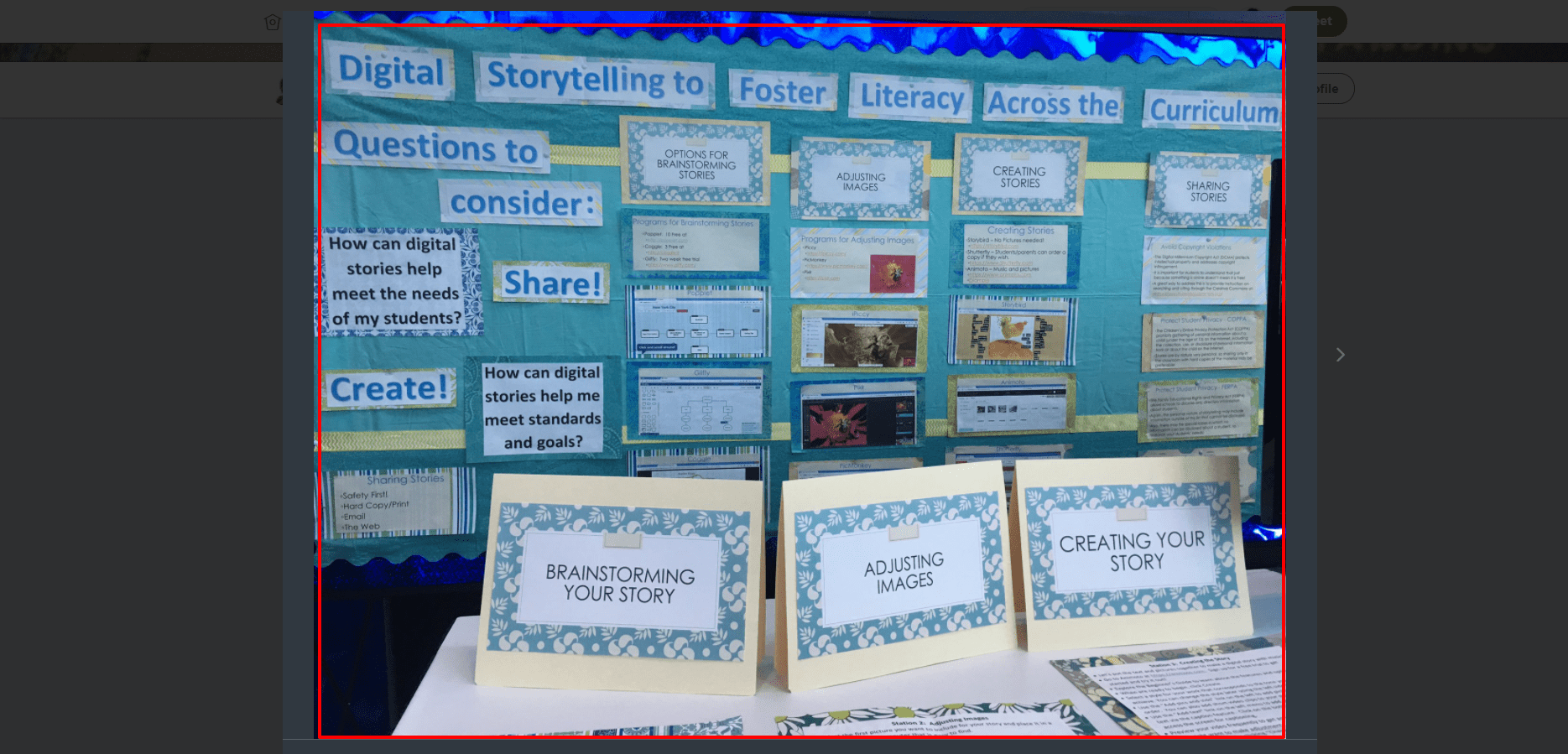
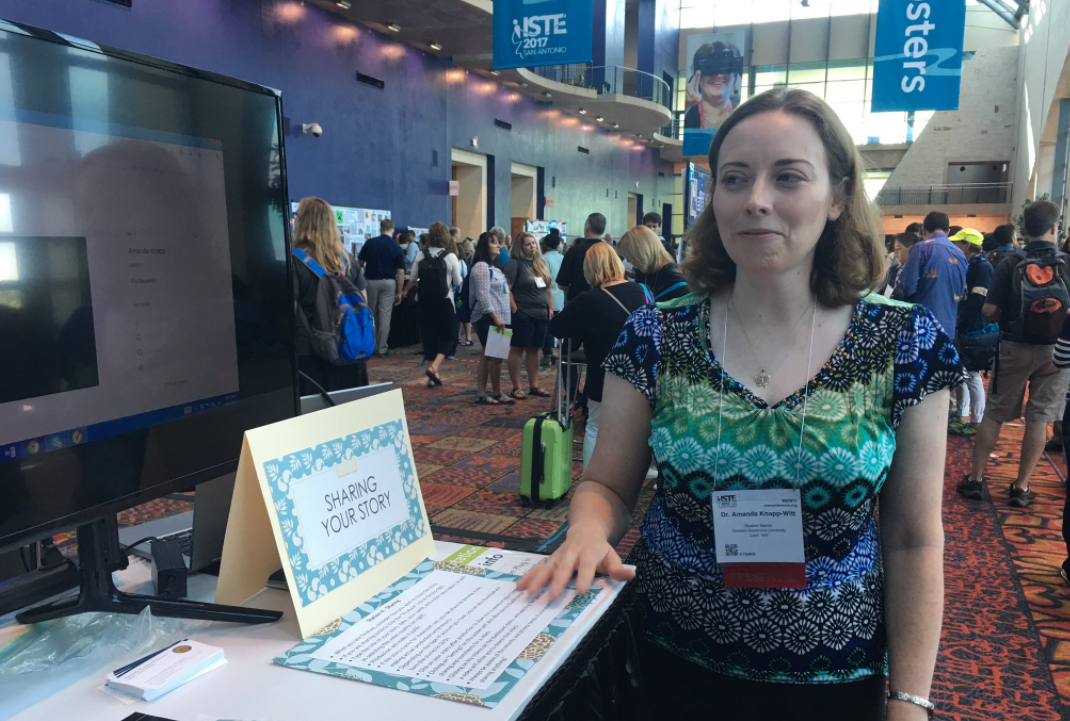
    With so many makerspace, STEM, and STEAM apps, and instructional approaches available to organizations and teachers, choices and program approaches can become overwhelming. It was exciting to see so many great project-based learning approaches centered around storytelling. Many schools are combining storytelling with gaming. For example, it was cool to see how students really engaged with Minecrafting a Colonial City. I liked the following process used toward incorporating digital storytelling with core curriculum.
    Dr Jennifer Miller steamlearnlab Twitter (2)

    Dr Jennifer Miller steamlearnlab Twitter (3)

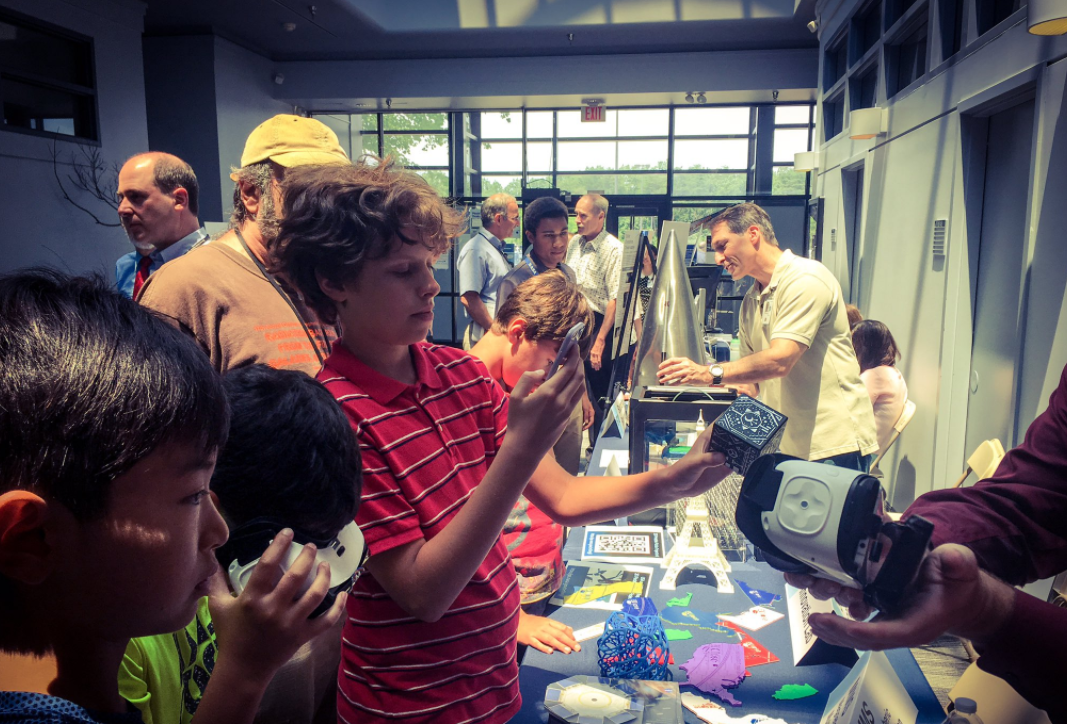
    Lewisville ISD has incorporated a mobile transportation lab, a collaborative unit, serving 70 libraries and STEAM labs. This provides an introduction to educators and students toward creative learning technology approaches. I visited NASA’s STEM Innovation Lab at Goddard Space Center and I was inspired by the many uses of the 3D printer. Learners of all ages were inspired to learn using 3D printed models, which encourages me to continue producing curriculum and 3D printing training programs.
    Dr Jennifer Miller steamlearnlab Twitter (4)

    Transparency Matters

    Eric Schlesinger always inspires. He recently provided a keynote at Denton TIA in which he reminded us that transparency really does matter. I have been a heavy user at times of social media, blogging, and at times have had to unplug. Often those whom are very plugged in are criticized for bragging. However, Eric reminds us that branding your story isn’t only ok, it is necessary toward being transparent and building trust. In fact, telling your story connects learning to stakeholders. He reminded us of the importance of being transparent and consistent with our posts. During the last two years, I had dropped my professional blog posts. After hearing him speak last week, I decided to pick up my blog and begin consistently posting once a week. Hopefully, this exercise will increase my ability to communicate digital learning and cognitive science approaches to all stakeholders. Change does not come from opinions. Change is brought about by the examples we set and our reactions toward others.

    Community Matters

    It is important to remember that the teacher makes the difference! It was very inspiring to see how teachers at WELD Re-4 School District deliver a creative conference in which students, business leaders, and educators provide professional learning sessions to the entire community. A result of this program included a new scholarship program,  innovations scholarships, which are provided toward students who demonstrate quality interactive student showcases.

    The final takeaway for this summer is that true learning is FUN! I am very grateful to have had this opportunity to learn and connect with so many around the world. This is going to be an amazing school year!


  • MOOCS: An Alternative to Professional Development and Lifelong Learning

    What do you think the future of MOOCs is? What about mobile learning?Are these things you feel are going to be beneficial or will there be a backlash?

    Richard Ferdig’s (2014) insight on how the rapid explosion of Massive Online Open Courses (MOOCS) continues to transform online learning within higher ed and professional development programs is thought provoking. The MOOC K12 phenomenon presents leadership with emerging issues and challenges regarding the quality of online instruction and the rapid need to transform K12 institutions to embrace 21st century learning communities. It is important for K12 teachers and leaders to engage in the MOOC world and enroll in a few MOOCS to gain an understanding and perspective on the future of online education. Ferdig’s (2014) research is correct to point out three findings, which is intended to assist in integrating technology appropriately to meet such challenges.

    1. Not all MOOCS are created equally.  Connected learning principles, cMOOCS , focus on knowledge creation, collaboration, and generation. xMOOCS, however, concentrate on knowledge dissemination. It is highly important that curriculum leaders, who in my opinion should be highly skilled in educational technology, evaluate MOOCS. Does the MOOC employ an instructional model aligning to pedagogical beliefs? Is feedback produced within the MOOC environment? How is learning accessed? 
    2. MOOC participants are self starters, or self directed learners, which means the motivation element exists. How would this look in a K12 environment? Interactivity is a huge consideration. Peer support can assist in providing interactivity.
    3. MOOCS facilitate conversations, engaging a very diverse audience, which can deepen the learning experience.

    Will MOOCS replace face to face institutions or online learning university programs? MOOC completion rates are low, as MOOCS are free. Students enrolled in a for credit course pay to attend school, which includes an economic motivator that is perhaps missing within the current MOOC environment (Billsberry 2013). All 21st century instructors will need to up their game and become top instructors, as students now have options. How can this be accomplished? Improved online instruction can exist with instructors improving conversation,  facilitating and providing feedback in a timely fashion. Students will have the ability to preview what they pay for. Will MOOCS hurt postsecondary and for profit professional development organizations? My assessment is that MOOCS will push faculty, K12 instructors and leaders to become better. MOOCS will continue to provide equal access to knowledge and improve the overall online learning environment. This will continue to push the world into a new era, as knowledge will be attainable for the first time in third world counties. This could mean that K12 US education will need to refocus efforts on new ways to improve academic motivation as US students will now compete with a more educated global world. It is very unlikely that universities will begin closing their doors. However, maybe it is time for universities and K12 institutions to hire faculty and teachers who have a strong background in learning theory, instructional design, and ed tech. Serious conversations within K12 institutions on the purpose of why we are really here will need to be continued. Students will now have more options and school choices via online platforms to select a pathway to help them obtain a job, particularly secondary students. MOOCS will push all educational environments to reconsider approaches to meet student needs and skill sets needed in the 21st century.

    Billsberry, J. (2013). MOOCs: Fad or Revolution? Journal of Management Education, 37(6), 739–746. doi:10.1177/1052562913509226

    Ferdig, R. E. (2014). PREPARING FOR K-12 MOOCS. Tech & Learning, 34(6), 26-27.