One way to engage students is by giving students a voice. Technology can really help facilitate learning because it provides multiple communication channels that the teacher can use to give students a voice (who may not otherwise engage), which empowers them to take ownership in their learning. A larger audience can allow for the student to extend learning outside of the classroom. Technology is not the answer to academic issues. We must use it in a meaningful way that motivates students to think. Our task is to create a new generation of problem solvers and critical thinkers. Technology must facilitate higher order thinking activities. You can find a lot of “junk” technology activities that are not engaging or fun, especially linear activities.
Some other thoughts: We have to be careful not to crush student ideas, voices, etc. We don’t always “know” better. Stand and deliver style of teaching does fit is some cases, but we need to spend less time presenting and more time allowing kids to If you truly value student voice, they must know that their ideas can direct the path to learning. Think about how you can give your students a global voice. How do we build a career focus, or career voice, to produce college ready graduates? Students must know that you believe in them. We must show that we like what we are teaching and what we teach. Choose learning technologies that give students a voice and allow them to contribute not just work linearly to contribute only to themselves, you, or a grade. Are we spending all of our time on compliance and standardization? Don’t be boring, push beyond the easy and comfortable. Students are often willing to choose boring over taking a risk. Expect students to do exciting things. Recognize boring and redirect, remove the safe option. Foster joy, we should all be laughing more because kids learn in a happy environment. An expert recently told me that we should incorporate the 5 model, Engage, Explore, Explain, Elaborate, Evaluation. Their suggestion was to move the first 3 online, and that will save you time for elaboration and evaluation. The flip concept is only a system, the strategy of 5 e is still needed from you. You and your relationship with students is still the most important motivating factor. If you want to use a flip system, you must question, elaborate, and evaluate in class. Videos alone will not address learning issues. You must expect students to do their part and follow through. It does work and is working in many areas in the nation and state. However, teaching is still the most important component.
Some ideas:
1. Creating a how to video and blog (written) evaluation reflections: Great alternative formal assessment tool. I am very proud of Debra Miller’s leadership in creating a video to publish on the junior high web page. A parent called this morning very excited to see the video. Keep up the excellent work.
2. Twitter: Students from one district last night led a state wide twitter chat on giving students a voice. Twitter widgets on your website really interest students. Teaching students how to act professionally online can be modeled in this way. Check out #txed hash tag to view how students led a very professional collaborative discussion on this topic. We have Dublin High School students using twitter and I enjoy seeing students contributing to increase school spirit. How can we get kids to begin contributing about core subject on instructional content?
3. Skype: Skype in the classroom is a great way to find partners to allow for students to collaborate, present, use higher level questioning, and elaboration on evaluation of ideas. This is an excellent way to bring “experts” into your classroom.
4. Offsite curriculum center: We have access to produce content to showcase to the community. How can you take advantage of this? Need ideas, let me know. I was very impressed with Donna Lewis’s 2nd grade and 3rd grade students. The entire class was highly engaged with her yesterday, check out one production example: http://animoto.com/play/Fxc4wpIsQwEYUTyr6l6zxw
5. Empower students to be creative and help them to understand that they matter.
6. Consider your physical learning space. How can you redesign learning spaces so that they are “fun”? I got to visit with students earlier this week at the high school and they expressed how that action created a more relaxing and fun atmosphere.
7. Problem solving and failure with a voice: Robotics is a way to get kids motivated and you would be surprised at how these kits can fit your exiting curriculum. Lego released a writing curriculum this week that encourages creative writing and academic vocabulary development. The production that is created by the team gives students a voice by allowing them to showcase a robot to a wider audience. It is great to see so many students enjoying problem solving activities using robotics. Dublin High School, and photos from Dublin Intermediate and Junior High students who are so excited to be part of the after school robotics club. We have 47 students participating weekly in an optional after school program. These students are having fun expanding in writing journals, collaborating, thinking and problem solving. . We learn from failure. Research on this topic: http://hbr.org/2011/04/strategies-for-learning-from-failure/ar/1
8. Portfolios are a great way to showcase student work and online portfolios gives students a large voice that they can then take to a wider audience. This is a great way to give students a career voice. With project share, students have an Epsilen portfolio account that can allow all teachers to “showcase” a student production that they can then add to their existing portfolio.
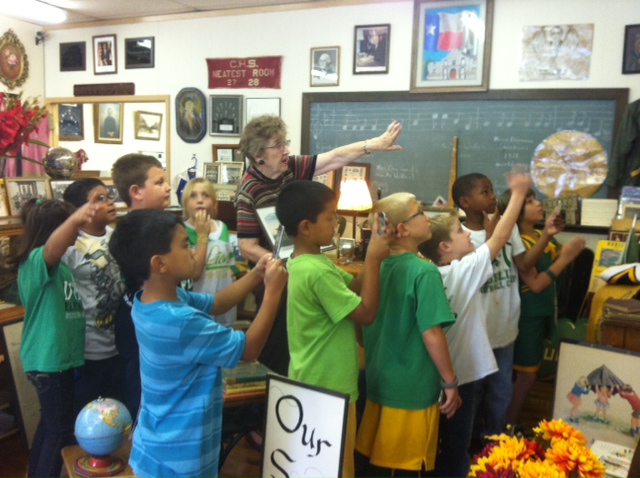
It was fun taking students with their teacher, Mrs. Donna Lewis, to the Dublin Historical Museum recently. Students really enjoyed learning about museum artifacts, conducting research, using their iPods to record photographs, and creating a movie to publish for a wider audience. Learning really can be fun!
 Dr. Jennifer Miller-Ray